
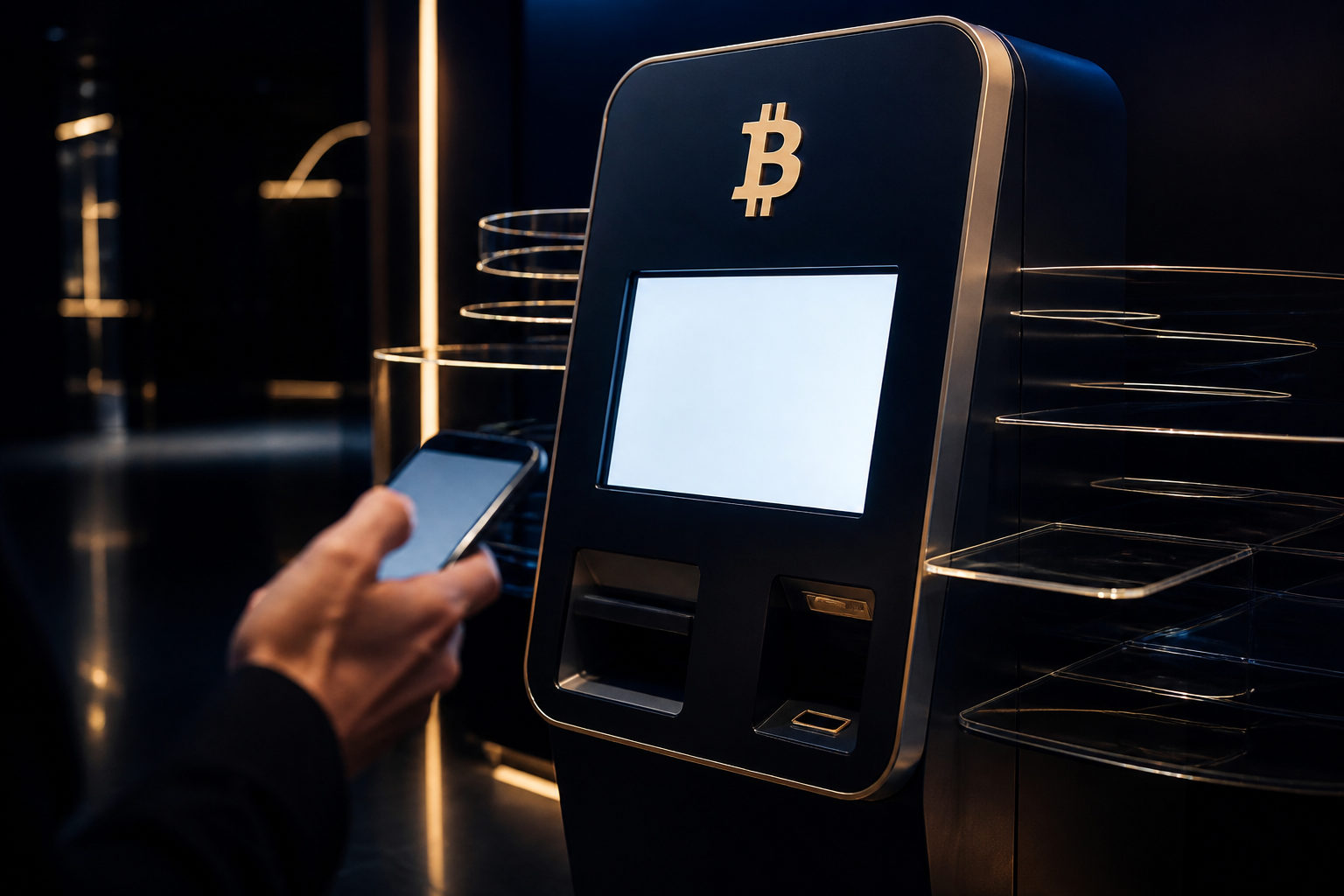
If you want to know how much Bitcoin Depot charges, the practical answer is this: the total cost usually comes from more than one place. What matters most is the difference between the ATM quote and the broader market price, any stated service fee, and any transfer-related cost that affects how much BTC reaches your wallet.
What “Bitcoin Depot fees” usually include
People asking this question are usually trying to solve a simple problem: if they put a certain amount of dollars into a machine, how much bitcoin will they actually get back. With a Bitcoin ATM, that answer is not always shown as one clean percentage. Some services display a fee line. Others build much of the cost into the quoted exchange rate.
That distinction matters because a visible fee is only part of the picture. A machine can show a modest service charge while still offering a purchase price that sits well above the spot price shown on major market trackers. In practice, the spread between those two prices can have a larger effect on your final outcome than the label on the screen.
There is also the operational side of the transaction. Bitcoin ATMs are physical cash-access points. They have location costs, cash handling, compliance checks, and customer support overhead. Those expenses tend to be reflected somewhere in the total price you pay, even when they are not broken out line by line for the user.
So when someone asks how much Bitcoin Depot charges, the most useful metric is not a single fee category. It is the full conversion result: how many dollars go in, what quote is shown, and how much BTC is expected to arrive in your wallet.
Why Bitcoin ATMs often feel expensive
Convenience is the main reason. A service like Bitcoin Depot lets users buy bitcoin through a physical machine, often with cash, without setting up a full trading workflow first. That convenience has a price. Users are paying for access, speed, and simplicity as much as for the bitcoin itself.
Another source of confusion is that many buyers compare the ATM only with a headline fee from an exchange. That leaves out the pricing spread. If an exchange shows lower trading fees but requires bank transfers, order placement, account setup, and a separate withdrawal step, the experience is very different from feeding cash into a machine and receiving bitcoin to a wallet address.
Network-related costs can add another layer. On-chain transfers require blockchain processing, and that may be folded into the total economics of the transaction. From a user perspective, it is safer to review the final quoted purchase terms than to guess which share came from service pricing and which share came from transfer handling.
That is why two buyers can use similar language about fees but mean different things. One may be referring to the posted service charge. Another may be reacting to the fact that the total BTC received felt low for the dollars spent.
How to judge whether Bitcoin Depot is worth the cost
The best approach is to compare the ATM quote with a live market reference right before confirming the transaction. Look at the BTC price on a major market data tool, then compare it with the purchase quote shown by Bitcoin Depot and the amount of bitcoin the screen says you will receive. That gives you a much clearer picture of the all-in cost than any single fee label.
Do not stop at the quoted price alone. Read the confirmation screen carefully. You want to know whether the machine is showing an estimated delivery amount, whether there are extra disclosures about transfer processing, and whether there are limits on cancellation or corrections after cash has been inserted. In a physical machine setting, your room to reverse a mistake may be smaller than it would be on a standard app-based exchange.
Your own goal also changes the answer. If you want a fast, local, cash-based way to get a small amount of bitcoin, a higher cost may still make sense. If you plan to buy regularly or care about long-term average entry cost, repeated use of a higher-spread ATM can become expensive over time.
What to check on the screen before you confirm
- Purchase quote: the actual price the machine is using for the transaction.
- Expected BTC received: how much bitcoin should arrive for your dollars.
- Fee disclosure: whether service, processing, or network-related charges are shown separately.
- Verification requirements: whether you need a phone number, ID, or extra review.
- Transaction rules: what happens if there is a delay, an error, or a cancellation request.
How Bitcoin Depot compares with online exchanges
An online exchange usually separates its costs into trading fees, spreads, and withdrawal charges. That format suits users who are comfortable moving funds digitally, placing orders, and managing their own transfer steps. Bitcoin Depot serves a different need. It offers immediate physical access and a shorter path from cash to on-chain bitcoin.
Because the service model is different, the pricing model is different too. An ATM customer may accept a less favorable all-in rate in exchange for convenience and directness. Someone focused on cost efficiency will usually want to compare several alternatives before buying, including exchanges, broker-style apps, and other compliant on-ramps.
There is another issue new buyers sometimes miss: wallet control. If you buy from an ATM but send the bitcoin to a wallet you do not fully control or have not backed up properly, the fee comparison becomes secondary. A cheaper purchase is not very useful if the receiving setup is sloppy and creates avoidable risk later.
For that reason, it helps to prepare your wallet address before you go to the machine. That way, when the quote appears, you can focus on evaluating the economics instead of rushing through setup in front of the screen.
FAQ
Does Bitcoin Depot show all fees directly on the machine?
Not always in one simple format. Some costs may be stated clearly, while others may be reflected in the quoted exchange rate, so the final BTC amount is often the best indicator of total cost.
How can I tell whether Bitcoin Depot is charging too much?
Compare the machine’s quoted purchase price and expected BTC amount with a live market reference at the same moment. That side-by-side check gives a better answer than looking at one posted fee by itself.
Are Bitcoin ATM purchases usually more expensive than exchange buys?
They often are, because the service includes physical access, cash handling, and a simpler purchase path. Whether that premium is acceptable depends on why you are using the ATM in the first place.
Is the Bitcoin Depot fee the same as the blockchain network fee?
No. A network fee relates to blockchain transaction processing, while Bitcoin Depot pricing can also include service and spread-based costs. Both can affect the final amount of BTC you receive.
What should I verify before putting cash into the machine?
Confirm that your wallet address is correct, then review the quote, the expected bitcoin amount, and any extra terms shown on screen. If any part is unclear, it is better to pause than to proceed blindly.
Before you buy, do this quick check
Bring a wallet address you control, open a major market price tracker on your phone, and compare that live reference with the Bitcoin Depot quote on the machine. If the screen does not make the total outcome clear, or if the amount of BTC looks too low for the dollars you are spending, walk away and use a more transparent method.