
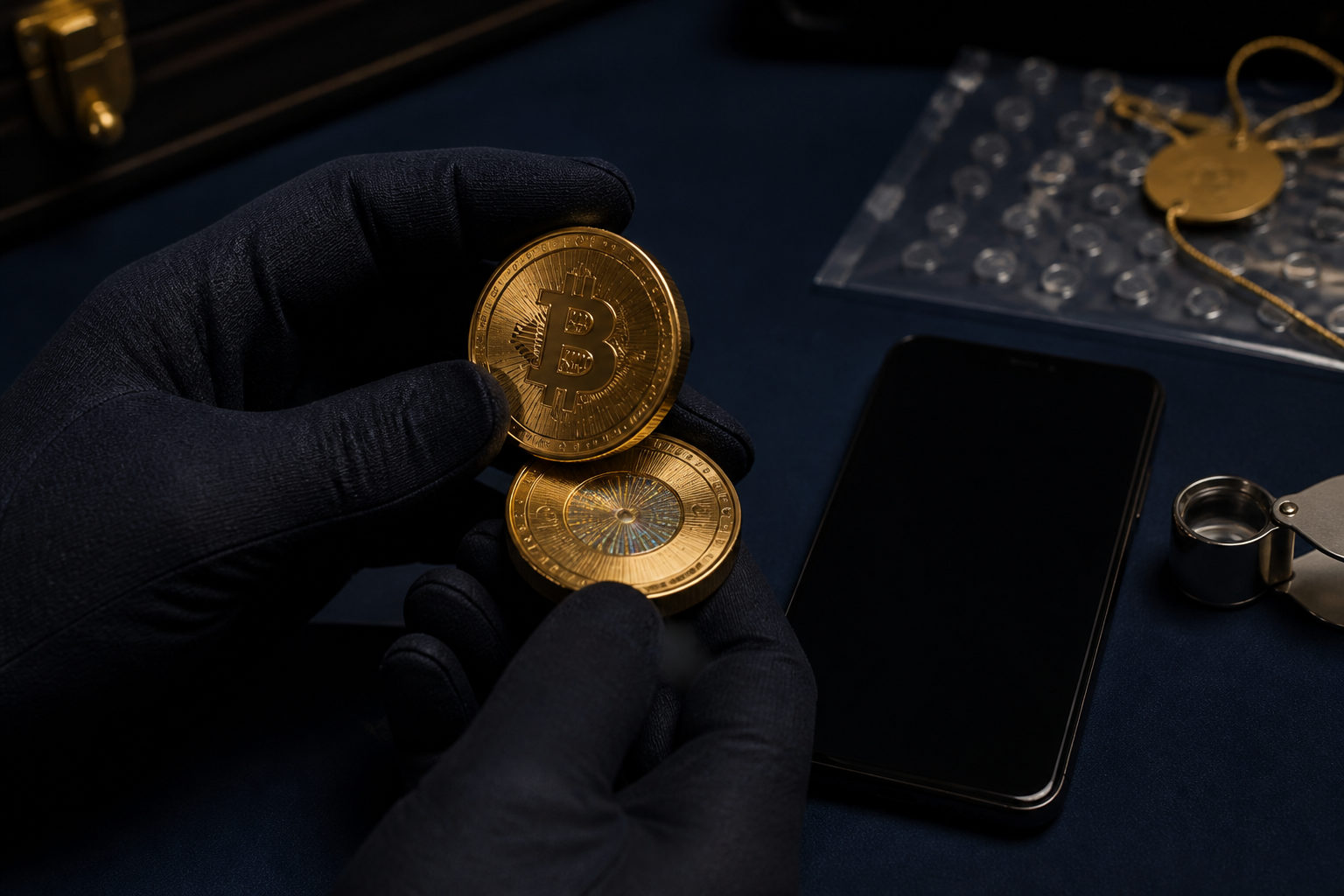
To redeem Casascius bitcoins, you need to safely access the private key sealed inside the physical coin and move the BTC to a wallet you control.
Understand what you are redeeming
Casascius bitcoins are physical coins associated with bitcoin held on-chain through a private key hidden under a tamper-evident hologram. That means a single item can carry two kinds of value at once: the BTC controlled by the hidden key, and the collectible value of the unopened physical piece itself.
This matters before you do anything else. If your main goal is to spend, store, or transfer the bitcoin, then you are focused on key access and fund movement. If your main goal is to preserve collectible value, opening the hologram may permanently change how the item is viewed by collectors.
People often search for how to redeem Casascius bitcoins when they really mean one of two things: extracting the BTC from the coin, or converting that BTC into cash later. Those are separate steps. Redemption starts with taking control of the on-chain bitcoin.
Checks to make before opening the coin
Start with the physical condition. Inspect the hologram for signs of lifting, puncture, resealing, edge disturbance, or any surface irregularity that suggests prior access. A coin can look clean and still require caution, so the visual check is only one part of the process.
The next step is more important: identify the public bitcoin address tied to the coin and review that address on a blockchain explorer. You are trying to answer a simple question before exposing the private key: does the address still hold BTC, or has it already been emptied? If the funds have already been moved, opening the coin will not restore them.
Before redemption, prepare a destination wallet that you control personally. In practice, that means a wallet where you hold the recovery phrase or private keys yourself, not a custodial account that someone else can freeze, delay, or misroute. Set this up first, confirm you can generate a fresh BTC receiving address, and make sure you understand how to verify that address before any transfer begins.
This preparation reduces pressure later. If you open the coin first and then scramble to choose software, create accounts, or compare wallet options, you extend the time during which the exposed private key is at risk.
How the redemption process usually works
Once you have checked the public address and decided that redeeming the BTC is the right move, prepare a controlled environment for the sensitive part. Use a device you trust, keep distractions low, and avoid handling private key material on shared or public systems. Many holders also prefer to install and review wallet software before the key is exposed, so they are not learning the interface mid-process.
Only then should you open the hologram and read the private key or the import information shown underneath. The exact presentation can differ from one physical piece to another, but the function is the same: that information gives spending power over the associated BTC. Anyone who sees the key, records it, or captures it in cloud-synced photos may be able to act on it.
After you have the key, there are two common paths. One is importing the private key into a compatible wallet so the original address is managed directly. The other is using that key to sweep or transfer the BTC into a new address in your own wallet. For many users, sweeping to a fresh address creates a cleaner result because the old key is used once for extraction and then retired from normal storage.
Before sending anything, verify that the receiving address belongs to your wallet and is intended for bitcoin on the correct network. Once the transfer is broadcast, review the transaction in a blockchain explorer and confirm that the destination address matches your intended address. Redemption is not complete when you merely reveal the key; it is complete when the BTC is visible at the new address you control.
If you later want to sell the bitcoin, that is a separate decision. You do not need an exchange to redeem Casascius bitcoins in the first place. An exchange only becomes relevant after the BTC has been moved into your custody and you decide to trade it.
Main risks during and after redemption
A common mistake is assuming that an intact hologram guarantees unspent BTC. The blockchain record is the stronger source of truth. Check the public address first, then decide whether opening the coin makes sense.
The highest-risk moment is key exposure. A private key can leak through a quick phone photo, clipboard malware, screen recording, browser autofill, cloud backup, or simple observation by another person in the room. That is why it helps to shorten the sensitive window: prepare first, open later, transfer soon after.
Another risk appears when people delay movement after revealing the key. Some holders uncover the key, save a copy “for later,” and leave the BTC in place while deciding what to do next. That creates an unnecessary gap between exposure and transfer. If your goal is redemption, the more disciplined approach is to finish preparation before opening and then move the BTC promptly to a fresh wallet address.
Third-party assistance carries a different kind of danger. If someone else handles the coin, reads the key, or asks you to send a photo of the hidden data, they gain the ability to spend the funds. Even if they intend to help, you cannot easily verify whether that key was copied, retained, or passed on. If you lack confidence, it is usually better to learn the wallet steps first than to outsource the most sensitive part.
There is also a trade-off that has nothing to do with malware or wallet software: collectible value. Some owners care about the BTC only. Others care about the physical object as a historical piece. Opening the coin may be the right move for one person and the wrong move for another, even when both understand the same technical process.
FAQ
Does opening the hologram mean the Casascius bitcoin has been redeemed?
No. Opening the hologram only gives you access to the private key. Redemption is effectively finished when the BTC has been moved to a wallet address that you control and you have verified the transfer on-chain.
Should I import the private key or move the BTC to a new address?
Many users prefer moving the BTC to a fresh address in their own wallet after using the hidden key once. That keeps future storage simpler and reduces the need to keep interacting with the old key. The exact method depends on what your wallet supports.
What if the public address already shows no BTC?
If the funds are already gone, opening the coin will not bring them back. At that point, the decision becomes a collectibles question rather than a redemption question. You would be evaluating the physical item, not extracting on-chain bitcoin.
Do I need an exchange to redeem Casascius bitcoins?
No. Redemption is about gaining control of the BTC by using the hidden key and moving the funds to your own wallet. An exchange only matters later if you decide to sell or swap the bitcoin after it is already in your custody.
Should the whole process happen online?
Checking the public address and broadcasting a transaction require an internet connection. Other parts of the workflow, such as preparing the wallet, understanding the interface, and arranging your environment, can be done first so the private key spends less time exposed during connected steps.
Before you start, have three things ready: confirmation that the public address still holds BTC, a self-custody wallet with a fresh receiving address, and a controlled environment for handling the hidden key. Those steps do more to protect a Casascius redemption than any last-minute fix after the hologram has been opened.