
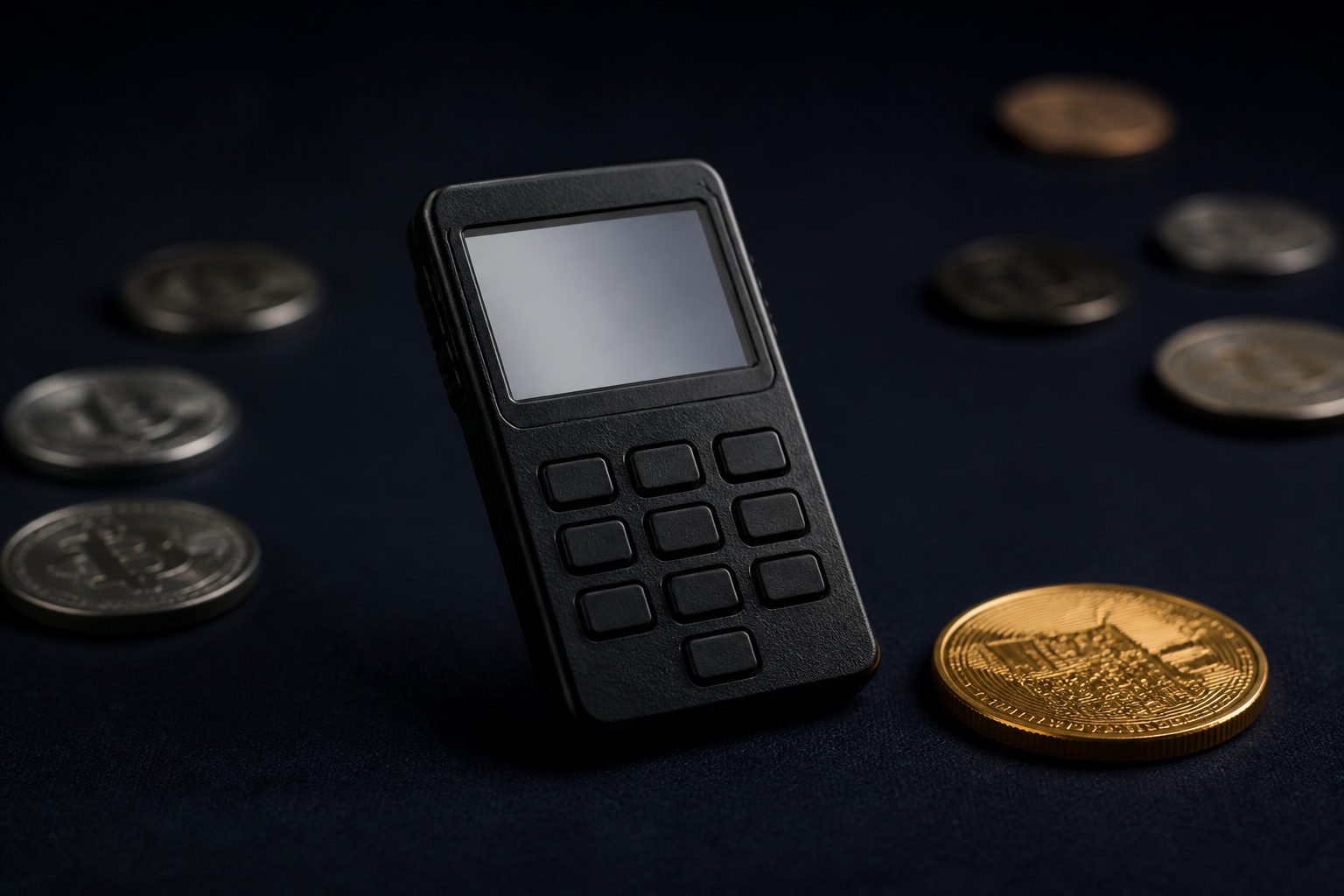
Yes. Coldcard is a Bitcoin-focused hardware wallet, built for storing keys, verifying details, and signing BTC transactions rather than managing many crypto assets in one place.
What “Bitcoin-only” actually means
When people ask whether Coldcard supports only Bitcoin, they are usually trying to answer two separate questions. One is practical: can it hold or manage other crypto assets the way a multi-coin wallet can? The other is about fit: does a narrower product make daily use easier or harder?
With Coldcard, the scope is clear. It is designed around Bitcoin use cases, so buyers should not expect it to serve as a general dashboard for Ethereum assets, stablecoins, or tokens on other networks. That focus shapes the setup flow, the software pairing, and the kind of user experience you get after purchase.
For someone who wants a dedicated device for BTC custody, that limitation may be the main appeal. For someone whose portfolio spreads across many chains, it is a meaningful constraint and should be treated as one before buying.
Why some users want a Bitcoin-only hardware wallet
A hardware wallet with a wide feature set can be convenient, but it also has to account for more asset formats, more transaction types, and more connection patterns. A Bitcoin-only device narrows the job. That can make the operating boundaries easier to understand, especially for users who care about self-custody and want fewer moving parts in the process.
That narrower scope also changes the mental load. If your device is used only for Bitcoin, you are less likely to bounce between unrelated token lists, network selectors, and permission prompts that belong to other ecosystems. The workflow stays tied to a single asset and a single set of concepts.
Some buyers prefer that clarity because they are building a long-term storage setup for BTC rather than looking for one wallet to do everything. In that setting, a specialized tool can make more sense than a flexible one.
There is a trade-off, of course. If you often move assets across different chains or want one device to cover every part of your crypto activity, Coldcard may feel too narrow from the start.
What to check before you decide to buy one
Are you mainly holding Bitcoin?
This is the first filter. If your main plan is to separate your BTC from exchange accounts or internet-connected wallets, Coldcard fits that goal much better than it fits a mixed-asset strategy. If you already know that you will be storing several kinds of crypto, you should expect to manage them with separate tools.
What wallet software do you plan to use with it?
Hardware wallets rarely exist in isolation. In normal use, they work with companion software that helps you view balances, build transactions, and complete signing flows. Before buying Coldcard, it makes sense to confirm that your preferred Bitcoin wallet software supports the way you want to work, whether that means a desktop-first setup or a more controlled signing routine.
The important point here is that compatibility is not just a box on a product page. It affects your everyday process: how you verify receiving addresses, how you prepare transactions, and how much friction you face during normal use.
Are you comfortable with a more deliberate setup style?
Coldcard tends to attract users who value explicit security steps and direct control. That often means a less casual learning curve. If you are new to hardware wallets, you should be ready to understand seed phrase handling, backup discipline, address verification, and the difference between signing a transaction and broadcasting it.
That does not make the device inaccessible to newcomers, but it does mean that a buyer looking for the most app-like, low-friction experience may want to study the workflow first instead of assuming every hardware wallet feels the same.
Do you want a mobile-first experience?
Some crypto users want a wallet that feels centered on quick phone use, with minimal setup and fast access to routine sending tasks. Coldcard is usually considered by people who put custody controls ahead of convenience. If most of your crypto activity happens on a phone, this is worth checking before you commit.
How the Bitcoin-only design affects real-world use
The first effect is clearer asset separation. Many users treat a device like Coldcard as a dedicated vault for BTC, while other assets stay elsewhere. That structure can reduce confusion because Bitcoin storage is not mixed into a single screen with unrelated chains, tokens, or app permissions.
The second effect is operational discipline. Once you move away from a multi-asset wallet, you often have to think more carefully about where each part of your holdings belongs. Some Bitcoin may be kept for long-term storage, some may stay in a hot wallet for spending, and non-Bitcoin assets may need a completely different setup. Coldcard fits best when you are willing to make those distinctions on purpose.
The third effect shows up when something goes wrong. If a user has a question about address checks, backups, or transaction signing, a Bitcoin-only device can narrow the troubleshooting path because there are fewer unrelated systems involved. That does not remove complexity, but it can make the source of a problem easier to identify.
Who Coldcard is likely to suit
Coldcard is generally a better fit for people who hold Bitcoin as their primary crypto asset, want strong control over custody, and do not mind managing other assets separately. It also appeals to users who prefer a device with a sharply defined role rather than one that tries to cover every crypto use case at once.
It may be less suitable for users who want one hardware wallet for every chain they touch, or for people who expect the product to function as a universal portfolio hub. If that is your goal, a broader wallet category may line up with your needs more closely.
Newer Bitcoin users can still consider Coldcard, but they should go in with the right expectation. The value of a specialized wallet shows up when you understand why dedicated key storage, backups, and transaction verification matter in the first place.
FAQ
Can Coldcard store Ethereum or stablecoins?
It should not be treated as a general multi-asset hardware wallet. If you need to manage Ethereum-based assets or stablecoins, you will usually need a different wallet setup for those holdings.
Does Bitcoin-only support make it too limited?
That depends on what you want the device to do. For a user focused on long-term BTC custody, a narrower feature set may actually reduce distractions; for a user active across many chains, it can feel restrictive.
Is Coldcard suitable for a beginner?
It can be, but only if the beginner is willing to learn the basics properly. Seed phrase storage, address verification, and transaction signing are core parts of the experience, not optional extras.
What if I start buying other coins later?
A common approach is to keep using Coldcard for Bitcoin and manage other assets with separate wallets. That split adds some overhead, but it keeps the role of each tool clear.
What should I verify before purchasing?
Check the official support scope first, then review whether your preferred Bitcoin wallet software matches your intended workflow. The key question is not only whether the device is compatible, but whether the whole setup suits how you plan to use it.
If your goal is simple and specific—keep Bitcoin in a dedicated hardware wallet with a clear custody model—Coldcard fits that brief well. If you want one device to handle every coin you own, you should sort your asset mix and workflow first, then choose a wallet category that matches them.