
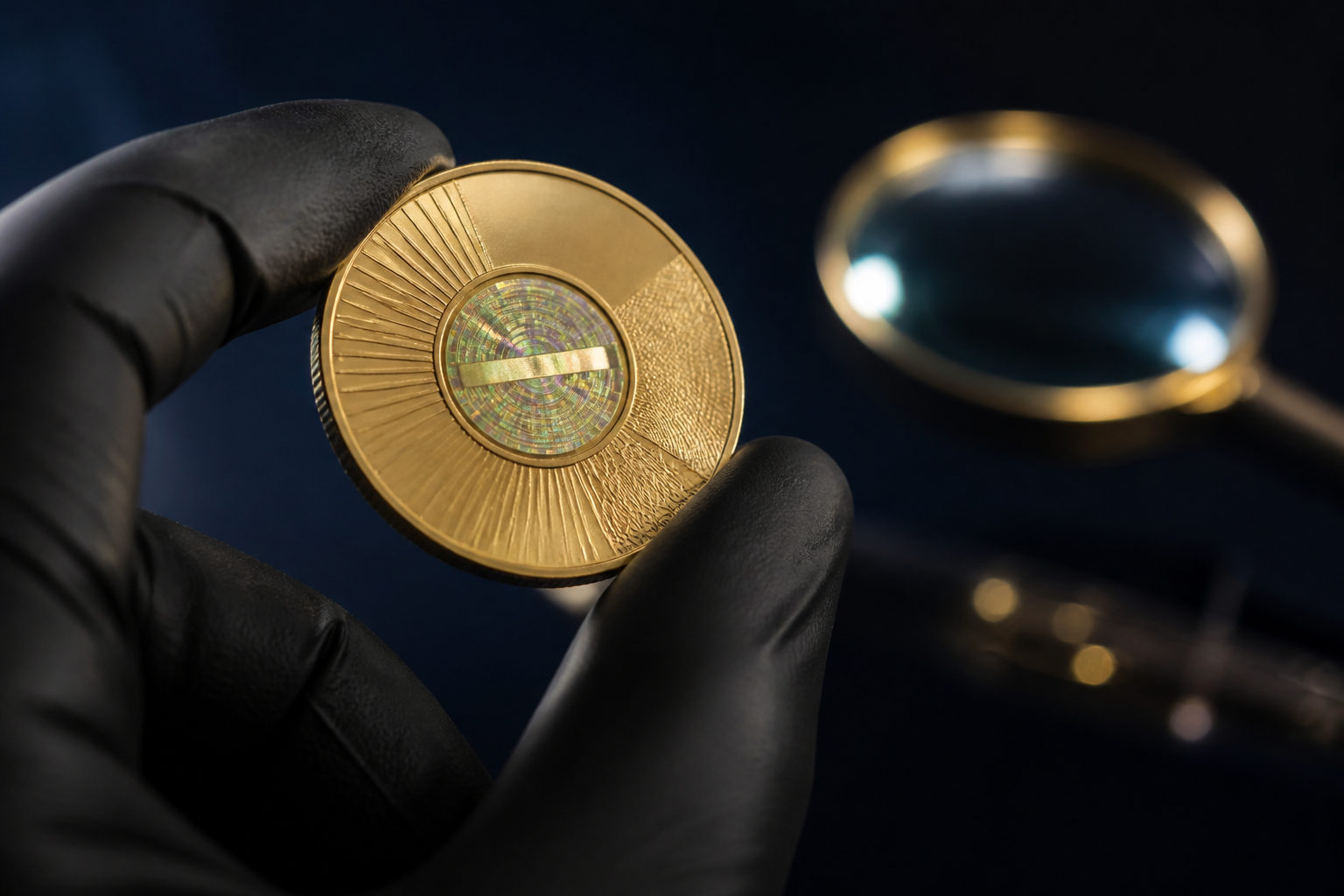
To check a physical bitcoin, start with one basic question: is it just a souvenir, or is it a physical item that holds access to real bitcoin on-chain? That split changes everything.
What a “physical bitcoin” actually is
Beginners often picture a bitcoin as something that can be held like a coin in a drawer. That is where most confusion starts. Bitcoin itself exists on the blockchain. A so-called physical bitcoin is usually either a collectible object with bitcoin branding, or a physical piece that hides a private key, redemption code, or other access information.
Those two categories may look similar from a distance. They should not be checked the same way. A collectible coin is judged like a collectible. An item that claims to represent spendable bitcoin has to be examined for seal integrity, hidden-key handling, public verification details, and signs that someone may have already copied what matters.
The first things to inspect
Check whether it has any real redemption structure
If the object only shows the bitcoin symbol, decorative patterns, a date-like marking, or a serial-style number, that proves very little. The serious question is whether there is a protected area for a private key or redemption data. No sealed key structure usually means no spendable bitcoin is attached to the object itself.
Some pieces use a tamper-evident sticker on the back. Others hide the sensitive information under a scratch-off layer or in a separate insert. Look closely. A pretty design is not the point. You are trying to see whether the item was built to keep secret information secret.
Study the seal, slowly
A seal can look fine at first glance and still be a problem. Tiny lifting at one edge, uneven adhesive, bubbles, pressure marks, odd reflections, or surface texture that suddenly changes near the hidden area can all matter. Small clues count here.
Turn the item under steady light. Do not rush. Check the edges of the sealed area, then the center, then the transition between sealed and unsealed sections. If something feels off but you cannot explain why, that hesitation itself is useful information.
Ask for information you can verify on your own
A seller saying “there is bitcoin inside” is not giving you much. For any physical item that claims to hold bitcoin value, you should at least understand what public information can be checked without exposing the private key. That may include a public address or a clear explanation of how the piece is meant to be verified while still sealed.
You do not want the seller to reveal the private key to prove honesty. That would defeat the whole setup. What you do want is a clean separation: public details for checking, private details still hidden. If the seller refuses to explain anything at all, a beginner has very little to work with.
See whether the description survives independent checking
This part gets missed all the time. A physical bitcoin should make sense even when you stop listening to the sales pitch. Can you match the markings on the item to the information the seller provided? Can you verify the public side without breaking the seal? Can you tell what exactly is being sold: a collectible, a sealed bearer item, or a bundle with extra paper inserts?
Here is the trap: finding a public address with activity does not prove your item is safe. It only shows that an address exists and has records on-chain. The private key may have been seen, copied, photographed, or stored elsewhere long before the item reached you.
A quick comparison table
| Type | Main trait | What to inspect | Main risk |
|---|---|---|---|
| Collectible coin | Bitcoin-themed design, no key structure | Material, finish, condition, origin | Mistaken for spendable bitcoin |
| Sealed physical bearer item | Private key or redemption data hidden inside | Seal condition, public verification details, consistency | Tampering or key exposure |
| Item with separate card or paper insert | Main object plus extra access material | Completeness, signs of opening, possible swaps | Copied, replaced, or missing inserts |
Common mistakes that lead people astray
The first mistake is trusting appearance too much. Weight, shine, packaging, engraving quality, even elaborate presentation boxes—none of that proves the attached bitcoin access is still under exclusive control. It only tells you the object was made to look convincing or collectible.
The second mistake is opening the sealed part “just to check.” That changes the item immediately. If the object had any premium tied to remaining sealed, that condition is gone. Security assumptions change too, because once the hidden information is exposed, the item no longer functions in the same way.
Another one is poor storage. Heat, moisture, friction, and pressure can distort adhesive, fade text, warp coatings, or make later inspection harder than it should be. When you receive the item, take clear photos of the sealed area, edges, markings, and any included insert before handling it much. Future you may need that record.
People also mix up a public address with spending authority. They are not the same thing. A public address can help you inspect the on-chain side. Spending bitcoin depends on control of the private key, and that is exactly the part you cannot assume is safe just because the outer shell looks untouched.
FAQ
Is a physical bitcoin an actual bitcoin coin I can hold?
Usually no. The object in your hand is a carrier, not the bitcoin itself. Without the related private key or redemption information, it is simply a collectible item.
How can I tell whether it is just a souvenir or something redeemable?
Look for a genuine sealed-key structure or a clear redemption method. If it has only visual bitcoin branding and no checkable access design, treat it as a collectible first.
If the seal looks unbroken, is that enough?
No. An intact seal improves confidence, but it does not prove the private key was never copied. If the source is unclear or the verification details are weak, the risk remains.
Should I open it to make sure it is real?
You can, but opening it changes the item right away. For pieces valued partly for being unopened, that affects both the security logic and the collectible side.
What is the most practical first step for a beginner?
Classify the item before anything else. Then document the details and check whatever public information is available. If the seller cannot support even that basic process, walking away is a valid result.
If you plan to buy or accept one, use this order
First decide what category the item belongs to. Then request close-up images of the sealed area and any public verification details. Once it is in your hands, document its condition before opening anything. After that, choose one path: keep it as a collectible, or move the bitcoin control to a wallet you manage yourself. That sequence cuts down a lot of avoidable mistakes.