
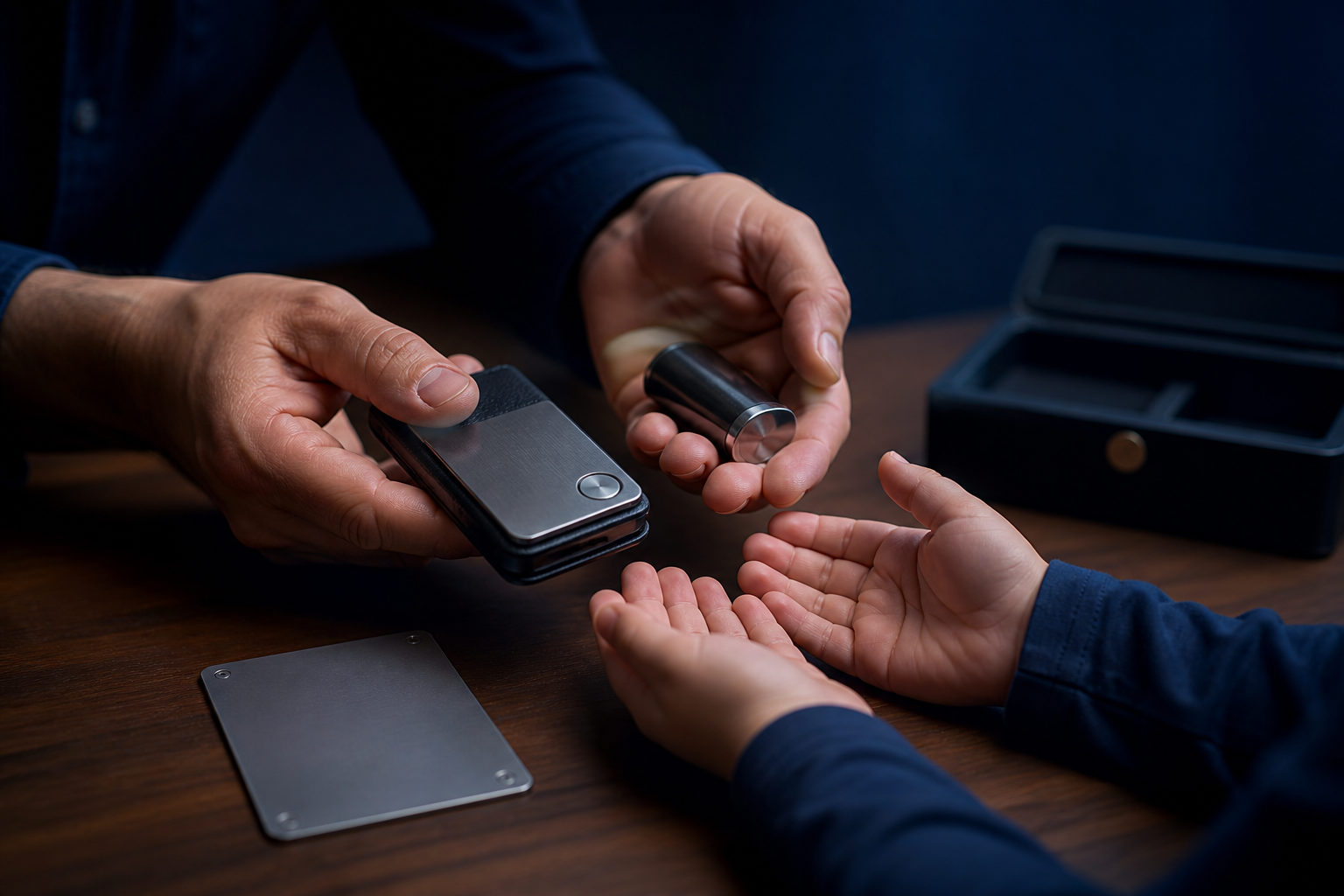
You can gift bitcoin to a child, but the key decision comes first: who controls the wallet now, when that control should pass, and how the backup and family records will work over time.
What you are really giving
When people ask how to gift bitcoin to a child, they often focus on the transfer. That is only one part of the job. In practice, the real asset is control over the private keys or recovery phrase. Whoever can restore the wallet can move the bitcoin.
That matters even more when the recipient is a minor. A child may be the intended owner, while a parent or guardian keeps operational control for years. That arrangement can make sense, but only if the roles are clear from the start: who is holding it, who it belongs to, and what needs to happen before the child takes over.
Your purpose should shape the structure. Some families want a long-term gift that the child receives later in life. Others want a teaching tool that introduces savings, scarcity, digital security, and how transactions work on the Bitcoin network. Those goals lead to different custody choices.
Common ways families handle it
There is no single best method for every household. The right setup depends on the child’s age, the adults involved, and whether the child is ready to interact with a wallet at all.
A parent or guardian holds a dedicated wallet
This is often the simplest approach. You create a separate wallet for the child’s bitcoin and keep it distinct from your own spending, trading, or long-term holdings. That separation makes future handover easier and reduces confusion about what portion was meant as the gift.
The main advantage is control. A young child does not need to manage seed phrases, device security, or wallet recovery. The weakness is also obvious: the adult still has full access, so the gift depends on trust, records, and a credible transfer plan.
A child-specific wallet with shared family awareness
Some families still keep custody with adults, but make sure more than one trusted person understands the setup. That does not mean everyone needs direct access at all times. It means the family has a practical path to recover the wallet or locate instructions if the primary custodian becomes unavailable.
This can reduce a common single-person failure point. If one adult is the only person who knows where the recovery materials are, the plan may collapse during an emergency, even if the bitcoin was meant for the child all along.
A staged gift with education built in
If the child is old enough to understand basic digital security, some parents split the process into stages. A smaller portion can be used to teach wallet basics, receiving addresses, transaction confirmation, and why recovery phrases matter. The larger portion stays under adult control until the child shows better judgment and safer habits.
This works well when the goal is both educational and financial. The child gets real exposure without being handed complete responsibility before they are ready.
The biggest risks usually appear after the transfer
Many gifting plans look complete on the day the bitcoin is sent. The weak spots often show up later, when devices change, records get lost, or family members discover that nobody wrote down how the handover was supposed to happen.
Do not leave the gift mixed into your main holdings
If you simply decide that part of your existing bitcoin stack “belongs to the child,” but keep it mixed with your personal funds, the arrangement can become messy fast. Future wallet moves, portfolio changes, or routine management may blur the boundary between your assets and the child’s gift.
A cleaner structure is to separate the child’s bitcoin from the beginning. That gives the gift its own storage path and its own paper trail. Years later, that separation can save a great deal of confusion.
Backup quality matters more than wallet branding
People often spend too much time comparing wallet features and too little time thinking about recovery. If the recovery phrase is exposed, the bitcoin can be taken. If the phrase is lost and the device fails, the family may lose access on its own.
For a child’s gift, avoid casual storage habits. A screenshot in a photo gallery, a note sent through chat, or a copy buried in an email account creates obvious security and continuity risks. A better plan is one that trusted adults can understand and use if recovery ever becomes necessary.
Write down the transfer conditions
“I’ll give it to them when they’re older” sounds clear until real life tests it. Older by what standard: age, maturity, knowledge, or a family milestone? If the conditions exist only in memory, disagreement is easy.
It helps to leave plain-language instructions covering ownership, current custodian, where recovery information is stored, and what needs to happen before control passes to the child. The document does not need legal wording to be useful. It needs to be readable and specific.
A practical decision order before you send anything
If you are still deciding how to gift bitcoin to a child, start with the structure and move to the transfer last. That order usually leads to fewer mistakes.
- Define the purpose. Is this a birthday gift, a long-term savings gift, or a teaching tool?
- Assign present-day control. Decide who keeps custody now and who else should know how the setup works.
- Separate the storage. Give the child’s bitcoin its own wallet or clearly isolated holding path.
- Create a recovery plan. Think through device loss, forgotten instructions, and what happens if the main custodian cannot act.
- Keep records of the gift. Record the intent, the wallet used for the child, and the family understanding around custody and handover.
- Test before the full transfer. Confirm that the receiving setup works before treating the gift as complete.
This sequence keeps your attention on the parts that still matter years later. Sending bitcoin is easy compared with preserving access, clarity, and family understanding over time.
Legal, tax, and family-record issues should not be an afterthought
Gifting bitcoin to a child can raise questions about gifts, guardianship, tax reporting, or family asset records. The rules vary by jurisdiction, and minors may be treated differently from adults. For that reason, it is wise to check the local requirements that apply to your situation and get professional advice when needed.
Even when formal reporting is not the main concern, internal family documentation still matters. A simple record of intent, custody, wallet separation, and future handover conditions can prevent confusion later. Without written notes, families often discover that everyone remembers the arrangement differently.
There is also an important distinction between an exchange account and actual wallet control. If the bitcoin stays in your own exchange account and you merely say it is for the child, that may still function like your asset in practice until the custody and transfer process are clearly separated.
FAQ
Can a young child receive bitcoin if they cannot manage a wallet yet?
Yes. A child can be the intended beneficiary while a parent or guardian keeps custody for a period of time. The main point is to separate ownership intent from current control.
Should I send the gift to an exchange account?
That depends on your long-term plan. If the goal is a real gift with a future handover, many families prefer a structure that makes custody, records, and control boundaries easier to understand.
When should a child get the recovery phrase?
Only after the child can handle the security responsibility that comes with it. That includes understanding what the phrase does, why it must stay private, and how poor storage habits can lead to permanent loss.
Do I need a separate wallet for the child?
It is not the only way to do it, but it is often the clearest one. Separate storage makes ownership intent easier to track and makes later transfer less confusing.
Is it better to gift all the bitcoin at once or in stages?
For families that care about both safety and education, a staged approach can work well. The child can learn with a smaller amount while the larger gift remains under planned adult custody until a later handover.
Before you send any bitcoin, make sure the child’s storage setup, backup path, written handover notes, and family awareness are all in place; those details will determine whether the gift is still accessible and clearly attributable years from now.