
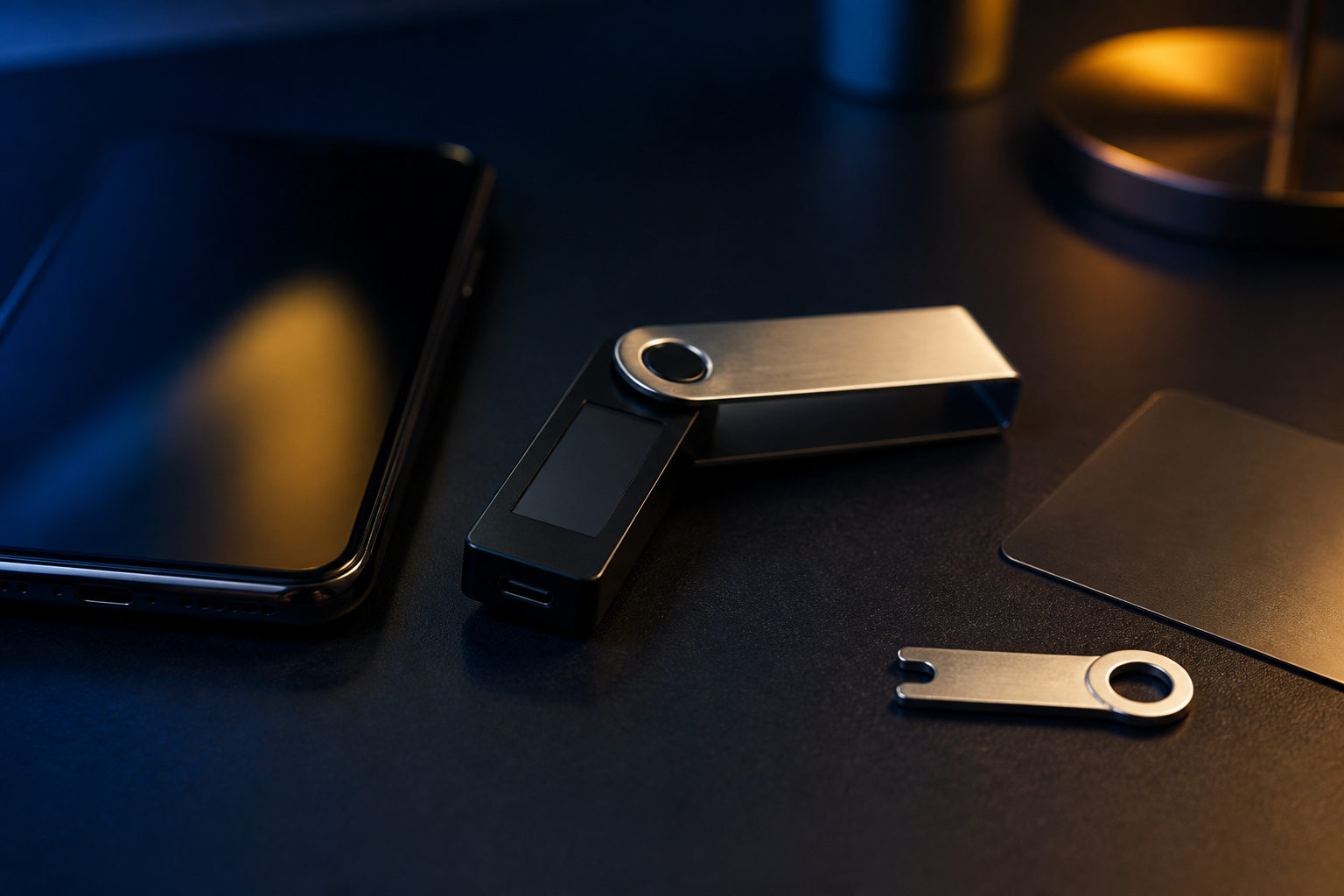
The best bitcoin wallet depends on what you need it to do. A wallet for long-term storage, daily payments, and first-time learning should not be judged by the same standard.
What makes a bitcoin wallet “best”
When people look for the best bitcoin wallet, they are usually asking a deeper question: where should control sit, and how much responsibility can they manage safely? A wallet is not a place where bitcoin is physically stored. It is a tool for controlling the private keys that authorize access on the Bitcoin network.
That changes how a good wallet should be evaluated. The real test starts with key control, backup clarity, recovery options, and the chance of making a costly mistake during normal use. Fancy features may help some users, but they do not matter much if the setup encourages weak backups or confusing transaction steps.
Main wallet types and who they fit
Most bitcoin wallets fall into three broad groups: custodial wallets, software wallets, and hardware wallets. Each solves a different problem, and each asks the user to accept a different level of responsibility.
Custodial wallets
A custodial wallet is managed by a platform or service provider. This is often the easiest entry point for someone who wants to buy bitcoin, see a balance, and send or receive funds without learning key management on day one.
The trade-off is straightforward. The provider controls the keys or controls access to them on your behalf, so your ability to move funds depends on account access, platform rules, and service availability. That may be acceptable for convenience or short-term activity, but it is a different model from personal custody.
Software wallets
Software wallets run on a phone or computer and usually let the user manage their own recovery phrase or private keys. They are practical for regular payments, balance checks, and learning how Bitcoin transactions work in a direct way.
The weakness is the device environment. If the phone is compromised, the computer is infected, or the recovery phrase is stored in cloud notes, screenshots, or chat apps, the benefits of self-custody start to erode. A software wallet can be excellent for active use, though it may not be the place where every holding belongs.
Hardware wallets
Hardware wallets keep key operations inside a dedicated device, which reduces direct exposure to ordinary internet-connected systems. For people holding bitcoin over a long period, this type is often the stronger fit.
That does not make it automatic protection. The user still has to initialize the device carefully, verify receiving addresses, keep the recovery phrase safe, and understand the difference between losing the device and exposing the backup. A lost device can be replaced. A leaked recovery phrase is a much harder problem.
How to compare wallets in a useful way
Brand recognition alone does not tell you much. A better approach is to check the parts that shape control, recovery, and error prevention.
- Who controls the keys: If the wallet does not give you a clear way to back up and recover access, you may not be the true controller of the funds.
- Backup process: A good wallet makes backup hard to ignore. It should guide you through recording the recovery phrase and make the process understandable even for a first-time user.
- Recovery path: Before choosing any wallet, know what happens if your phone is lost, your computer fails, or the app is deleted. If you cannot explain the recovery process to yourself, the setup is incomplete.
- Address verification: Sending bitcoin to the wrong address is usually irreversible. A wallet that makes address review easy reduces the chance of clipboard tampering or simple human error.
- Fee controls: The wallet should help you understand transaction fee choices. If fee behavior is hidden behind vague labels, new users can end up confused about delays or overpaying without understanding why.
- Transparency: Open-source software can be inspected by the wider community. That does not guarantee safety, but it does make independent review easier than a closed black box.
Choose by use case, not by feature count
If you are just starting and want to learn the basics of receiving and sending bitcoin, a software wallet is often enough. It gives you a practical way to understand addresses, confirmations, and transaction fees without adding too much setup overhead.
If your main goal is long-term storage, a hardware wallet is usually the stronger option. The value is in separating sensitive key actions from devices used for everyday browsing, downloads, and messaging.
People who trade or move funds often may want two layers: one wallet for active use and another for storage. That split makes risk boundaries easier to manage. If the everyday device is exposed, the damage does not automatically extend to the entire balance.
There are also setups for shared control, such as multisignature wallets. These distribute authorization across more than one key, which can reduce the effect of a single mistake or a single compromised device. They also bring extra complexity in setup and recovery, so they are better treated as a planned system than a casual upgrade.
Common wallet mistakes happen outside the wallet app
Many losses have less to do with the wallet name and more to do with habits around it. A recovery phrase stored in email drafts, cloud drives, photo galleries, or chat histories is far easier to expose than many users expect.
Download sources are another weak point. Fake sites, copied app names, and search results that imitate legitimate pages can cause more harm than choosing the wrong wallet category. Verifying the source before installation and paying attention during first-time setup are basic security steps.
Users also confuse wallet passwords with recovery phrases. A password often protects local access to a device or app. The recovery phrase is what allows the wallet to be restored elsewhere. Those two things serve different purposes, and mixing them up leads to dangerous assumptions.
Habits that matter more than rankings
- Test with a small amount first: Before relying on a new wallet, complete a small send and receive cycle so you can confirm that you understand the flow.
- Keep backups offline: A recovery phrase should be stored on an offline medium and kept away from ordinary device access.
- Plan recovery before trouble happens: You do not need to restore the wallet repeatedly, but you should know what information is required and where it is kept.
- Separate purposes: Daily spending, long-term holding, and shared control are easier to manage when they do not all live inside one arrangement.
- Be alert to social engineering: Anyone asking for your recovery phrase, requesting screen sharing, or offering to “help” move funds should be treated as a serious risk.
FAQ
What kind of bitcoin wallet is easiest for beginners
For many new users, a software wallet is the most practical starting point because it makes sending and receiving easier to learn. That works best when the device is clean and the backup is handled with care from the start.
Is a hardware wallet enough for long-term bitcoin storage
A hardware wallet improves key isolation, but it does not replace careful backup management. If the recovery phrase is exposed or recorded badly, the device itself cannot fix that mistake.
Can I use an exchange wallet as my main bitcoin wallet
You can use it for convenience or short-term activity, but it is still a custodial arrangement. If personal control matters to you, it helps to keep a clear line between platform access and a self-custody wallet.
Do I need more than one bitcoin wallet
Not always. The answer depends on whether you are separating daily use from storage and whether more than one person needs approval authority. One wallet can be enough for some people, while others benefit from a split setup.
Does the best bitcoin wallet mean the one with the most features
No. For most users, the better wallet is the one that makes key tasks clear: backup, recovery, address verification, and normal transaction use without confusion.
Before choosing any wallet, write down your actual goal: learning, spending, storage, or shared control. Once that is clear, compare custody, backup, and recovery paths first. That method is more useful than chasing a universal answer to the best bitcoin wallet.