
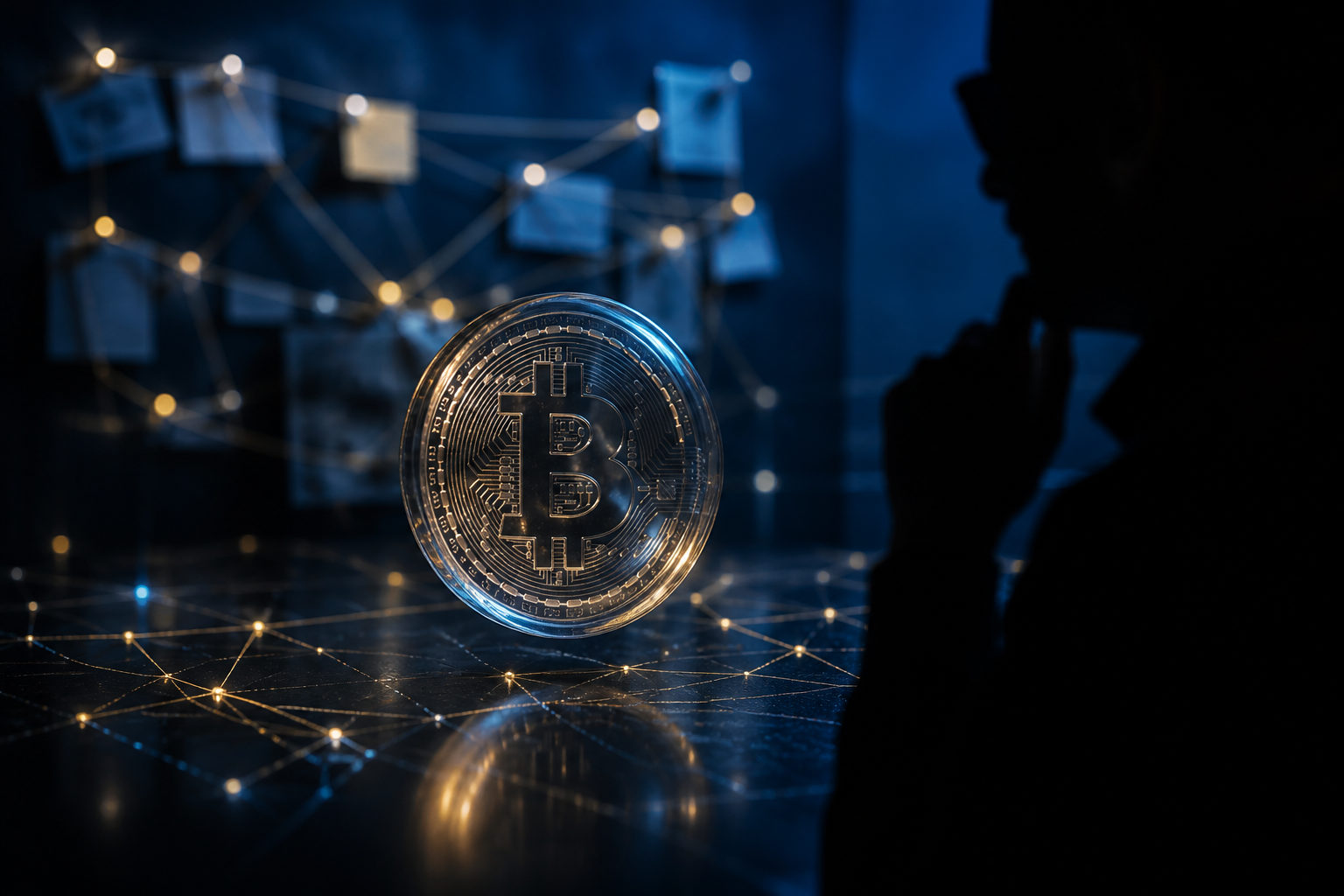
Can governments track bitcoin transactions? Yes, in many cases they can trace the movement of funds on the blockchain. The harder part is linking a wallet address to a real person, and that usually depends on records outside the chain.
Why bitcoin transactions can be traced
Bitcoin is often described as anonymous, but that shortcut causes confusion. The bitcoin ledger is public, so anyone can inspect which address sent funds, which address received them, and how coins moved from one point to another.
A better description is pseudonymous. The record shows addresses rather than legal names. Think of it as a public bookkeeping system where every line is visible, permanent, and ordered, yet the entries use account labels instead of full identity cards.
That distinction matters. There are really two separate questions here: can someone see the transaction, and can they tell who controls the address. The first answer is often yes. The second depends on whether outside clues can connect that address to a person, business, or service.
How governments usually approach tracking
The easiest way to picture the process is as a puzzle. The blockchain supplies the trail of money. Off-chain records fill in the names, devices, account histories, and business relationships that the chain does not show by itself.
| Stage | What can be observed | What helps complete the picture | Main limitation |
|---|---|---|---|
| Read the blockchain | Transfers between addresses, sequence of activity, fund movements | Blockchain explorers and address analysis | Addresses appear first, not real-world names |
| Identify service-related wallets | Some addresses may belong to exchanges, custodians, or payment services | Known labels, public clues, investigative work | Labels may be incomplete or wrong |
| Tie activity to a person | Address use becomes linked to a specific user | Account opening records, login history, device traces, banking records | More intermediaries mean more uncertainty |
| Reconstruct the flow | How funds were split, combined, and moved again | Pattern analysis across many related addresses | Longer paths create more noise |
For everyday users, the most exposed point is often the exchange. If someone buys bitcoin through a platform that collects identity information, the exchange may hold the records that connect a customer account to deposit addresses, withdrawal addresses, and transaction timing. Once that link exists, blockchain activity stops being just a string of characters.
Governments and investigators also look at behavior, not just single transfers. If a set of addresses tends to move together, sends funds in a repeated pattern, or regularly interacts with a known service, that pattern may suggest common control. One transaction can be ambiguous. A series of transactions can say much more.
What makes identification easier
Some bitcoin activity is much easier to tie back to a real person than others. In many cases, users create the connection themselves by mixing public addresses, exchange accounts, purchase records, and online profiles.
| Situation | Why it becomes easier to trace | A common misunderstanding |
|---|---|---|
| Using a regulated exchange | The platform may keep account data and deposit or withdrawal records | Sending coins to a personal wallet erases the earlier link |
| Posting a receiving address in public | Social profiles, donation pages, or shop pages can attach identity clues to the address | Reusing the same address has little effect |
| Repeatedly consolidating many addresses | It can suggest that one user controls all of them | More addresses always mean more privacy |
| Paying for identifiable goods or services | Orders, support chats, shipping details, or invoices may match the on-chain transfer | Only the blockchain matters |
Address reuse is a good example. A public address that stays visible for a long time acts like a fixed collection point. Each new transfer adds context, and over time outside observers may build a much richer picture of who stands behind it.
Another source of confusion is the moment of exposure. People often assume identity leakage happens only when they send bitcoin. In practice, the stronger clues can appear during account registration, customer support, payment processing, delivery, tax reporting, or disputes. The transaction on the chain is only one part of the story.
What makes tracking harder
Tracing is powerful, but it is not magic. An address does not come with a built-in legal name. If someone avoids tying wallet activity to public identities, limits visible patterns, and does not rely on a narrow set of clearly labeled services, attribution becomes more difficult.
Still, difficult does not mean impossible. Blockchain records remain available, so a transaction that looks vague today may become clearer later if a new exchange record, merchant file, or public statement fills in the missing piece. Old transfers do not vanish just because nobody could identify them right away.
| Factor | Effect on tracing | Reason |
|---|---|---|
| No direct link to a real-world identity | Makes attribution harder | There is no immediate mapping from address to person |
| Repeated use of one public address | Makes attribution easier | Activity becomes concentrated and easier to label |
| Simple and predictable fund flows | Makes attribution easier | The chain of movement is easier to follow |
| Off-chain records held by exchanges or merchants | Makes attribution much easier | Those records can connect on-chain activity to an account holder |
A useful way to put it is this: the blockchain reveals relationship maps between addresses, while off-chain records reveal who may control them. Governments become far more effective when they can combine both.
How bitcoin differs from bank transfers and cash
Comparing bitcoin with bank transfers and cash helps clear up the privacy question. Bitcoin makes transaction history public, but names are not attached by default. Bank transfers are usually tied to identified account holders, yet the ledger is not open to the public. Cash leaves fewer shared records in small face-to-face use, though tracing it later often depends on physical evidence.
| Method | Is the ledger public? | Are real identities shown by default? | What tracing depends on |
|---|---|---|---|
| Bitcoin | Yes | No, not directly | On-chain paths plus off-chain identity clues |
| Bank transfer | No | Usually yes within the banking system | Institutional records and compliance processes |
| Cash | No shared public ledger | Usually no | Physical evidence, surveillance, and counterparties |
That is why bitcoin is often misunderstood. It is visible in a very unusual way: the movement of funds is open to inspection, while the names behind those movements may remain uncertain until more evidence appears.
FAQ
Can a government see my real name directly on the blockchain?
Usually no. The blockchain mainly shows addresses and transaction history, while real names tend to come from exchange records, payment data, or other off-chain material.
If I move bitcoin to my own wallet, is the source still visible?
In many cases, yes. Moving coins to a self-custody wallet changes control of the funds, but it does not erase the earlier transaction trail that remains on the public ledger.
Does using a new address every time solve the problem?
It can reduce exposure, since observers have fewer chances to stack many payments onto one visible address. Even so, links can still appear if those funds later return to the same identifiable point or touch accounts tied to your identity.
Can governments freeze or reverse bitcoin transactions?
They cannot simply edit the bitcoin ledger the way someone might alter a private database. In practice, control is more likely at the edges, such as exchange accounts, custodial services, or other regulated entry and exit points.
How can a regular user tell whether a bitcoin transaction is easy to trace?
Start by asking whether the transaction passed through an exchange that knows the account holder. Then check whether the address appeared in public, and whether invoices, orders, messages, or payment receipts could connect the transfer to a person.
If you want a practical way to judge exposure, break any bitcoin payment into four parts: wallet address, exchange account, payment record, and public identity. The risk usually comes from the links between those parts, not from the blockchain entry alone.