
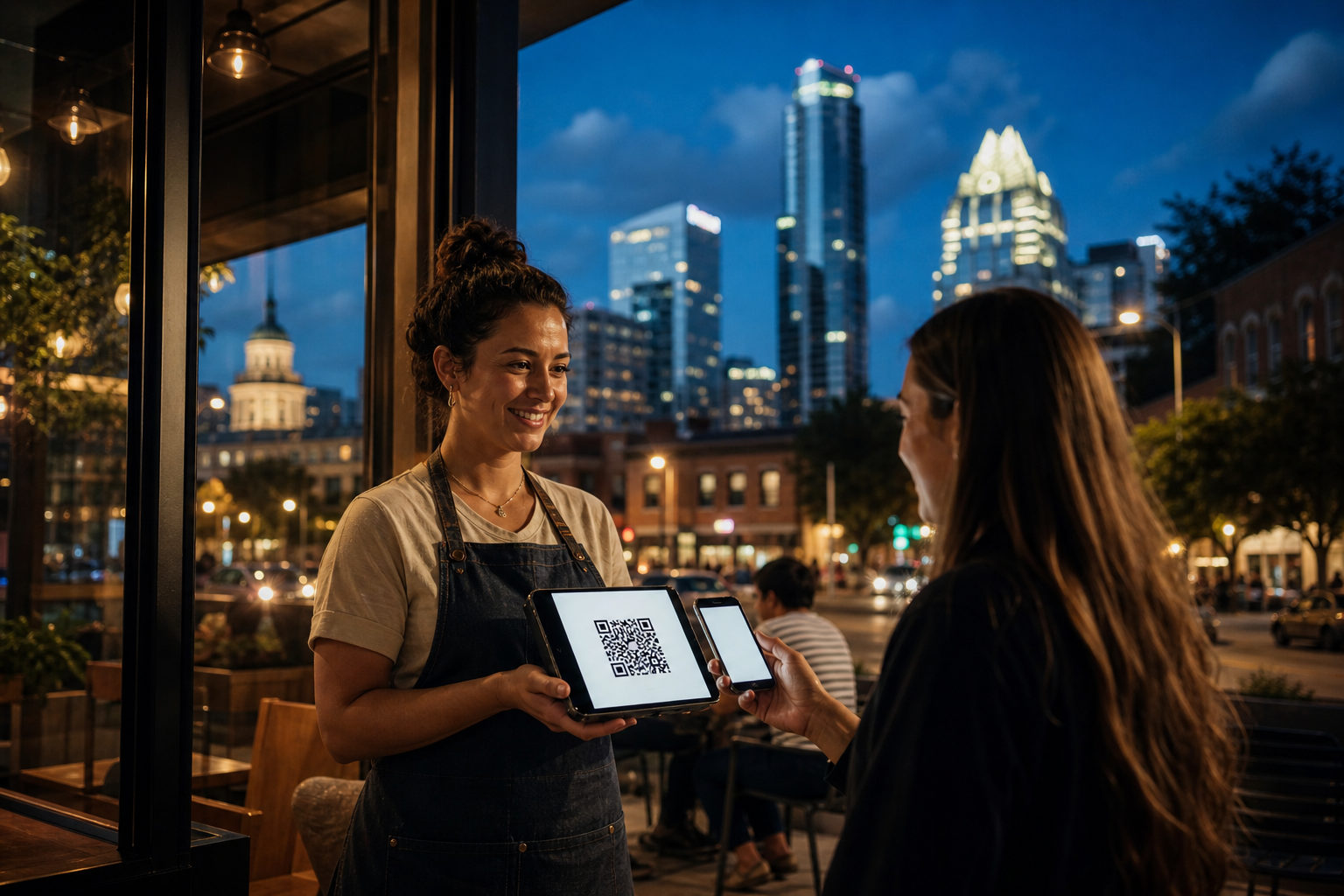
If you want to know who accepts Bitcoin in Austin, the safest answer is this: do not rely on a fixed list. Use a repeatable check process to confirm that a specific merchant still accepts Bitcoin, understand how payment works, and test the flow before sending a full amount.
Start with verification, not a merchant list
People often search this topic because they want a quick answer: which stores, restaurants, or service providers in Austin take Bitcoin right now. The problem is that real-world acceptance changes. A business may stop taking Bitcoin after switching point-of-sale software, changing staff procedures, or dropping a third-party payment tool. One location may accept it while another location under the same brand does not.
That is why a static list is less useful than a method. If you know how to verify a merchant properly, you can use the same approach anywhere in Austin and avoid most of the mistakes that lead to failed payments or scams.
Step 1: Define the type of purchase before you search
What to do
Decide what kind of payment you are trying to make before looking for a seller. A coffee purchase, a meal, a retail item, and an in-person service all involve different workflows. Check the merchant's public payment information first, then contact the specific location directly to ask whether it currently accepts Bitcoin.
Why this matters
Bitcoin acceptance is rarely the main headline on a business page. Some merchants support it quietly through a payment processor. Others used to support it and stopped. Searching by category first helps you avoid wasting time and keeps you focused on merchants that actually fit your immediate need.
What to watch out for
- Give more weight to a merchant's own public statements than to customer comments.
- If the business has multiple locations, confirm the exact store you plan to visit.
- A Bitcoin sticker on a door does not prove that the payment option is still active.
- If someone asks you to move the conversation to a private chat app before explaining payment, treat that as a warning sign.
Step 2: Ask four direct questions before you go
What to do
Before heading out, contact the merchant by phone, store messaging, or in person and ask four things. First, do you currently accept Bitcoin directly? Second, do you use an on-chain payment flow or a third-party checkout tool? Third, how is the payable amount shown and locked in at checkout? Fourth, how are refunds handled?
Why this matters
At first glance, the question sounds simple: yes or no. In practice, the answer affects fees, timing, checkout speed, dispute handling, and refund expectations. A merchant that says yes but cannot explain its own payment procedure is not ready for a smooth transaction.
Clear answers before arrival reduce friction. You do not want to stand at the counter downloading a wallet update, waiting on a weak mobile signal, or arguing over whether the amount on the screen is still valid.
What to watch out for
- If the staff answer is vague, such as “I think so” or “someone did that before,” do not treat it as confirmation.
- If they cannot explain how the checkout amount is generated or who verifies payment, pause the transaction.
- Refund rules should be discussed before payment, not after a problem appears.
- If you are told to send Bitcoin to a personal wallet instead of a store checkout screen, risk goes up fast.
Step 3: Verify the checkout screen at the counter
What to do
Once you are on site, do not scan immediately. Ask to see the actual payment screen and check whether it clearly shows the order, the amount due, the asset being requested, and any time limit tied to that quote. If all you see is a reused wallet address with no order details, ask more questions before doing anything.
Why this matters
A proper Bitcoin checkout flow should make the transaction context clear. That protects both sides. It reduces confusion around changing quotes, reused addresses, manual bookkeeping mistakes, and claims that payment was meant for a different order.
For the customer, a clear checkout interface is one of the best signals that the merchant truly has a working process for Bitcoin payments rather than an improvised setup.
What to watch out for
- Confirm the asset. “We accept crypto” does not automatically mean Bitcoin.
- Confirm the payment method. Make sure the merchant is actually asking for Bitcoin and not a different asset or route.
- Check whether the payable Bitcoin amount is shown clearly, not just the dollar bill.
- Do not scan a random printed QR code sitting near the register unless the merchant can prove it belongs to the active order.
Step 4: Use a small test payment when possible
What to do
If the merchant allows it, send a small test payment first. Wait until the store can see that the payment has been detected, then complete the rest. This is especially useful when it is your first time using Bitcoin at that business, your first time using that wallet setup, or when the internet connection at the location is unreliable.
Why this matters
Bitcoin transactions are not something you casually reverse after the fact. A test payment checks several things at once: whether the QR code is correct, whether your wallet reads it properly, whether the merchant knows how to monitor incoming payments, and whether both sides agree on what counts as payment received.
This is not about distrust. It is about reducing avoidable errors before sending the full amount.
What to watch out for
- Ask first whether split payment is acceptable.
- If the merchant insists on full payment in one shot but cannot explain the verification process, think carefully before proceeding.
- Keep records of the order screen, the payment screen, the amount, and the time.
- If someone asks you to “send another one just to check” without a clear reason, stop there.
Step 5: Put scam prevention ahead of convenience
What to do
In a city where Bitcoin is a familiar topic, real businesses are not the only thing you may run into. Fake support agents, fake QR codes, fake event promotions, and “I can pay on your behalf” offers are all possible. Use a simple filter: if the process moves away from the merchant's formal checkout, requests payment to a private address, pressures you to act fast, or refuses to provide an order record, treat it as high risk.
Why this matters
Most payment scams do not depend on advanced technical tricks. They depend on urgency and confusion. A person who is eager to complete a purchase is easier to push into skipping basic checks. The moment the flow moves from a store-managed process to a personal wallet or private chat, your protection drops sharply.
What to watch out for
- Be careful with “I will pay for you.” There is no good reason to send Bitcoin to a middleman just so they can settle the bill.
- Be careful with “top up first, spend later” demands from unfamiliar businesses.
- Be careful with unusually aggressive discounts tied to immediate crypto payment.
- Be careful when staff say the checkout system is down and ask you to pay an owner's wallet directly.
- Be careful using public Wi-Fi while operating your wallet.
Step 6: Think beyond acceptance and consider total friction
What to do
Before paying, look at the whole experience, not just whether Bitcoin is accepted. Consider network fees, waiting time, your own comfort with wallet controls, and what happens if you need a return or cancellation. For a low-value purchase that needs to be fast, a card may be simpler even if the merchant does accept Bitcoin.
Why this matters
A payment method can be valid and still be the wrong fit for a specific transaction. Bitcoin offers verifiable transfer, but it also means mistakes such as a wrong address, a wrong amount, or an expired quote can be harder to unwind than a normal card payment. If you understand that before reaching the counter, you make better decisions.
What to watch out for
- Make sure your wallet shows fee details and transaction status clearly.
- If the store has no consistent rule for when payment counts as complete, do not rush.
- If there is any chance you may need a refund, ask how it is handled before you pay.
- If you are doing this mainly to try the process, start with a small purchase.
Step 7: Build your own reusable Austin checklist
What to do
When you successfully use Bitcoin with a merchant in Austin, do not just remember the business name. Record the process. How did you confirm acceptance? What did the checkout screen look like? Did staff know what they were doing? Was the refund policy clear? Did the merchant use a structured flow or an improvised one?
Why this matters
A personal checklist is more useful than a list of names that may be outdated next week. Once you know what a solid Bitcoin checkout looks like, you can test the next merchant against the same standard. That makes you less likely to trust a weak process just because someone says they accept Bitcoin.
What to watch out for
- Group businesses into categories such as verified by you, needs reconfirmation, and not recommended.
- Note your own preferences, such as whether you are comfortable waiting or making split payments.
- Do not post wallet screenshots with full transaction details if they expose personal information.
FAQ
Which places in Austin accept Bitcoin right now?
There is no permanent public list that stays accurate across all businesses and all locations. The better approach is to identify the type of purchase you want to make, then verify the exact merchant directly before you go.
Even when two locations share a brand, their payment setup may differ. Always confirm the specific store, then confirm again at checkout.
How can I tell whether a merchant really accepts Bitcoin?
Ask for a proper checkout screen tied to your order. It should show the amount due, the requested asset, and enough context to connect the payment to the purchase.
If the merchant only offers a fixed wallet address and cannot explain the bookkeeping process, be cautious. That is not the same as a clear retail checkout flow.
What is the most common mistake when using Bitcoin in person?
The biggest problems usually come from process errors, not from Bitcoin itself. People skip checks on the payment screen, assume “crypto accepted” means Bitcoin, ignore refund policy, or trust a staff member who does not know how to verify payment.
Another frequent issue is being redirected into a private payment arrangement. Staying inside the merchant's formal process avoids many of these problems.
Does “we accept crypto” mean the store accepts Bitcoin?
No. That phrase is broad. A merchant may accept only certain assets, use only one kind of checkout tool, or have different rules for different payment methods.
Ask the merchant to state clearly that Bitcoin is accepted and to show the matching checkout method before you send anything.
What should I do if I paid and the merchant says nothing arrived?
Do not send a second payment right away. First, review your wallet record, the QR code you scanned, the order details, and the time of payment. Then ask the merchant to check whether the issue is a delay, staff confusion, or an expired checkout quote.
If they cannot explain the problem but keep pushing you to pay again, stop. Keep your records and sort out the first transaction before doing anything else.
If you plan to use Bitcoin in Austin, update your wallet before leaving, turn on basic security protections, and only pay when the merchant shows a clear formal checkout process. With a new merchant, start small and keep complete records of the transaction.
Disclaimer: This article is for informational and educational purposes only and is not investment, financial, or legal advice. Crypto assets are highly volatile and you could lose your entire investment. Do your own research and decide carefully.