
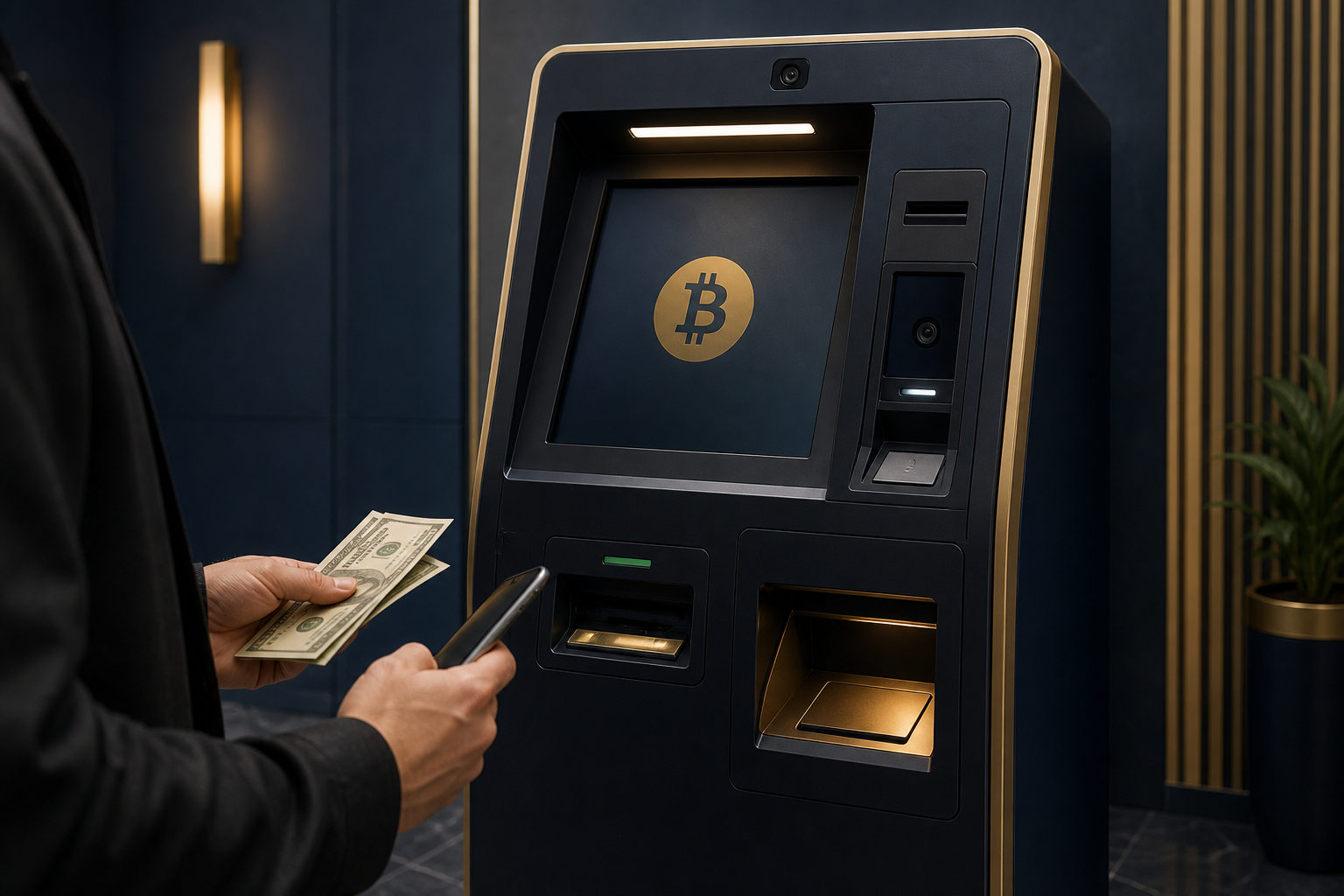
Some Bitcoin ATMs do accept cash, but not every machine does. The answer depends on the operator, the machine type, local compliance rules, and whether you want to buy bitcoin with cash or sell bitcoin for cash.
Why the answer is not a simple yes or no
People often assume a Bitcoin ATM works like a bank ATM. It does not. A bank ATM moves money inside the banking system, while a Bitcoin ATM handles an exchange between cash and bitcoin and then has to deal with wallet addresses, blockchain transfers, identity checks, and operator controls.
That is why two machines can look similar and still behave very differently. One may let you insert cash and buy bitcoin. Another may only accept a card or another payment method. A third may support buying but not selling. Some machines can dispense cash when you sell bitcoin, while others have no cash-out function at all.
So when people ask whether Bitcoin ATMs accept cash, the useful answer is this: some do, some do not, and you need to confirm the exact function of the machine before you start. That matters even more if you are new to bitcoin, because a rushed transaction can turn into an expensive mistake.
How to use cash to buy bitcoin at a Bitcoin ATM
Step 1: Confirm that the machine accepts cash for purchases
Before you pull out any bills, read the screen. Look for the buy option, the accepted payment method, the supported assets, and any notice about phone verification or identity checks.
The reason is simple. Not every Bitcoin ATM accepts cash, and even a machine with a bill acceptor may have that feature disabled at the time. Operators can change settings based on maintenance needs, compliance rules, or machine status. A cash-capable machine is not always cash-enabled for every user in every location.
Pay attention to what the live screen says, not just the branding on the machine. The logo on the outside does not tell you what functions are available at that moment.
Step 2: Prepare your own wallet before you walk up to the machine
In many cases, the machine will ask for a receiving address. Usually that means scanning a QR code from your wallet app. Open the receive screen in advance, make sure your phone has a working connection, and check that the QR code is easy for the machine to read.
This step matters because a Bitcoin ATM is an exchange point, not the best place to keep assets under someone else’s control. Sending the bitcoin straight to a wallet that you control is usually safer. If you wait until you are standing in front of the machine to install a wallet, back up your recovery phrase, and learn the app, you are more likely to make a bad choice under pressure.
There are a few things to watch. Do not send funds to a deposit address from a service you do not fully understand. Do not scan an address unless you know it is for bitcoin and is compatible with the transaction you are making. Back up your wallet credentials before you use the machine, not while strangers are standing nearby.
Step 3: Review the full cost before entering cash
Most machines will show an exchange rate, a service charge, a network-related cost, or an estimate of how much bitcoin you will receive. Read the full display before you continue.
The reason is that convenience often comes with a higher total cost. You are paying for physical access, operator overhead, compliance procedures, and blockchain settlement. If you only focus on the fact that the machine is fast, you may ignore how much bitcoin actually reaches your wallet.
Do not focus on one fee label by itself. What matters is the outcome. The key question is not only how much cash you inserted, but how much BTC the machine says it will send.
Step 4: Insert cash carefully and verify the receiving address again
Once you reach the cash input stage, feed the bills in slowly and watch what the machine recognizes. Many machines update the running amount and the estimated bitcoin output as each bill is accepted.
There is a practical reason for doing this one step at a time. If a bill is rejected or the amount does not update as expected, you can catch it early. It also gives you another chance to confirm that the receiving address is yours.
This is one of the most important scam checkpoints in the whole process. Never use a QR code handed to you by a stranger. Never switch to an address sent through a message by someone claiming to be support, an investigator, a refund agent, or an investment guide. If the bitcoin is sent to the wrong address, there is usually no easy reversal.
Step 5: Save the receipt and wait for processing
After you confirm the transaction, the machine may print a receipt or display a digital record. Keep that information. Save the transaction reference, the time, the amount, and the receiving address.
The reason is that a Bitcoin ATM starts the transaction, but your wallet may not show the final result immediately. The transfer still needs to be processed on the network and recognized by the receiving wallet or service. If something seems off later, the receipt is the first thing you will need when contacting the operator.
Before you leave, check the screen for a sent or processing message and compare the first and last characters of the destination address with the one shown in your wallet. That quick check can prevent a lot of trouble.
If you want cash out, the process is usually stricter
Many users asking whether Bitcoin ATMs accept cash are really asking two different questions. One is whether they can insert cash to buy bitcoin. The other is whether they can sell bitcoin and receive cash. The second process is often more demanding because the machine has to receive your bitcoin, verify the order, and handle cash delivery.
Step 1: Make sure the machine is two-way
Look for options such as sell, withdraw, or cash out on the screen. If the menu only offers buying, it is not the right machine for a sale.
The reason is straightforward. Many Bitcoin ATMs are one-way machines. They let users convert cash into bitcoin, but they do not support the reverse direction. The shared label can be misleading if you assume every machine offers both services.
Also remember that a machine can support selling in general and still have cash-out paused on a given day. The cash side may be limited by maintenance, restocking, or operator policy.
Step 2: Read the cash-out instructions in full before sending bitcoin
Some machines create an order first, then show a destination address or a redemption code. You send bitcoin to the address shown on the machine, and after the system recognizes the transfer, you receive cash or a code to claim it.
This process needs extra attention because timing and order rules matter. If you do not understand whether the cash is dispensed immediately, whether you must wait, or what happens if the order expires, you can confuse a normal process delay with a failed transaction.
Check how the machine handles pickup, what proof you need to keep, and how to contact the operator if the order does not update. If the instructions are unclear, stop before you send anything.
Step 3: Send bitcoin only to the address displayed on the machine
Use your own wallet to send bitcoin to the address generated by the order on the machine screen. Verify the address and, if shown, the order identifier.
This step is where social engineering often appears. Scammers do not need advanced technology if they can make you panic. A person near the machine may claim to help and then show you a different QR code. Someone on the phone may tell you the displayed address is temporary and give you a “verified” one instead. Ignore all of that. Trust only the details shown on the machine during your session.
Be careful with shoulder surfing as well. Public machines attract attention, and it is easy for someone nearby to watch your wallet screen or pressure you into skipping checks.
Step 4: Do not send a second payment just because the screen has not updated yet
This is a common error among first-time users. They see a waiting message, assume the first transfer failed, and send bitcoin again.
The reason that happens is that blockchain processing takes time, and the machine also needs time to update the order state. A slow screen update does not mean nothing happened. Check your wallet history first, then use your receipt to contact the operator if needed.
Until the machine clearly tells you what to do next, do not repeat the payment. Keep every receipt, screenshot, or message connected to the transaction until the process is finished.
Scam prevention matters more than the cash question
The biggest risk is often not whether the machine takes cash. It is why someone told you to use it in the first place. Bitcoin ATMs are often mentioned in fraud cases because scammers like payment methods that are hard to reverse and unfamiliar to victims.
Red flag 1: Someone tells you to go to a Bitcoin ATM right away
If a stranger contacts you by phone, text, or social app and tells you to go to a Bitcoin ATM immediately, stop. The story may involve account security, a refund, a government payment, a fine, an urgent family problem, or a supposed verification process.
Legitimate organizations generally do not require people to settle issues through a Bitcoin ATM. Pressure, secrecy, urgency, and instructions to avoid telling family members or your bank are classic warning signs.
Do not assume a caller is real just because they know your name or some personal details. Exposed personal data is often reused in scams.
Red flag 2: A supposed support agent wants to guide you remotely
Some scammers ask victims to stay on a call, share their screen, or follow step-by-step instructions at the machine. The victim is told this is for verification or account protection, but the real goal is to direct the bitcoin to the scammer’s address.
The reason this works is that beginners may confuse technical guidance with safe handling. If the receiving address is not your own wallet or a service you chose and verified yourself, the transaction is not helping you. It is simply sending value to someone else.
Never let another person set up your wallet, keep your recovery phrase, read your verification code, or choose the QR code you scan. If you do not understand a step, pause the process.
Red flag 3: A stranger near the machine offers to help
An in-person “helper” can be just as dangerous as a fake caller. They may ask to hold your phone, point you to a different QR code, look at your wallet details, or interfere while you are distracted.
The safer approach is simple. Keep control of your device, keep some physical distance from anyone nearby, and do not display your full wallet information in public any longer than necessary. If you feel rushed or confused, leave and come back later.
FAQ
Can every Bitcoin ATM take cash for a purchase?
No. Some machines accept cash, while others use different payment methods or support only part of the process. The only reliable way to know is to read the live instructions on the machine before you begin.
Can I buy bitcoin at a Bitcoin ATM without a wallet?
In many cases, you still need a wallet address to receive the bitcoin. Even if a service offers a temporary holding method, a wallet you control is usually the safer choice for keeping your bitcoin.
Can a Bitcoin ATM give me cash when I sell bitcoin?
Some machines can, but only if they are two-way machines and the cash-out function is active at that time. Selling usually involves more checks than buying, so read the instructions carefully before sending bitcoin.
Why do Bitcoin ATM fees seem high?
You are paying for physical access and immediate exchange, not just a simple online trade. Instead of focusing on one fee label, look at the final amount of bitcoin you will receive or the amount of cash you will be able to collect.
Is it safe if someone tells me that a Bitcoin ATM is the best way to make a payment?
Usually no. If someone pressures you to act quickly, stay quiet, scan a specific QR code, or pay through a Bitcoin ATM for an urgent problem, treat it as a serious warning sign and verify the claim independently.
What to check before you leave home
Bring a wallet that you control and make sure your phone can display your receiving QR code. At the machine, confirm whether it really accepts cash and whether you are buying or selling. Read the fees, identity requirements, and cancellation rules before you continue. Trust only what the machine shows during your session, never a stranger’s QR code or instructions. Keep the receipt and verify the destination address before you walk away.