
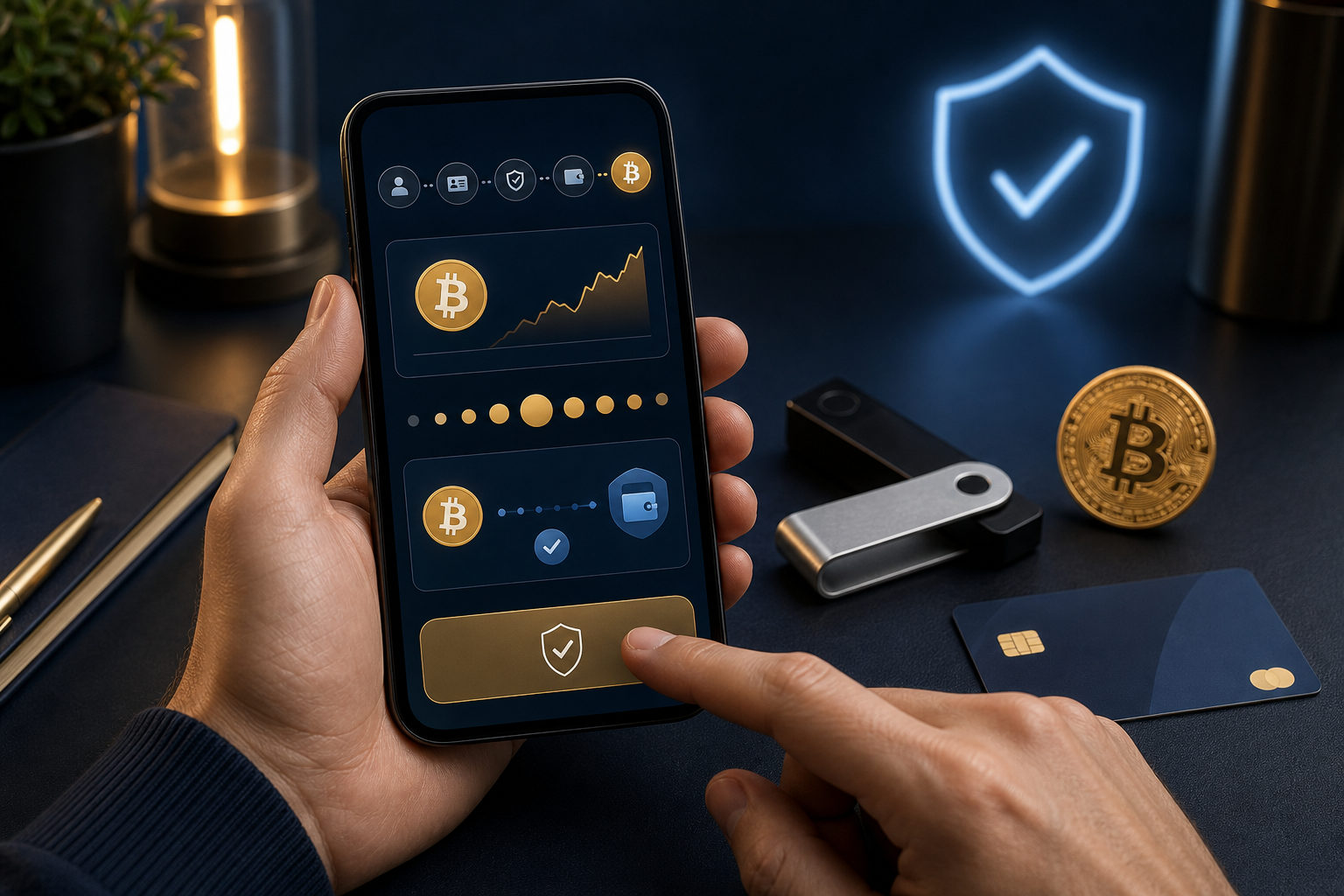
If you are new and want to buy bitcoin, the safest approach is simple: choose a legitimate buying route, secure your account first, understand wallets, and start with a small test purchase.
What beginners should know before buying bitcoin
People searching for “how to buy bitcoin beginners guide 2026” often want a quick answer, but the useful answer is a sequence, not a shortcut. For first-time buyers, the biggest mistakes usually happen before or after the purchase itself: weak account security, fake support messages, wrong withdrawal settings, or sending funds to the wrong address.
A few basics matter. Bitcoin is a digital asset that runs on a blockchain network. Its maximum supply is 21 million coins. The white paper, Bitcoin: A Peer-to-Peer Electronic Cash System, was released in 2008, and the genesis block appeared in January 2009. The name attached to its creation is Satoshi Nakamoto, whose identity remains unknown. You do not need deep technical expertise to make your first purchase, but you do need to understand that bitcoin is not just a number inside an app. It is an asset that can be transferred on-chain and, if you choose, held in a wallet you control.
Before you do anything else, prepare these basics:
- A working email address and phone number for account access and alerts.
- A unique, strong password that you do not reuse anywhere else.
- Two-factor authentication, ideally through an authenticator app instead of relying only on text messages.
- A basic wallet plan, even if you do not move coins off a platform right away.
- Clear funding limits so you only use money you can afford to leave untouched during volatility.
This preparation may feel slow, but it cuts down risk in every later step. Most beginners do not lose money because buying is impossible. They lose money because they rush through setup, trust the wrong person, or skip verification habits that should have been in place from day one.
Step 1: Choose a buying route based on rules and safety, not hype
Most beginners end up looking at two broad options: a centralized service that offers bitcoin purchases, or a wallet-linked or third-party on-ramp that lets you buy directly into a wallet flow. The first option is often easier for a new user because the process is more guided. The second can make sense later, once you understand addresses, confirmations, and withdrawal settings.
Whatever route you choose, evaluate it in this order:
- Check identity verification and compliance steps. A service that asks you to verify your identity and pass security checks may feel slower, but that structure can reduce certain risks. Offers that promise instant buying with no checks at all can expose beginners to more trouble later.
- Review fee transparency. You should be able to see what price you are paying, what service fees apply, and whether there is a spread between the displayed market price and your execution price.
- Read the withdrawal rules before you buy. Some services make buying easy but create friction when you try to withdraw bitcoin later. Beginners should know if withdrawals are supported, how approvals work, and what network details matter.
- Look for account protection features. Two-factor authentication, login alerts, device management, and withdrawal confirmation tools all matter.
- Avoid personal “helpers” and private middlemen. If someone says they can buy for you, hold funds for you, or guide you through a special private route, treat that as a risk signal.
This matters because a real beginner guide is not about the fastest click path. It is about reducing preventable mistakes. A polished interface does not automatically mean safer handling. A quick signup does not automatically mean lower friction later.
There are a few practical warnings here. Do not trust random links in search results or messaging groups. Type the official website yourself or use the verified app from an official app store. Do not assume a recommendation from a friend removes the need to verify the service. And do not confuse availability with safety. Being able to buy bitcoin is not the same as buying it well.
Step 2: Secure the account before you fund it
Beginners often treat a bitcoin account like any normal software account. That is a mistake. If the account gives access to money, then security settings are not optional extras. They are part of the purchase process.
After registration, do these items before sending funds:
- Create a strong, unique password. Do not reuse one from email, shopping, social media, or cloud storage.
- Turn on two-factor authentication. An authenticator app is usually a better baseline than text-message-only protection.
- Enable login and device alerts so unusual access stands out quickly.
- Review withdrawal protections such as address whitelists, confirmation prompts, or trusted-device controls.
- Store backup and recovery information safely. Keep it offline if possible. Do not leave sensitive recovery data in screenshots or chat apps.
Why put so much emphasis on setup? Because this is the stage where beginners are easiest to exploit. You are still learning the interface. You may not know what a real support message looks like. You may not know how often scammers impersonate customer service, ask for codes, or send fake “security review” links.
The key cautions are straightforward. Never share passwords, one-time codes, wallet seed phrases, or recovery information. Never install unknown remote-access tools because someone says they will “help” you complete the purchase. Never hand over control just because the person sounds experienced. Once someone can see your screen or influence where you enter credentials, the problem is no longer theoretical.
This is also a good point to learn the difference between a hosted account and a self-custody wallet. A hosted account means another service manages the environment where your bitcoin is recorded. A self-custody wallet means you control the keys or seed phrase tied to that wallet. You do not have to move to self-custody on day one, but you should know the distinction before you buy.
Step 3: Fund the account and make a small first purchase
The moment of first purchase creates pressure. Some people worry they are too late. Others worry the price will move before they finish. For a beginner, that pressure is usually harmful. The better move is to make a small purchase first and treat it as a full rehearsal.
Break this stage into three checks.
Use funds that are clearly yours
Only use money from your own accounts and from a source you can explain if needed. Do not buy on behalf of strangers. Do not let someone route money through you. Do not agree to “help” another person by using your account to complete their purchase. Situations like that can create disputes or account restrictions that have nothing to do with bitcoin itself.
Make sure you are buying actual bitcoin
Some services show several products in one place: spot purchases, leveraged products, derivatives, or yield-style offerings. A beginner should focus on the simplest question first: are you buying BTC itself, and will you be able to withdraw it later if you choose? That is more important than any advanced feature.
If you are following a step-by-step bitcoin buying process, check these points carefully:
- The order screen clearly shows how much BTC you will receive.
- The fees or spread are visible enough to understand the total cost.
- After execution, the balance shows BTC rather than a different product.
- The service explains how withdrawals work and what confirmation steps apply.
Complete a small end-to-end test
An end-to-end test means more than pressing Buy once. It means registering, verifying, funding, purchasing, reviewing the transaction record, checking your balance, and understanding what would happen if you later chose to withdraw. This lowers the cost of mistakes. It is far better to discover confusion during a small test than during a larger purchase when stress is higher.
This is also where discipline matters most. Do not let chat groups, social posts, or strangers push you into increasing size immediately. Buying bitcoin is one decision. Joining a managed yield offer, copy-trading scheme, mining package, or “VIP” arrangement is a different decision entirely. Beginners should separate those things clearly.
Step 4: Learn wallet basics before moving coins
Buying bitcoin is the first layer. Understanding where it can be stored and how it can be moved is the next one. A wallet is not a box that contains coins. It is a tool that manages keys, generates receiving addresses, signs transactions, and helps you view balances. Control of the keys is what gives control over the asset.
For beginners, wallets are often grouped into custodial and self-custody options. Custodial tools are simpler because another party manages more of the process. Self-custody gives you more direct control, but it also gives you more responsibility. If you mishandle the seed phrase or backup, there may be no recovery path.
A careful first withdrawal usually follows this order:
- Create the wallet and back it up offline. If you use a self-custody wallet, write down the seed phrase and store it in a secure private place. Do not save it in a screenshot album, send it to yourself by email, or leave it in cloud notes.
- Confirm that the receiving address is for bitcoin. After copying the address, verify the first and last characters carefully.
- Send a small test withdrawal first. Do not move everything in one attempt when you are still learning the process.
- Wait for confirmations. Bitcoin blocks are produced roughly every 10 minutes. Actual timing can vary in practice because network conditions and service processing times are not always the same. A delay on the screen does not automatically mean something is lost.
- Keep records. Save the transaction identifier, amount, time, and receiving address so you can review the transfer later if needed.
There are two common beginner errors here. The first is copying the wrong address, sometimes because malware replaces clipboard contents. The second is misunderstanding transfer details and confirming a withdrawal without carefully checking the destination. The solution is not speed. The solution is repetition and verification. Before every transfer, review the address, the asset, the withdrawal screen, and the final confirmation page.
Even if you plan to keep your bitcoin on a platform for a while, understanding withdrawal logic is still useful. It prevents panic when you eventually need to move funds, and it helps you tell the difference between normal processing delays and actual problems.
Step 5: Treat scam prevention as part of the buying process
For beginners, fraud is often a bigger threat than price volatility. Scammers do not need to break the Bitcoin network. They only need to persuade you to trust the wrong page, the wrong person, or the wrong instruction.
These situations deserve immediate skepticism:
- Guaranteed profits or “risk-free” offers. Bitcoin can rise and fall sharply. No one can honestly remove risk from ownership.
- Requests to send money to a person instead of a service account you verified yourself. This includes private agents, “coaches,” over-the-counter middlemen, or fake support staff.
- Direct messages from “customer support”. A scammer may claim your account is frozen, flagged, or under review and then ask for codes or send a fake login page.
- Pressure to add extra products right after your first buy. If you only wanted to buy bitcoin but someone keeps pushing managed accounts, mining rentals, staking-like offers, or special internal quotas, step back.
- Requests to share your screen or install remote software. That can give another person the chance to observe or control a sensitive action.
- Payment screenshots used as proof. Until you verify settlement yourself through the real interface you trust, do not release anything or continue the transaction.
A good rule for beginners is this: if someone wants you to move fast, keep secrets, skip normal checks, or trust them over your own verification, stop. Bitcoin transactions are not like ordinary online shopping refunds. Once a transfer is completed, reversing it may not be possible in any practical sense. That makes caution at the front end much more important than damage control later.
The best answer to “how to buy bitcoin beginners guide 2026” is not a platform recommendation. It is a method: verify the service, secure the account, understand what you are buying, learn where it can be withdrawn, and assume that any shortcut can carry hidden risk.
FAQ
Should a first-time buyer purchase a large amount of bitcoin?
Usually no. A small first purchase gives you room to understand the account, the fee display, the balance screen, and the withdrawal flow without adding unnecessary pressure.
Do I need to move bitcoin to my own wallet right away?
Not always, but you should know how withdrawals work before you buy. If you plan to hold for a longer period, learning wallet backups and address checks early can reduce future mistakes.
How can I check the bitcoin price without falling for a fake page?
Use a mainstream market data service or the official interface of the service you actually use. Avoid links sent by strangers, and save official sites or verified apps yourself.
Why do I need to learn about confirmations after buying bitcoin?
Because buying is only the first step. If you ever withdraw, receive, or verify a transfer, confirmations become part of understanding whether the transaction is progressing normally.
What is the most common beginner mistake?
It is often not “buying at the wrong time.” More often, it is trusting another person with passwords, codes, seed phrases, or the final confirmation step on a transfer.
If you are ready to start, do three things first: create a unique password, enable two-factor authentication, and choose a buying route whose rules you actually understand. Then make a small purchase, review every confirmation screen carefully, and treat address checks and record-keeping as habits rather than optional extras.
Disclaimer: This article is for informational and educational purposes only and is not investment, financial, or legal advice. Crypto assets are highly volatile and you could lose your entire investment. Do your own research and decide carefully.