
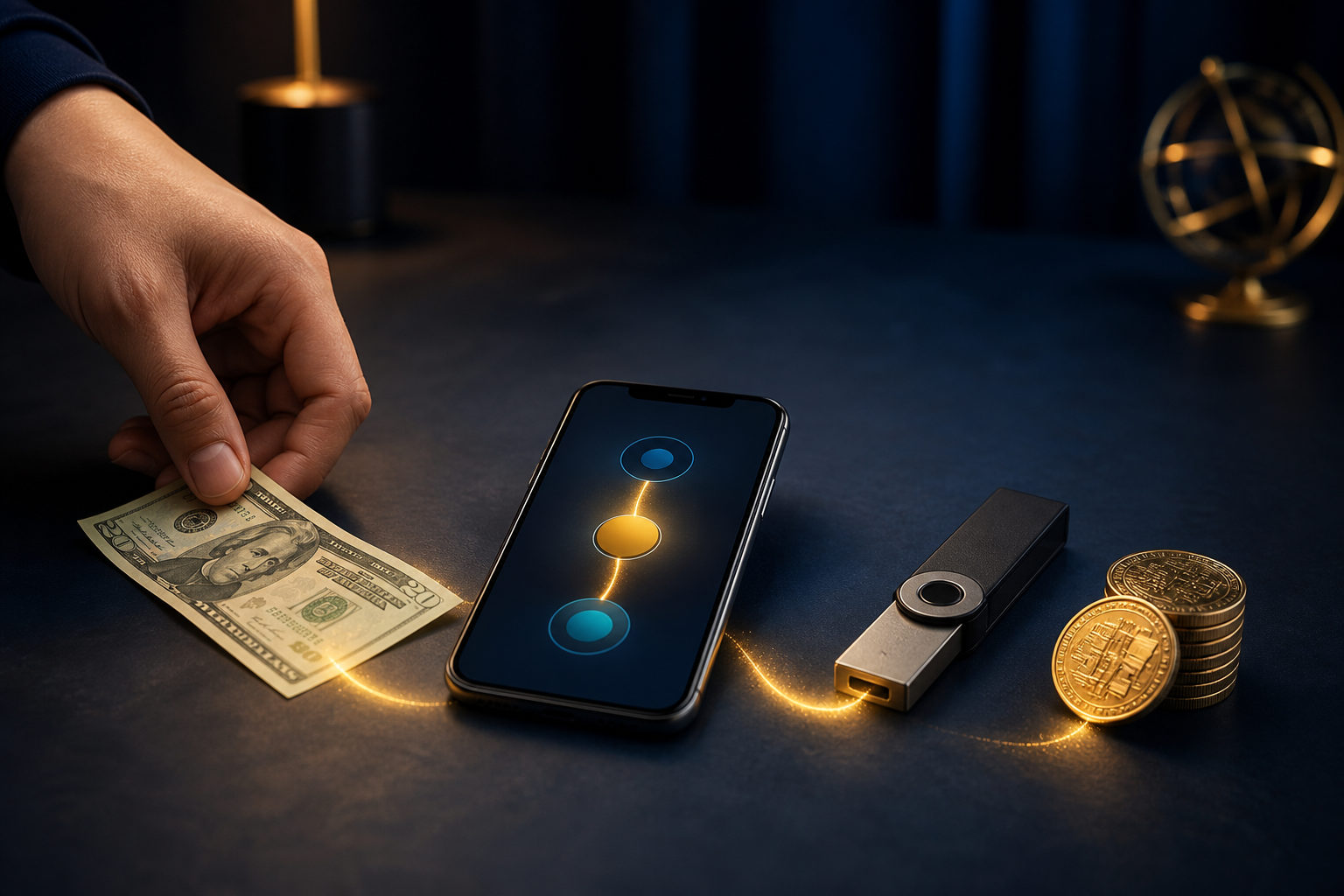
Yes, you can invest $20 in Bitcoin because Bitcoin can be bought in fractions. For a beginner, that amount works best as a learning position: enough to practice buying, storing, and protecting your account without treating it like a shortcut to quick profits.
Start with the real question: what should $20 in Bitcoin do for you?
A lot of new buyers assume Bitcoin must be purchased as a full coin. That is not how it works. Bitcoin is divisible, and its smallest unit is 1 satoshi, which is one hundred millionth of a BTC, so a small dollar amount can still buy a small portion.
That matters because the main value of a first $20 purchase is usually educational. It lets you see how identity checks work, how fees show up, how an order is placed, and what it means to hold Bitcoin on a platform versus in a wallet you control.
If you treat $20 as a test run, your decisions tend to get better. If you treat it as a fast-money trade, you are more likely to ignore fees, rush through security steps, and fall for promises that make no sense.
Step 1: Define your goal before you buy
Action: Decide what this $20 is for before you open a buy screen. Is it for learning the process, holding a small amount over time, or testing whether you are comfortable with Bitcoin price swings?
Why it matters: Your goal changes what “success” looks like. If the goal is learning, then understanding fees, storage, and security matters more than short-term price movement. If the goal is long-term exposure, then wallet knowledge and personal risk tolerance matter more.
Watch out for: Do not frame $20 as a seed for instant returns. Small amounts can create a false sense of safety, and scammers use that. They often start with “just try a little,” then push you toward larger deposits, fake upgrades, or off-platform transfers.
What $20 is good for
- Learning how to buy Bitcoin in a real setting
- Testing whether you can handle volatility without panic
- Practicing account security and record keeping
- Understanding how custody works
What $20 is not good for
- Trying to force short-term profits through constant trading
- Treating Bitcoin like a guaranteed-yield product
- Following random signals from chat groups
This first step sounds simple, but it shapes everything else. A clear goal keeps you from making impulsive choices once the purchase is done.
Step 2: Pick an entry point based on rules, fees, and withdrawal ability
Action: Use a service that clearly supports small purchases, explains its fee structure, and shows whether you can withdraw Bitcoin to your own wallet. You do not need the flashiest interface. You need a process that is transparent.
Why it matters: With a small purchase, costs can have an outsized effect. If a service adds a wide spread, extra payment fees, or makes withdrawals difficult, your $20 may shrink in practical terms before you even think about holding it.
Watch out for: Avoid signing up through links sent by strangers on social media or messaging apps. Avoid anyone offering to buy Bitcoin on your behalf. If a person asks you to send money first and promises to handle the rest, you are giving away control before you have even started.
What to check before using any service
- Fee transparency: Can you see buy fees, sell fees, spread, and any withdrawal costs?
- Withdrawal support: Can you move Bitcoin to a wallet you control, or are you stuck inside the platform?
- Normal security checks: Does the service require account verification and device confirmation?
- Clear support materials: Are the terms and help pages understandable, or are important details hard to find?
If a platform talks more about guaranteed returns than about security and fees, that is a warning sign. Bitcoin itself does not promise a fixed return, so any pitch built around certainty should make you stop immediately.
Step 3: Review the cost before you place the order
Action: Before you hit confirm, look at the payment method, the quoted amount of Bitcoin you will receive, and any later cost tied to moving it out. Compare the total result, not just the headline claim that you can buy with a small amount.
Why it matters: Small purchases are vulnerable to friction. A fee that looks modest on a larger order can become meaningful on a small one. The issue is not whether $20 can buy Bitcoin. The issue is how much Bitcoin you actually receive after all charges are applied.
Watch out for: Do not rush into advanced order settings you do not understand. For a first purchase, the basic questions are enough: how much are you paying, how much Bitcoin will you get, and what happens if you want to move it later?
Cost points beginners often miss
- Extra charges attached to the payment channel
- The gap between the quoted buy price and sell price
- Withdrawal costs that make moving a small balance less practical
- Minimum withdrawal rules
This is one of the most useful habits you can build early. When people regret a first small purchase, the problem is often not Bitcoin itself. The problem is that they never checked the full cost path from buy to storage.
Step 4: Decide where your Bitcoin will stay after the purchase
Action: Once you buy, decide whether you will keep the Bitcoin on the platform for now or move it to a self-custody wallet. There is no universal right answer. Your choice should depend on your comfort level, your understanding of wallet backups, and whether moving the funds makes sense given the costs.
Why it matters: Keeping Bitcoin on a platform is easier at first. Self-custody gives you direct control, but it also means you are responsible for backups, wallet recovery information, and safe device practices. Control and responsibility increase together.
Watch out for: Do not move funds into a wallet setup you do not understand. If you do not know how recovery phrases work, or if you are not confident checking a receiving address, pause and learn first. On the other hand, if you already understand wallet basics, moving a small amount can be a valuable part of learning how Bitcoin ownership actually works.
| Storage option | Main benefit | Main risk |
|---|---|---|
| Platform account | Simple for beginners | You depend on the platform and your account security |
| Self-custody wallet | You control the Bitcoin directly | You are responsible for backups and mistakes |
No matter where you keep it, use a unique password. Turn on two-factor authentication if the service supports it. Also protect the email account tied to your Bitcoin account, because many account takeovers start with weak email security rather than with the crypto platform itself.
Step 5: Put scam prevention ahead of profit
Action: Treat any unsolicited help, secret strategy, guaranteed profit claim, or “managed” Bitcoin offer as high risk. Download apps only from official sources. Do not enter account codes, recovery phrases, or private keys into links sent in chats or direct messages.
Why it matters: First-time buyers are common targets because they know just enough to start, but not enough to detect manipulation quickly. Scammers focus on moments when a beginner feels unsure: signup, verification, deposit, withdrawal, or “account recovery.”
Watch out for: No legitimate support representative should ask for your recovery phrase or private key. No honest service needs remote access to your device just to help you buy Bitcoin. If anyone pressures you to act fast, send funds to a personal account, or share your screen during a sensitive action, stop.
Common crypto scam patterns
- Fake support: Someone claims there is a security issue and asks for codes or screen sharing.
- Signal groups: A chat room shows alleged profits, then pushes members toward an unknown service.
- Romance or trust-based fraud: Personal rapport comes first, then an “investment opportunity.”
- Fake wallet apps: The app looks real but is designed to steal wallet recovery details.
- Bonus or rebate traps: You are told to send Bitcoin first to “verify” or “activate” something.
A useful rule is this: if someone needs your credentials or wallet recovery information, they do not need to help you. They need access to your assets.
Step 6: After buying, evaluate the process instead of obsessing over every price move
Action: Review what happened after the purchase. Save the transaction record. Check the fee breakdown. Confirm that your account security is in place. If you plan to send Bitcoin later, learn how to verify addresses carefully before doing so. If you want to see the live price, use a mainstream market data source rather than screenshots from chat groups.
Why it matters: A first $20 purchase should teach you discipline. If you spend all your time reacting to every move, you miss the point of the exercise. The more useful question is whether you now understand the mechanics better than you did before.
Watch out for: Do not increase your amount just because the first trade happens to look good. Do not assume the whole process failed just because Bitcoin moves against you for a while. Your real checklist is operational: did you understand the fees, secure the account, and keep control of the process?
Better post-purchase habits
- Keep records of the purchase and the fees shown at checkout.
- Review password strength, email security, and two-factor authentication.
- Learn wallet basics before attempting a transfer.
- Only add more money when you understand the risks without outside pressure.
That is how a small first purchase becomes useful. It gives you a framework, not just an asset balance.
FAQ
Is $20 too little to buy Bitcoin?
No. For beginners, $20 can be a sensible starting point because Bitcoin is divisible and a small amount lets you learn the process with limited exposure. The key is to treat it as a learning position, not a shortcut to quick gains.
Does buying only $20 of Bitcoin make sense?
It can, especially if you are new to crypto. A small purchase helps you understand fees, custody, account protection, and how Bitcoin ownership works in practice.
Should I move a small Bitcoin purchase to my own wallet right away?
That depends on costs and your comfort level. If you do not yet understand wallet backups, it may be safer to learn first; if you do understand them, moving a small amount can be a useful test of self-custody.
Is $20 enough for active trading?
In many cases, no. A small amount can be affected quickly by fees, spread, and emotional decision-making, so frequent trading may create more mistakes rather than more control.
How can I tell if a Bitcoin offer is a scam?
Warning signs include guaranteed returns, pressure to act quickly, requests for recovery phrases or verification codes, and instructions to send money to a person instead of using the service yourself. A legitimate buying process should stay under your control from start to finish.
If you want to start with $20, the practical order is simple: define your goal, compare costs, buy through a service you understand, and tighten your security before doing anything else. If a step feels confusing or rushed, stop there and verify it before you continue.
Disclaimer: This article is for informational and educational purposes only and is not investment, financial, or legal advice. Crypto assets are highly volatile and you could lose your entire investment. Do your own research and decide carefully.