
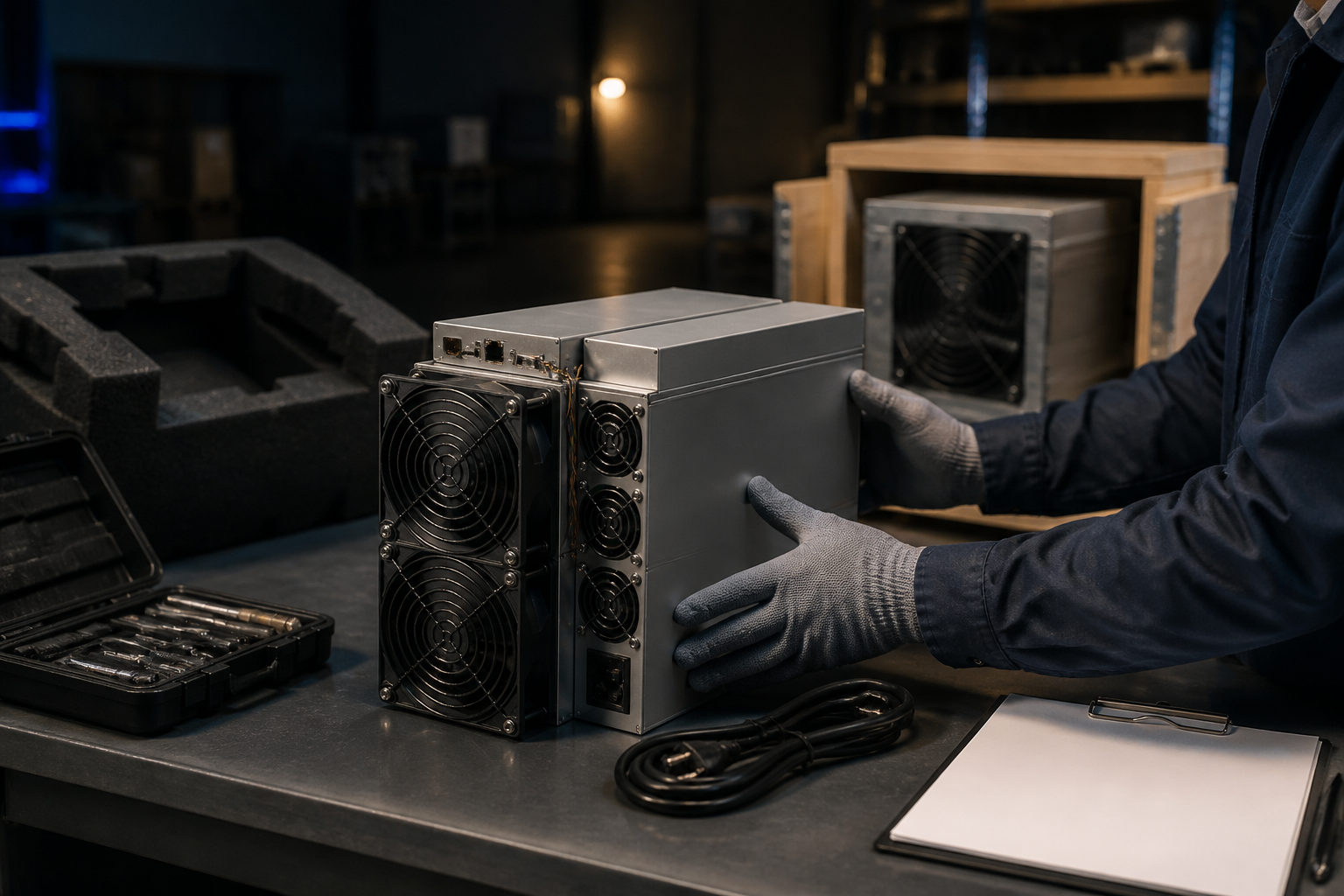
How to buy a bitcoin miner comes down to preparation before payment: check your power and cooling setup, verify the machine type and condition, and set inspection terms before money moves. Most costly mistakes happen before the miner is even turned on.
Start by deciding whether you want mining hardware or bitcoin exposure
Many people search for a way to buy a bitcoin miner when what they really want is a way to get bitcoin. Those are different choices. A miner is not a passive gadget; it is a piece of specialized equipment that needs power, ventilation, internet access, monitoring, and occasional maintenance.
Write down your intended setup before you compare machines. Will the miner run at home, in a warehouse, or in a hosted facility? A home setup often runs into noise, heat, and electrical limits. Hosting raises a different set of questions, such as account access, downtime handling, machine retrieval, and who is allowed to change pool settings.
You also need to be comfortable with equipment risk. Bitcoin mining uses ASIC hardware, and ASIC units can lose market value as newer models appear, competition changes, or a used machine shows signs of wear. If you want the least operational overhead, that matters more than any sales pitch about performance.
Check electricity, cooling, and network conditions before you compare models
New buyers often jump straight to hashrate. That is too late in the process. First confirm that your location can support a miner for long periods without unstable power, overloaded circuits, or weak wiring. If the environment cannot supply steady power, even a healthy machine may restart, disconnect, or run below expectations.
Cooling deserves equal attention. A bitcoin miner pushes out continuous heat while it operates, so a poor airflow setup can raise fan speed, increase noise, and add stress to internal components. Dust is another practical issue. In a dusty room, cooling paths can clog faster, and that changes how the machine behaves over time.
The internet connection does not need exceptional bandwidth, but it does need consistency. Frequent dropouts, unreliable routers, or sloppy local network settings can interrupt mining sessions or make troubleshooting harder. If you plan to host the machine elsewhere, ask in advance who controls remote access, who can reboot the unit, and how offline alerts are handled.
Learn what to verify on the machine itself
Bitcoin mining is done with ASIC miners, so your first check is simple: make sure the device is actually built for Bitcoin mining rather than for another algorithm. That sounds obvious, but mixed listings and vague product descriptions can still confuse new buyers.
Once you know the machine type is correct, widen the review beyond a single number. Hashrate matters, but so do power behavior, fan condition, power supply status, control board history, and whether the hash boards have been repaired. A used miner that can boot is not automatically a stable miner under sustained load.
Ask for proof that reveals condition rather than marketing. Useful material includes multiple exterior photos, labels, screenshots from the management panel, error pages, fan readings, and current operating status. A seller who actually has the machine can usually provide specific views when asked. A seller who keeps deflecting details while pushing for fast payment is showing you something important.
Separate spot inventory from preorders or delayed delivery offers. A machine that can be inspected is easier to evaluate than one that will arrive later under shifting terms. If a seller leans heavily on urgency, scarcity language, or pressure to reserve immediately, slow the conversation down and return to verifiable facts.
Screen the seller by source, support terms, and payment behavior
Before you judge price, ask where the machine comes from. A new unit, a circulated used unit, and a refurbished unit carry different kinds of risk. Refurbished hardware is not automatically off limits, but the seller should state what was replaced, what was repaired, and what kind of post-sale support is included. If the description stays vague, you are being asked to price unknowns.
Support terms need to be concrete before payment. Clarify what counts as an acceptable machine on arrival, how quickly issues must be reported, what evidence is needed for a claim, and whether a fault leads to repair, replacement, or rejection. Many disputes come from fuzzy definitions rather than from total machine failure.
Payment behavior is one of the clearest warning signs in this market. Be careful if the seller changes the receiving account at the last minute, asks you to pay a personal account without a clear paper trail, or pushes for a full advance payment while avoiding written terms. It is safer when the invoice, machine description, payment identity, and after-sales promise all match and are saved in your records.
If someone presents a bitcoin miner as a near-guaranteed profit machine, move on. A hardware sale can define condition, delivery, and service scope; it cannot honestly remove operational risk.
Set inspection rules before the order, then test in a fixed sequence
Experienced buyers do not wait until delivery day to think about inspection. Before you pay, agree on how the miner will be checked, what screens or logs matter, how long the initial test should run, and what conditions count as a failed handoff. Hosted purchases need the same discipline, even if the machine never reaches your hands physically.
When the miner arrives, start with the outside. Look for heavy impact marks, signs that screws have been removed, damaged labels, unusual residue, or cooling channels packed with dust. Then compare the serial and identifying information against what the seller showed earlier. Mismatches at this stage should stop the process.
Only after that should you power the unit and join it to the network. Confirm that the management interface loads correctly, the hardware is recognized, and no obvious fault messages appear. A miner that reports activity right away still needs observation over time. Watch for unstable hashrate, board dropouts, fan irregularities, power supply noise, or recurring warnings.
Firmware and settings deserve their own check. Reset passwords, remove any old pool credentials, and confirm that the machine is not running software from an unknown source. Unclear firmware can create security issues and can complicate later maintenance or resale.
Hosted mining requires contract review, not just machine review
If you will place the bitcoin miner with a hosting provider, the decision expands beyond hardware. You need to know when the unit will be installed, how removal works, what happens during outages, whether repairs must go through a designated party, and how component replacements are approved. Those points define how much control you keep after the sale.
Fee structure is another area where buyers lose clarity. A low machine price can be offset by installation charges, operating fees, maintenance charges, packing costs, or retrieval costs later. Read each item separately. If a term is important enough to affect your decision, ask for it in writing rather than relying on a verbal promise.
Control rights should be explicit as well. Who owns the dashboard login, who sets the payout address, who can change pool configuration, and how fast can you recover the machine if you end the hosting arrangement? Ownership on paper is less useful if the practical controls sit somewhere else.
FAQ
What should I check first when buying a bitcoin miner?
Start with power, ventilation, and placement. If your environment cannot support the machine, a good listing and a fair price will not solve the day-to-day operating problems.
Is it safe to buy a used bitcoin miner?
It can be, but only when the seller is transparent about condition. You should know whether the unit was repaired, which parts were replaced, and how arrival issues are handled.
Are screenshots enough to verify a miner listing?
Usually not. Screenshots can be selective, so ask for exterior photos, labels, error pages, and current operating views that match the specific unit being sold.
Can I run a bitcoin miner at home?
Some buyers do, but home use often runs into heat, noise, and circuit limits. Check the room, airflow, and electrical capacity before you commit to any purchase.
What do buyers miss most often with hosted miners?
They tend to focus on the machine price and skip the terms that govern downtime, retrieval, and account control. Those details matter once something goes wrong.
Use a written checklist before you send payment
List your power setup, location, target model, machine source, repair history, support scope, inspection standard, payment identity, shipping arrangement, and hosting terms. If any one item stays vague, pause the deal. Buying a bitcoin miner safely usually means moving slower than the seller wants.