
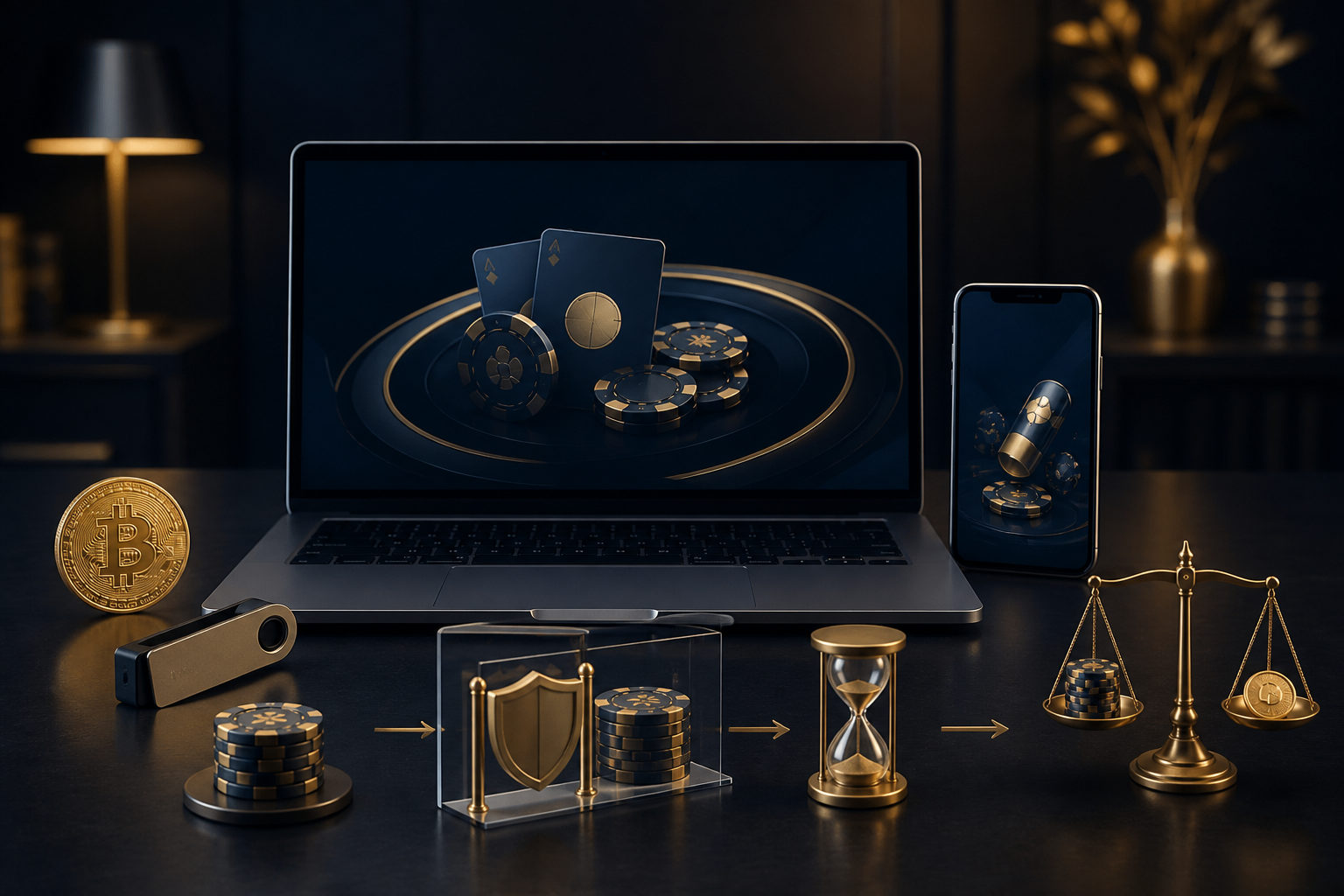
Most crypto casinos usually accept Bitcoin, but that does not automatically mean you can use it without trouble. The real question is whether Bitcoin is available for deposits, withdrawals, account checks, and your region, not just whether a BTC logo appears on the homepage.
Start with the practical answer, not the marketing claim
When people ask whether most crypto casinos accept Bitcoin, they are often asking a more useful question: can I deposit BTC, place bets, and withdraw back to my own wallet without getting stuck halfway through the process? That is the right way to frame it. A casino can say it accepts Bitcoin and still create friction where it matters most.
There are several different meanings behind the phrase. One site may allow Bitcoin deposits but settle balances in an internal unit. Another may make deposits easy while adding extra checks before any withdrawal. A third may display Bitcoin as a supported option even though users in certain regions cannot legally access the service or complete cash-out requests.
So the honest answer is yes, many crypto casinos do support Bitcoin in some form. Still, you should not treat that as proof that the full deposit-to-withdrawal path is open to you. The safer approach is a step-by-step review of the rules, the wallet flow, and the red flags. With Bitcoin, a transfer sent to the wrong place cannot simply be reversed later.
Step 1: Define what “accept Bitcoin” really means
Your first move should be simple: check the deposit page, withdrawal page, payment methods section, and terms. Do not rely on a banner, a review snippet, or a short message from support. Look for clear wording that Bitcoin is available both for funding the account and for taking funds out.
This matters because the phrase itself is vague. A platform may accept Bitcoin as an entry rail only. For a user, that is not enough. What matters is whether you can move BTC from a wallet you control into the platform, then later withdraw to a wallet you control again, under rules that are visible before you send anything.
There are a few details to check right away. Is the balance kept in Bitcoin or converted after deposit? Can withdrawals be sent in BTC, or only in some other format? Are there references to account checks, source-of-funds review, or region-based restrictions? Even when no exact figures are shown, clear wording still matters. If key rules are vague, that is already useful information.
What to verify before anything else
- Bitcoin deposits: confirm BTC is listed as an actual funding option.
- Bitcoin withdrawals: do not assume support on the way in means support on the way out.
- Balance handling: check whether the platform keeps value in BTC or converts it internally.
- Account review rules: see whether identity or source checks may appear before withdrawal.
- Regional access: make sure your location is not blocked at a later stage.
Step 2: Test with a small amount from a wallet you control
If a casino appears to support Bitcoin, do not rush into a large transfer. A better method is to use a self-custody wallet and send a small test deposit first. Then verify the receiving address, the on-chain arrival, the balance update, and the later withdrawal path before moving anything bigger.
The reason is straightforward. Bitcoin transactions are not like card payments where users often expect chargebacks or easy cancellation. If you copy the wrong address, if malware swaps the address in your clipboard, or if you send funds under the wrong assumptions, recovery may not be possible. A small test lowers the cost of being wrong.
There are several practical points here. First, double-check the address after pasting it. Look at the beginning and the end, not just the middle. Second, make sure the deposit details are for Bitcoin itself, not a different asset that happens to sit near BTC in the interface. Third, do not stop after a test deposit if the next critical concern is withdrawal. A small test withdrawal can reveal more than the deposit step does.
People asking whether most crypto casinos accept Bitcoin are often focused on the logo or payment menu. In reality, the stronger question is whether the platform still behaves predictably when you try to move Bitcoin back out. That is why a two-way test matters.
Step 3: Read the withdrawal rules more carefully than the deposit rules
This is where many users run into avoidable trouble. Before sending Bitcoin, read the withdrawal page, the bonus terms, the account restrictions section, and any compliance or security policy the platform publishes. Look for conditions that affect whether BTC can be withdrawn directly and whether the platform may pause, review, or reject a request.
Deposits are often designed to feel easy. Withdrawals are where hidden conditions appear. A site may accept Bitcoin quickly, then ask for identity documents, extra checks, or additional explanations only when you try to cash out. That does not always mean fraud, but it does mean you should know the rules before your funds are already inside the system.
Watch for broad language that gives the operator wide discretion. If the terms say payment methods can be changed at any time, or that reviews may be expanded without much explanation, treat that as a risk signal. If there is a bonus attached to your account, read whether it affects only the bonus itself or also the ability to withdraw your own deposited funds. Some users miss this point because they focus only on the deposit experience.
Withdrawal checks that matter
- Native BTC withdrawal support: look for a direct Bitcoin withdrawal path, not a manual workaround.
- Review triggers: see whether identity, device, login environment, or source checks may apply.
- Bonus impact: promotions can change what you are allowed to withdraw and when.
- Regional restrictions: registration access does not always mean withdrawal access.
- Wallet destination: it is safer when you can withdraw to a wallet you control.
Step 4: Screen every platform through an anti-scam filter
In crypto-related gambling, many losses come from pressure and confusion rather than technical complexity. A site or agent does not need advanced tricks if it can push users into acting fast, skipping the rules, and trusting verbal promises. So treat every platform as unverified until the process can be checked from start to finish.
Use a simple filter. Are the key terms public? Does support give the same answer each time? Is the deposit-and-withdrawal path explained clearly? Are account limitations disclosed before you send funds? If the answer to those questions is weak, your risk is already higher, even if the platform keeps repeating that it accepts Bitcoin.
There are several warning signs worth treating seriously. One is when the site talks a lot about how easy it is to deposit but avoids clear answers on withdrawals. Another is when someone asks you to send Bitcoin to a support agent, an affiliate, or a private address instead of a system-generated address tied to your account. A third is pressure to top up more funds before a withdrawal can supposedly be released. That pattern should stop the process immediately.
Also avoid treating chat screenshots, social posts, or community messages as official rules. If a promise cannot be found on the platform's own pages, it should not be treated as enforceable. With Bitcoin, trust should be based on transparent procedures and actions you can verify yourself, not on a persuasive message.
Step 5: Understand volatility, confirmation time, and fees before blaming the platform
Another hidden part of the question “do most crypto casinos accept bitcoin” is whether using Bitcoin will feel smooth in practice. Your experience depends on three things that users often mix together: market price movement, blockchain confirmation time, and transaction costs. These are not always platform problems, but they can still affect what you see.
Start with price movement. Bitcoin trades in an open market, so the value of your deposit can change between the moment you send it, the time it is credited, and the time you later withdraw. If the casino converts BTC into an internal balance, what you see may differ from a pure Bitcoin-denominated setup. If the balance stays in BTC, price swings will feel more direct. Without live market data in this article, the safest habit is to check real-time pricing on major market trackers rather than relying on a single interface.
Then there is confirmation time. The Bitcoin network produces a new block about every 10 minutes, and many services wait for a certain number of confirmations before crediting a deposit. The key point is not to expect instant settlement from every transfer. If a casino does not explain how it handles confirmations, that lack of clarity itself is a problem.
Fees matter too. Sometimes users think funds are missing when the real issue is a mix of on-chain transaction cost, internal platform conditions, and the amount actually credited after processing. You do not need a precise fee table to make a better decision. You only need to know that both deposits and withdrawals can involve blockchain costs, and transparent platforms explain that clearly.
FAQ
Does a BTC logo mean the casino is trustworthy?
No. Bitcoin support only tells you that the platform offers a payment or settlement option. It does not prove that withdrawals are smooth, the rules are clear, or the site will treat your account fairly when you request funds back.
Why should I review withdrawal terms before I deposit?
Because the biggest problems often show up when users try to take funds out, not when they send them in. If you discover restrictions only after depositing Bitcoin, your options become narrower right away.
Is a small test transfer really necessary?
Yes, especially with Bitcoin. A small test helps confirm the address, the wallet flow, the balance handling, and the withdrawal route before a larger amount is exposed to unnecessary risk.
What if the platform asks for identity documents later?
That depends on the platform rules and your region, but the key is whether that requirement was disclosed clearly in advance. If identity checks appear suddenly and the process is poorly explained, stop and reassess before sending more Bitcoin.
Where should I check the live Bitcoin price?
Use major market tracking tools and compare what you see with your wallet or trading service. Do not depend only on one platform display, and do not treat group chats or informal quotes as reliable pricing.
What should I do if support asks me to send BTC to a private address?
Stop immediately. A normal process should use a system-generated deposit address linked to your account. A private address, a temporary address shared in chat, or a verbal instruction is a major warning sign.
If you plan to use Bitcoin on any gambling platform, keep the order simple: confirm regional access, verify that both deposits and withdrawals support BTC, run a small two-way test from a wallet you control, and save copies of the key terms before sending more. If any step stays unclear, do not send Bitcoin.
Responsible Gambling Notice: This article is for informational and educational purposes only and is not gambling, investment, or legal advice. Gambling carries a risk of losing your funds and is not legal in every jurisdiction. Check your local laws, be of legal age, and gamble responsibly; seek professional help if gambling becomes a problem.
Disclaimer: This article is for informational and educational purposes only and is not investment, financial, or legal advice. Crypto assets are highly volatile and you could lose your entire investment. Do your own research and decide carefully.