
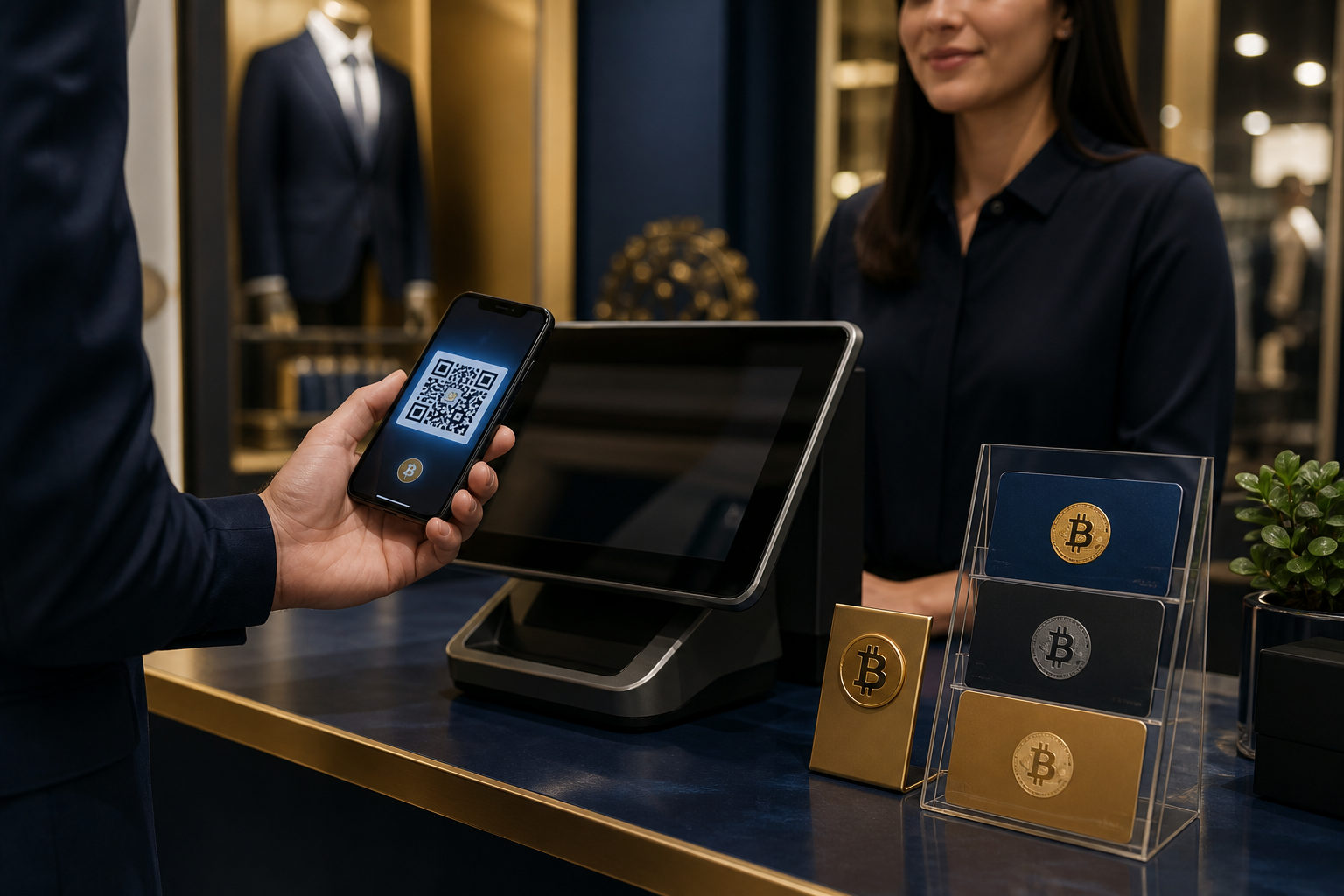
What businesses accept bitcoin? Some businesses do, but the real answer is more specific: bitcoin payments usually appear as direct wallet payments, processor-based checkout, or indirect spending through gift cards. If you want to use BTC safely, the hard part is not finding a logo. It is verifying the payment flow before you send anything.
What “accepting bitcoin” usually means in practice
People often ask what businesses accept bitcoin as if every merchant fits into one simple category. In real commerce, that is rarely the case. A company may say it accepts bitcoin, while the actual customer experience depends on how the payment is handled at checkout.
The first model is direct acceptance. A merchant gives you a bitcoin address or QR code, and you send payment from your own wallet. The reason some sellers prefer this method is straightforward: it avoids an extra layer between buyer and seller. The caution point is that you need to confirm whether the address is tied to your specific order, whether the merchant expects on-chain payment on the Bitcoin network, and how the order is marked as paid.
The second model uses a payment processor. You choose Bitcoin or BTC at checkout, a payment page appears, and the merchant may receive settlement in dollars rather than keeping bitcoin. Businesses use this route because it can fit more easily into existing accounting and customer service workflows. For buyers, the main risk is entering the wrong checkout page, especially if a supposed support agent sends a payment address through chat or email.
The third model is indirect spending. In these cases, the merchant you want to shop with may not directly answer the question of what businesses accept bitcoin, but you can first spend bitcoin on a gift card, prepaid code, or another stored-value product and then use that value with the final merchant. This can widen your options, yet it also adds extra points of failure. Refund terms, expiration rules, and fraud risks can all become harder to manage.
There is another detail many people miss. A business that accepted bitcoin in the past may not accept it today. A brand's main website, mobile app, marketplace storefront, and physical location can all have different payment rules. A company can support bitcoin in one region and not in another, or online but not in-store.
A step-by-step way to check whether a business accepts bitcoin
Step one: Check the checkout page before you trust the marketing copy
The first action is simple. Add an item or service to your cart and go to the payment stage. Do not rely on a homepage banner, a social profile, or an old FAQ page as proof that bitcoin is accepted.
The reason is practical: promotional pages may stay online long after payment options change, while the checkout page is usually the closest thing to a live answer. The caution point is to avoid rushing into payment just because you see the word “crypto.” You still need to confirm that the option leads to a real order flow and not just a support form or a manual message request.
Step two: Verify the exact sales channel that supports BTC
Ask a narrower question than “Does this brand take bitcoin?” Ask whether the specific channel you plan to use accepts it. That could mean the official website, a certain regional site, a marketplace seller, a physical store, or a customer support invoice.
This matters because payment support is often channel-specific. A merchant might allow bitcoin for online orders but not for local pickup, or only through one storefront and not another. The caution point is not to assume that one mention of bitcoin applies across the whole business. You need to verify the exact path your order will follow.
Step three: Confirm the asset and the network, not just the ticker
Before paying, read the payment page carefully and check what the merchant is actually asking for. If the seller says it accepts bitcoin, that does not mean any asset labeled with a similar ticker will work, and it does not mean every network option in your wallet is interchangeable.
The reason is simple: payment errors often happen when users focus on the familiar letters and ignore the transfer route. The caution point is to stop if the network is unclear or if support staff give vague instructions such as “just send BTC on any network.” A legitimate payment flow should tell you exactly what it expects.
Step four: Start with a small order and test the full process
If this is your first time using bitcoin with a merchant, use a small order to test the entire path from checkout to payment recognition to delivery. The purpose is not to treat a small transfer as disposable. It is to confirm that the merchant, the payment flow, and the order process all behave the way they claim.
The caution point is that a successful small test does not remove the need for future checks. Payment pages may generate a new address each time, and some systems expire after a short window. Never reuse an old invoice or assume a previous payment address remains valid for a new order.
Step five: Read the refund policy before deciding to pay
Many users focus so much on what businesses accept bitcoin that they forget to ask what happens if the order is canceled, delayed, or returned. Before paying, check whether refunds go back to your wallet, become store credit, or follow a different policy entirely.
The reason this matters is that bitcoin payments do not behave like card chargebacks. Once sent, the transaction itself is generally not reversible by the customer. The caution point is to be extra careful with preorders, custom work, and digital goods, since the merchant's return terms may be stricter than buyers expect.
Step six: Save evidence from both the order system and the blockchain
Keep the order number, a screenshot of the item details, the payment QR code or invoice page, the transaction hash, and any support messages related to payment. This gives you a record if the merchant later says the order was unpaid or if there is confusion about timing.
The reason is that payment disputes often turn on small details. The caution point is to store useful evidence without oversharing personal data. When you contact support, send the minimum information needed to identify the order and transaction rather than forwarding every page that contains your address or other sensitive details.
Common situations where bitcoin payments may appear
Instead of memorizing a list of company names, it is better to recognize the kinds of situations where bitcoin payment options are more likely to show up. That approach is more durable, since merchant policies can change.
Online digital goods and services are a frequent example. Sellers of software access, hosting-related services, developer-oriented tools, and other digital products may offer bitcoin because delivery can be automated after payment is confirmed. The caution point is that digital delivery often brings tighter refund rules. If access is granted right away, a buyer may have limited options once the product has been used.
Gift cards and prepaid value products are also common. This does not always mean the final merchant directly accepts bitcoin, but it does mean bitcoin can be converted into spendable value for a wider range of purchases. The caution point is that gift card fraud is common. A high discount, a rush to pay, or a seller pushing direct messages are all signs to slow down.
Some physical businesses, especially smaller shops and service providers, may accept bitcoin as well. In these cases, the safest move is to ask at the counter whether bitcoin payment is currently available, who confirms payment, and whether the staff on duty know the process. A sticker on a door or register is not enough on its own. It may be outdated, or it may refer to a setup the store no longer uses.
Another situation involves merchants that use a processor behind the scenes. From the customer's point of view, you are still paying with bitcoin. From the merchant's point of view, the transaction may be converted into dollars. The caution point here is timing. Processor-generated invoices often have a limited payment window, so you should not assume an old invoice can be paid later.
Fraud prevention matters more than broad merchant lists
For most people, the biggest danger is not a lack of businesses that accept bitcoin. The bigger danger is sending bitcoin to the wrong party because the payment path was not checked carefully enough. Once that happens, recovery is usually much harder than with traditional payment methods.
One common scam involves fake support agents. You ask a question on social media, and someone claiming to represent the business sends you a wallet address in private. The safe response is to return to the official website or app and verify whether that payment request exists inside the normal order system. A chat message is not a payment confirmation.
Another risk is a fake or lookalike website. The page design may resemble the real store, but the domain name is slightly different. Users who are focused on speed can miss that detail and send bitcoin to a fraudulent invoice page. The practical defense is to use saved official links or navigate from a verified source rather than clicking a random search result or ad.
A different trap appears after you have already sent funds. A page may claim the payment failed and instruct you to send the same amount again. If that happens, check your wallet first. If the transaction was already broadcast, compare the blockchain record with the merchant order page before taking any further action. Do not let a single error message push you into a second payment.
Refund scams are also common. A fraudster may say you need to pay a release fee, a verification fee, or a small test amount before a refund can be issued. That is not a normal refund process. You should also never share your seed phrase, private keys, or wallet security codes with anyone claiming to help with a bitcoin payment issue.
There is also the “I’ll pay for you” trap. Someone offers to handle the purchase on your behalf if you first send them bitcoin. That may sound convenient, but it gives a stranger both the funds and effective control over the order. If you need help understanding the process, get guidance without handing over custody of your coins.
FAQ
How can I tell if a business really accepts bitcoin right now?
The best test is to reach the real checkout page and see whether bitcoin appears as an actual payment option tied to an order. Marketing text alone is not enough, especially if it has not been updated recently.
Does a bitcoin sticker at a store mean I can definitely pay with BTC there?
No. A sticker may be old, staff may not know how to process the payment, or the setup may only work under certain conditions. Ask before ordering or before the final checkout step.
If a merchant says it accepts crypto, does that automatically include bitcoin?
Not always. Some merchants support only selected assets or specific payment rails, so you need to confirm that the checkout page is asking for bitcoin itself and that your wallet is using the correct network.
What should I do if I paid in bitcoin and the merchant does not deliver?
Save the order details, transaction hash, invoice information, and support messages, then follow the merchant's dispute or support process. Since the payment itself is generally not reversible by the buyer, careful verification before paying is your best protection.
What is the safest way to find businesses that accept bitcoin?
Do not rely on a broad list that may already be outdated. Start with the type of product you want, test the merchant's checkout flow, review the refund policy, and begin with a low-risk purchase before using bitcoin for larger orders.
Before every bitcoin payment, pause and verify three things: the checkout entry point is real, the requested network is correct, and the refund policy is clear enough for the order you are placing. If any one of those is uncertain, do not send the funds yet.