
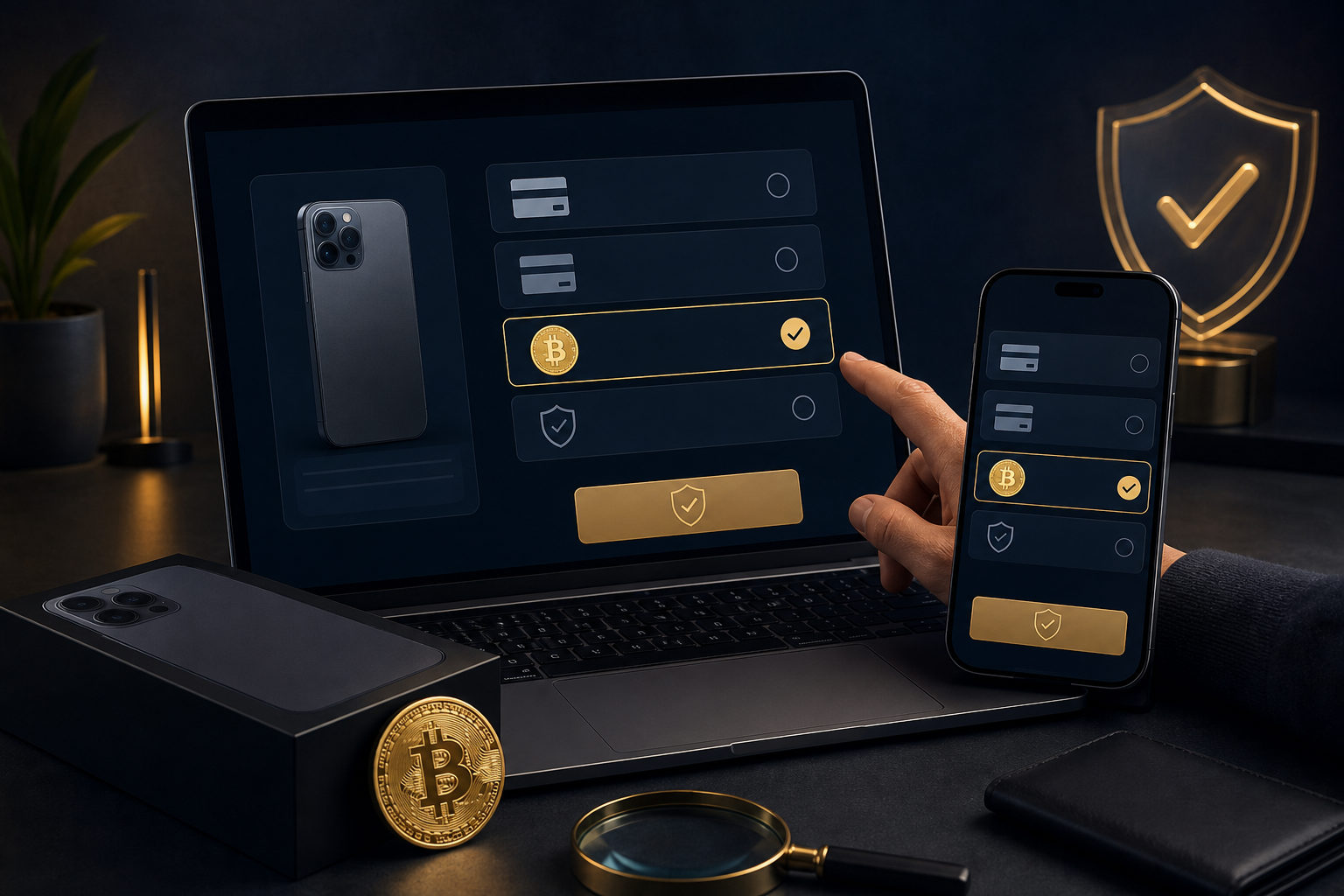
Does Newegg accept Bitcoin? The only safe answer is to verify the payment options on your own checkout page that day. Old posts, screenshots, and recycled claims are not enough to confirm what your order can use.
Start with the right assumption: past support does not guarantee current support
People usually search this question because they want a simple yes or no. In practice, the real answer depends on what appears during checkout for your account, your cart, your shipping details, and the item you are buying. A merchant may have accepted Bitcoin before, may still accept it for some orders, or may not show that option for your specific purchase path.
That is why you should not rely on forum replies, social posts, or old articles that say a retailer accepts crypto. Payment methods can change because of regional restrictions, seller settings, payment processor availability, internal risk checks, or temporary system changes. Even if another shopper saw a Bitcoin option, that does not prove your order will show the same thing.
For this topic, the safest approach is procedural. You are not trying to win an argument about company policy. You are trying to avoid sending irreversible funds to the wrong place.
How to verify it step by step
Step 1: Go to the official site and build the order normally
Open the official Newegg site the way you usually would, sign in to your account, add the item to your cart, and move through the standard checkout flow. Do not begin from a shared “crypto checkout” link, a coupon page from an unknown source, or a message claiming to offer a special Bitcoin payment route.
The reason is straightforward. The product page does not decide your final payment options. The checkout page does. Only after the system sees your item, delivery location, account status, and order details can it show what payment methods are actually available for that order.
The caution here is fraud prevention. Fake support pages and lookalike domains often appear around retailer payment searches. If a page pushes you away from the normal order flow, asks you to continue in a chat app, or tells you to request a wallet address by email, stop there.
Step 2: Check the payment section line by line
Once you reach the payment page, review the listed payment methods carefully. If you see a Bitcoin or crypto-related option, open the details and read the conditions. If you do not see one, do not assume it is hidden elsewhere or available through a manual workaround.
This matters because a legitimate retail crypto payment flow is usually integrated through a recognized payment process. It is not the same as sending coins to a random address and hoping the order gets matched later. A real checkout option should connect the order total, the payment request, and the order status in a consistent way.
Be careful not to confuse crypto payments with gift cards, financing tools, store credit, or third-party payment products that are unrelated to Bitcoin. Also, if the wording is vague, such as a broad “digital assets” or “crypto” label, you still need to confirm whether Bitcoin itself is supported and what rules apply after payment.
Step 3: Confirm the payment stays inside an official order flow
If a crypto option appears, the next check is just as important. See whether the payment process stays within the formal checkout path or routes through a standard payment page that remains linked to your order. If instead you are told to copy an address manually, paste an order number into a memo field, and send the coins yourself outside the checkout system, treat that as a high-risk situation.
The reason is simple: manual crypto transfers leave much more room for mistakes. If you enter the wrong address, send the wrong asset, miss the payment window, or fail to match the order details, the result may be delayed processing, order cancellation, or no clear recovery path. Scammers know this and often imitate a “special manual crypto channel” run by support staff.
Your rule should be strict here. Do not trust any wallet address sent through private messages, direct email, or unofficial support conversations. Reliable payment instructions should come from the actual checkout process and should clearly correspond to your order.
Step 4: Read the timing, confirmation, and refund rules before sending anything
If Bitcoin really is offered, pause before paying. Read the payment instructions with care. Focus on the payment deadline, what happens if the request expires, how the merchant treats underpaid or late transactions, and how refunds are handled.
Bitcoin payments do not behave like card payments. Bitcoin was introduced in the 2008 white paper Bitcoin: A Peer-to-Peer Electronic Cash System, and the genesis block arrived in January 2009. On the network, a new block is produced about every 10 minutes, and confirmation timing can still vary with network conditions and transaction fee choices. For a merchant, that timing matters because checkout systems often depend on a valid payment window.
This is where many avoidable disputes begin. A buyer thinks payment has been made because the transaction was broadcast. The order system may still be waiting for the required confirmation state or may mark the payment as late. Refund handling can also differ from what a buyer expects, so you need to understand the merchant's stated rules before you proceed.
Step 5: Use a low-risk test order if this is your first time paying this way
If you have never used Bitcoin in an e-commerce checkout before, it is wiser to start with an order whose value and complexity are easier to manage. The point is not that a smaller order is automatically safe. The point is that your first run through the process should expose as little downside as possible if you misunderstand a step.
Bitcoin transactions are not like card authorizations that can often be stopped through ordinary consumer channels. Bitcoin has a fixed supply cap of 21 million coins, and its smallest unit is 1 satoshi, which equals one hundred millionth of a BTC. Those design features are part of how the system works, but they do not protect you from sending funds to the wrong destination.
Even with a smaller test order, verify everything. Check the asset type, the address, the amount, the countdown, and the order reference. If any part of the process looks unclear, pause and confirm it before sending funds.
If the checkout page does not show Bitcoin, what should you assume?
You should assume that your current order does not have an official Bitcoin payment option. That is the practical answer for buyers. If the checkout flow does not present Bitcoin or a clearly defined crypto method, you should not invent one on your own.
This is where people often get pulled into bad decisions. They search for a “latest wallet address,” buy gift cards from untrusted sellers, or ask strangers online to complete the order for them. Those workarounds create fresh risks around payment fraud, card theft, account abuse, and personal data exposure. They do not solve the original question safely.
The better move is to stay inside the retailer's public support material and its own checkout process. If the help pages do not clearly say that Bitcoin is available, and the checkout page for your order does not show it either, then treat the answer as no for that purchase.
Why one shopper may see a different result than another
This point causes a lot of confusion. A payment method can appear for one user and not another because of shipping region, item category, seller type, fraud checks, or a payment processor setting in the background. The checkout page is dynamic, not a universal screenshot that applies to every order.
There is another detail that matters. Retail sites often present broad information on help pages or category pages, while the final decision appears only at checkout. So even a statement that sounds official still has to be tested against the payment options shown in your own order flow.
For the buyer, this leads to two useful habits. First, never treat someone else's screenshot as proof for your order. Second, even if you used Bitcoin successfully with a merchant before, verify the option again next time rather than assuming nothing has changed.
Safety boundaries you should not cross
Stay inside the official checkout path
If a supposed payment process moves you into email, messaging apps, pasted wallet addresses, or a temporary QR code sent by support, you should not treat that as standard retailer checkout. A legitimate payment path should remain connected to the order and should show consistent details from start to finish.
Do not let discounts rush your judgment
Scams often use savings language to lower your guard: special crypto discount, limited-time Bitcoin offer, checkout by coin only, or private deal through support. A discount does not prove a payment page is authentic. If the “deal” requires you to leave the site's normal checkout process, that is the warning sign that matters.
Remember that Bitcoin transfers are not casually reversible
Bitcoin was built for peer-to-peer value transfer, not for the kind of chargeback system many shoppers are used to with cards. That does not mean every crypto payment is unsafe. It means your margin for error is smaller once you send funds to the wrong address or follow an unofficial payment route.
Protect your account and wallet access
If you decide to pay with Bitcoin, merchant verification is only half the job. You also need to protect your own wallet and account access. Never share seed phrases, private keys, login codes, or full wallet control with anyone claiming to help complete a payment. A real merchant does not need those secrets to receive funds.
FAQ
Where should I look to know whether Newegg takes Bitcoin for my order?
Look at the final checkout page for your own order. That is where your cart contents, shipping details, and account conditions come together, and that is the only place that can confirm what payment options are actually available to you.
Can I send Bitcoin to a wallet address posted online and assume it belongs to Newegg?
No. A posted address is not proof of ownership or legitimacy. If the payment request does not come through the official checkout flow and clearly match your order, sending funds is a bad idea.
If a Bitcoin payment fails, will the order always stay open?
Not always. That depends on the payment deadline and the merchant's checkout rules. Before you pay, check how expired requests, delayed confirmations, and failed attempts are handled.
Why does another shopper say Bitcoin is available when I cannot see it?
Different regions, items, seller arrangements, and risk checks can lead to different payment options. The safe standard is your own checkout page, not another person's experience.
Will a refund always come back in Bitcoin if I pay that way?
There is no universal rule. Refund treatment depends on the merchant and the payment service used in the checkout flow. Read that part before sending payment, not after.
If you are ready to place an order, keep the process simple: use the official site, move the item to checkout, and inspect the payment terms carefully. If Bitcoin is not shown as an official option, do not pay through side channels or private wallet addresses.