
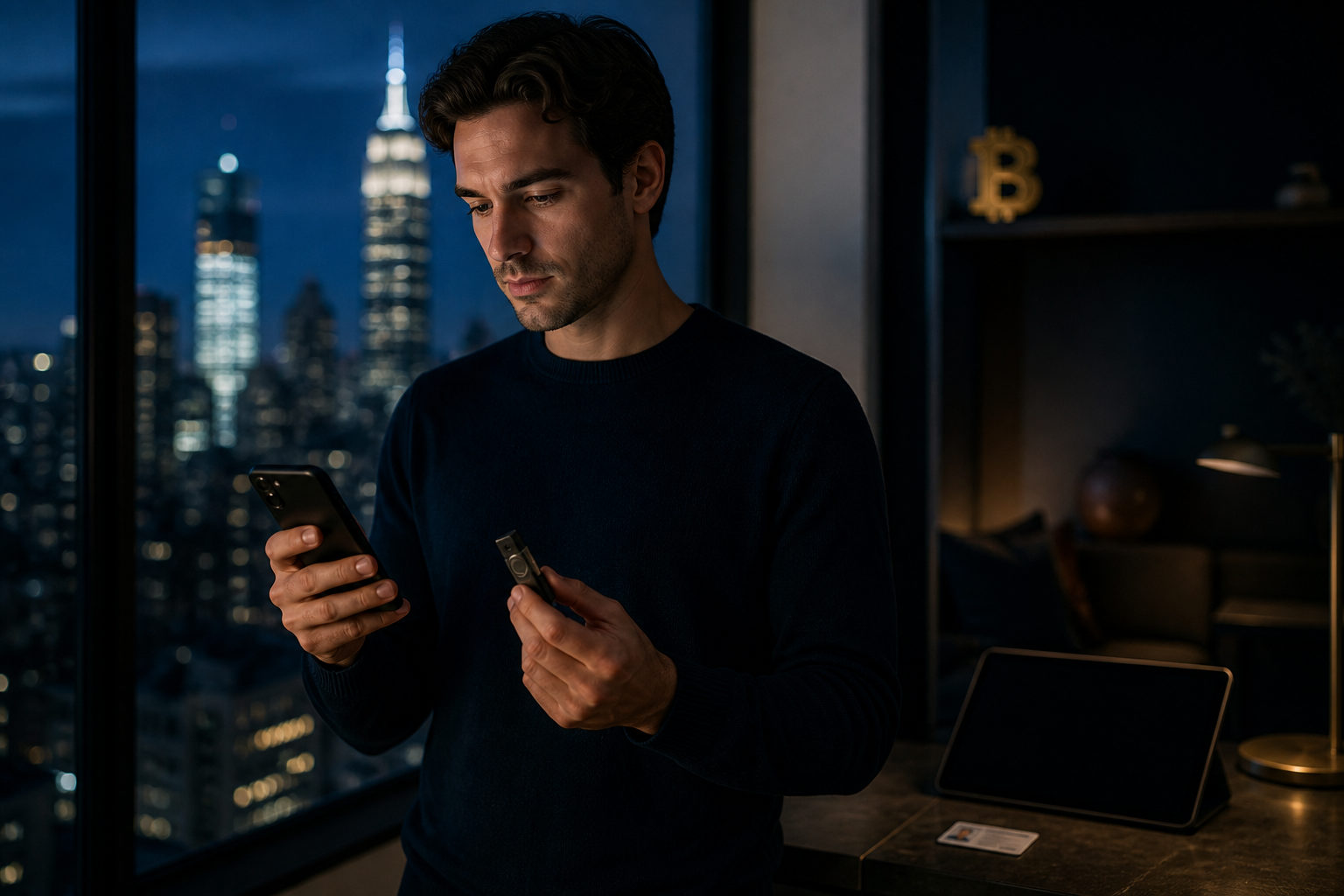
To buy bitcoin in New York, start with a service that clearly accepts New York users, complete identity checks, fund the account carefully, make a small test purchase, and confirm you can withdraw BTC before committing more money.
Start with your actual goal
People searching how to buy bitcoin in New York often focus on the first place that lets them click a buy button. That is rarely the main decision. What matters first is whether you want simple exposure for a short period or direct control over bitcoin for longer-term holding.
If you only want to learn the process, convenience may matter more than wallet setup on day one. If you expect to hold for a while, custody becomes part of the purchase decision, because buying and storing are tied together. A smooth onboarding flow is useful, but it does not tell you whether you will be able to move your BTC out later.
New York also calls for extra care around availability and compliance. Some crypto services divide features by region, and a brand that works in one state may offer fewer functions in another. Before you submit personal data or send dollars anywhere, confirm that the service is actually open to New York residents and that its rules are visible in plain language.
Step 1: Confirm the service is available to New York users
Read the registration flow, service terms, support pages, and withdrawal rules before opening an account. Do not rely on ads, social posts, short videos, or screenshots from other users. A service may appear to support bitcoin purchases broadly while limiting signups, funding methods, or withdrawals in specific jurisdictions.
The reason for checking first is practical. If you complete onboarding and transfer funds before noticing a restriction, you may end up stuck in a review process with money in transit and no clear path forward. That is an avoidable problem.
Watch for vague wording. If a service does not plainly state whether New York users are supported, treat that as a warning sign. You should also look for clear explanations of identity verification, fees, purchase mechanics, and withdrawal access. A clean interface means little if the important policies are hard to find.
Step 2: Prepare identity documents and secure your account before funding it
Most compliant ways to buy bitcoin in New York will require identity verification. In practice, that means you should be ready with government-issued identification, consistent personal details, an email account you control, and a phone number that can receive security prompts.
It is smart to use a dedicated email address for financial and crypto accounts. Set a unique password and enable two-factor authentication before you do anything else. The email account is often the recovery layer for the exchange account, so weak email security can undo every other precaution.
Avoid any offer to “help” with verification, account setup, or document submission. If another person handles your sign-in, verification prompts, or recovery options, you lose control at the point where control matters most. The trouble may not show up on the first day. It often appears later when the service asks follow-up questions or flags unusual activity.
Step 3: Choose a funding method only after you understand the full cost
Before you buy bitcoin, decide how dollars will enter the account. Different funding methods affect timing, reversibility, account review risk, and your ability to match account ownership. For beginners, the cleanest route is usually the one that leaves a clear paper trail and matches your own name across each step.
Do not focus only on the headline trading fee. Your actual cost may include spread, deposit charges, withdrawal fees, and extra markups built into instant purchase tools. A page that advertises low commission but gives little detail on execution price is not giving you the whole picture.
Keep the source of funds consistent with your own identity. Borrowed cards, third-party transfers, and informal payment arrangements can create problems later if the service asks for proof of ownership or source of funds. What feels convenient in the moment can become the hardest part to explain.
Step 4: Make a small test purchase before scaling up
Your first order should be a process test, not a full commitment. Buy a small amount that fits your learning budget and watch each stage: order confirmation, balance update, transaction history, and access to the withdrawal page. This is the easiest way to catch account limits, payment issues, or product confusion before the stakes get larger.
You also want to verify what you actually bought. Some interfaces place spot bitcoin, internal balances, and price-tracking products close together. Similar names can hide very different rights. If your goal is direct ownership with the ability to withdraw BTC, make sure the product in your account supports that.
Pay attention to the order type as well. If the service offers several ways to buy, understand whether you are placing an order for immediate execution or setting conditions for later. For a first purchase, clarity is more useful than trying to optimize entry timing.
Step 5: Check whether the bitcoin in your account can be withdrawn
After the purchase, do not stop at seeing a balance on screen. Go into the asset or withdrawal section and confirm that the holding is BTC and that withdrawals are available. Look for extra review steps, address whitelisting, waiting periods, or any additional account checks that might delay a transfer.
This matters because buying exposure and controlling the asset are not always the same thing. A service can make balances easy to view while keeping withdrawal rules buried deep in its support pages. If you plan to hold your bitcoin outside the service, withdrawal access is part of the purchase decision from the start.
Be careful with asset labels and network prompts. If you are unsure what a code, product name, or transfer option means, stop there and verify it through the service’s official help materials. Do not hand screenshots to strangers in chat groups and ask them to guide the transfer. That is a common setup for theft.
Step 6: Decide whether to move BTC to a self-custody wallet
If you are buying a small amount just to learn, leaving it with a regulated service for a short time may feel simpler. If you are buying bitcoin in New York as a longer-term position, self-custody deserves serious attention. In self-custody, you control the keys or seed phrase, which means control and responsibility sit with you.
Before moving coins, understand the basic difference between a hot wallet and a cold wallet. A hot wallet is easier for regular use and faster access. A cold wallet places more emphasis on isolation and long-term storage. The right choice depends on your habits, the amount you are willing to secure personally, and how comfortable you are with backup procedures.
Keep the seed phrase and private keys off cloud notes, draft emails, chat apps, and photo galleries. Anyone who asks for them, claims they need them for verification, or offers to “sync” or “recover” your wallet is trying to gain control. There is no legitimate reason to share that information.
Step 7: Test withdrawals carefully and verify the address slowly
When you are ready to move BTC to your own wallet, copy the receiving address, review the beginning and end of the string, and send a small test amount first. Wait for that transfer to show up as expected before moving the rest.
This step protects you from irreversible mistakes. Blockchain transfers usually cannot be canceled after they are confirmed. If malware swaps the copied address, if you paste the wrong destination, or if you rush because someone is pressuring you, the result can be permanent loss.
Also make sure the receiving wallet is already backed up before you send anything substantial. A fresh wallet that has not been properly backed up is not ready to hold meaningful value. Device loss or reset can lock you out just as effectively as sending to the wrong address.
Step 8: Keep organized records from the beginning
Anyone learning how to buy bitcoin in New York should build a record-keeping habit early. Save purchase confirmations, funding records, withdrawal history, and notes that identify your wallet addresses. Clear records help you review costs, investigate problems, and prepare for any reporting obligations later.
Crypto activity often spans more than one account, more than one wallet, and more than one time period. Memory is a poor record system. If you wait until much later to reconstruct what happened, you are much more likely to mix up transfers and purchases.
Keep original account statements when available and export transaction history from the service if that option exists. Screenshots can be useful for quick reference, but they should not be your only archive. Store important records safely and avoid sending full account files to unverified helpers or unofficial “support” contacts.
Common scam patterns to watch for
Fraud around bitcoin purchases often starts before the purchase itself. You may run into fake support accounts, private messages that pretend to offer setup help, copycat websites, pressure tactics in chat groups, or “mentors” who insist on handling the process for you.
Be especially careful with any situation that mixes urgency with secrecy. If someone tells you to hurry, move to a private chat, install remote access software, share one-time codes, or transfer funds before you have checked the receiving address yourself, stop immediately.
Another common trap is the fake recovery or wallet verification request. The message may look technical and convincing, but the goal is simple: get your login details, seed phrase, or transfer approval. Keep all sensitive actions inside the official app or website you reached on your own.
FAQ
Do I need ID verification to buy bitcoin in New York?
In most compliant setups, yes. The exact checks vary, but identity verification is commonly part of account access, funding, and withdrawals, so completing it early reduces friction later.
Should I keep bitcoin on the service or move it to my own wallet?
That depends on your time frame and comfort level with self-custody. Traders may value convenience, while longer-term holders often place more weight on direct control of the asset.
Why does the displayed bitcoin price differ from my final purchase cost?
The number shown before you confirm can differ from the final result because of spread, fees, market movement, and the execution method. The final confirmation screen matters more than the first quote you see.
What should I check before sending BTC to another wallet?
Confirm that the destination is a BTC receiving address, verify the address characters carefully, and send a small test transaction first. If anyone pushes you to send the full amount right away, treat that as a risk signal.
What is the biggest mistake beginners make when buying bitcoin in New York?
A common mistake is treating the purchase as a single click instead of a chain of decisions. Availability, verification, funding, withdrawal access, wallet security, and record keeping all affect whether the purchase actually works as intended.
If something feels off, pause before you send anything
If a platform, message, or group interaction feels wrong, do not continue with payment, document upload, or wallet transfer. Go back to the official login route, review your security settings, check withdrawal permissions, and confirm each step on your own screen. For a first bitcoin purchase in New York, extra patience during account setup and withdrawals is often the best protection you have.