
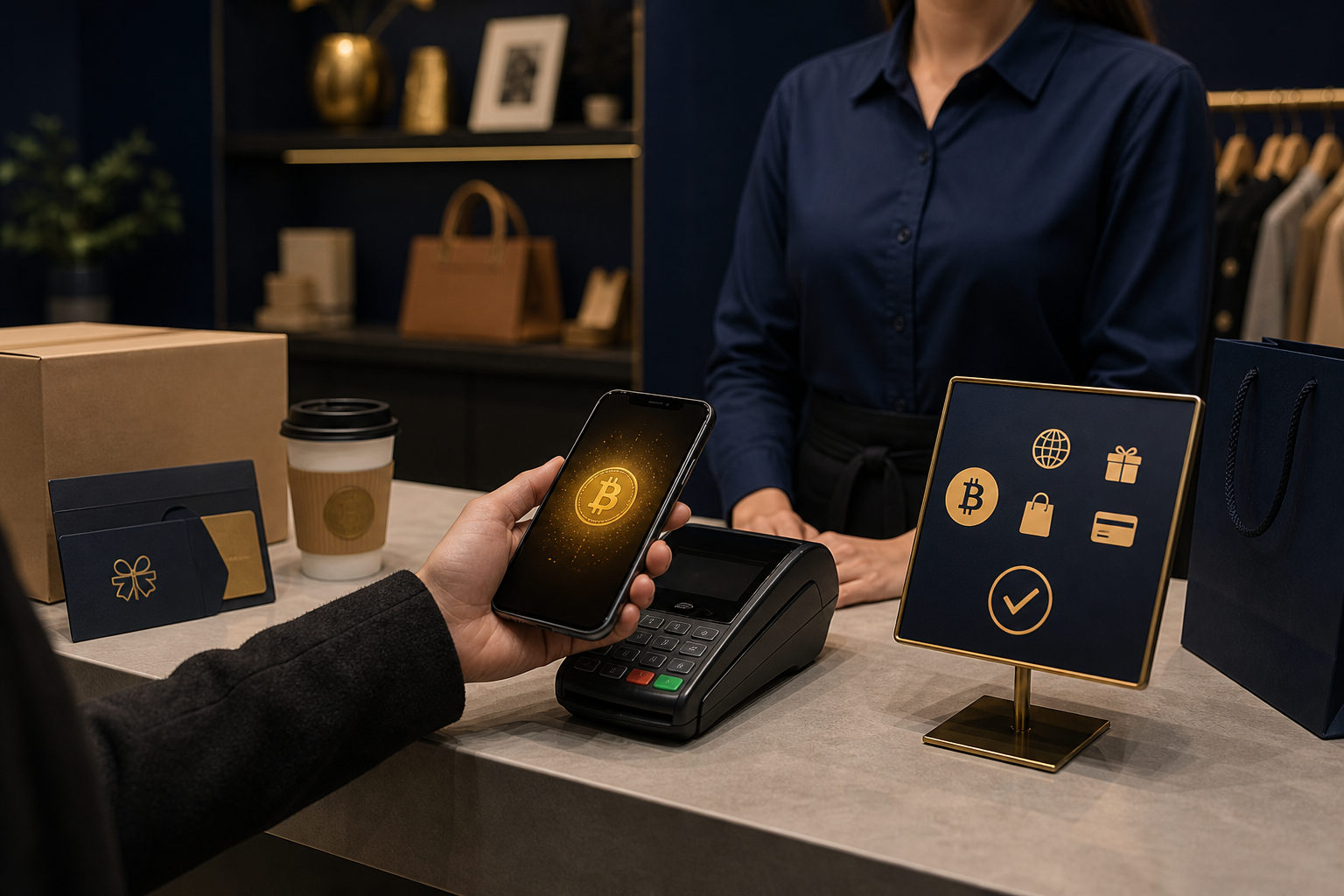
In the US, some businesses do accept bitcoin, but not in a uniform way. The practical answer is this: whether you can pay with bitcoin depends on how a merchant handles crypto payments, whether checkout still shows BTC as an option, and whether the payment flow is official and active at the time you order.
What “accepts bitcoin” usually means in the US
When people ask who accepts bitcoin in the US, they often imagine a simple yes-or-no list. Real payment flows are more mixed than that. A merchant may take BTC directly, use a payment processor, or offer a gift-card route that only looks like direct bitcoin spending from the customer side.
Direct bitcoin acceptance
Some merchants collect BTC themselves. In that setup, the checkout page, invoice screen, or in-store register usually presents a bitcoin payment option, a wallet address, or a QR code.
The right move is to verify the asset, the payment amount, and the payment window before sending anything. The reason is simple: blockchain transfers are generally not easy to reverse, so a mistake in asset type or destination can be costly.
One caution matters more than the marketing copy on a homepage. A store only truly accepts bitcoin for your order if the live checkout page still offers BTC and the terms explain how failed payments and refunds are handled.
Payment through a third-party processor
Many US merchants do not hold bitcoin themselves. Instead, they rely on a crypto payment service that accepts BTC from the buyer and settles with the merchant in dollars behind the scenes.
From a customer view, this still feels like paying with bitcoin. The benefit is a more structured checkout flow, but the main safety rule does not change: only trust payment details shown inside the official order process, not wallet addresses sent later through chat, email, or direct messages.
Gift cards funded with bitcoin
This is one of the most common paths for people who want to spend BTC in a broader range of US retail settings. In that case, the store is not necessarily accepting bitcoin directly. You first use bitcoin to get a gift card, then use that card with the merchant.
That can expand where your funds are usable, but it changes the risk profile. Refunds, expiration, remaining balances, and usage limits are then governed by the gift card rules, not by the fact that you started with bitcoin.
Small in-store merchants and local experiments
Some independent businesses in the US, including small retailers or service providers, may put up a bitcoin accepted sign. That can be genuine, but support may depend on whether the owner still has the payment setup enabled that day.
For in-person transactions, ask before the product or service is delivered. Confirm whether BTC is active, which QR code you should scan, when the merchant considers the payment complete, and whether you can get a receipt tied to the order.
How to verify whether a US merchant really accepts bitcoin
If you want a reliable answer, do not stop at blog posts, screenshots, or old social posts. The safer approach is to verify the payment path yourself. These steps work for online stores, digital services, and many local merchants.
Step 1: Check the checkout page, not just the homepage
Operation: add the item to your cart and go all the way to the payment method screen. Look for a clear BTC or bitcoin option rather than vague labels such as digital payments or alternative payments.
Reason: a site may keep old language on a public page while the actual payment method has been removed or restricted to certain products. The checkout page is what matters because that is where the merchant reveals what is currently available for your order.
Watchout: do not send funds just to “test” whether bitcoin works. Wait until a real order exists, then compare the order details, asset type, amount, and payment timer.
Step 2: Find out whether the merchant receives BTC directly or through a processor
Operation: read the payment instructions, FAQ, or help section tied to the order. See whether the merchant says a third-party crypto payment service handles settlement or whether the store manages bitcoin payments itself.
Reason: that affects who handles support, how refunds may be issued, and what records you should keep. A direct-acceptance merchant may ask for a wallet address if a refund is approved, while a processor-based flow may keep everything inside the order system.
Watchout: stay within the official domain or app flow the whole time. If checkout suddenly moves to a page you do not recognize, pause and verify before sending any payment.
Step 3: Confirm the asset and network before you pay
Operation: make sure the merchant is asking for BTC and that the payment instructions are clear. If the page is vague and only says it accepts crypto, contact official support before doing anything.
Reason: many payment mistakes do not come from price confusion. They come from sending the wrong asset or using the wrong network. Once a blockchain transfer is sent, recovery may be difficult or impossible.
Watchout: do not rely on similar ticker symbols or assume your wallet chose the correct path for you. You need to confirm what you are sending, where it is going, and how the merchant expects to receive it.
Step 4: Read the refund and cancellation policy first
Operation: open the refund policy, cancellation rules, and any section on failed or expired crypto payments before paying. Check whether a refund would be returned in BTC, handled in dollar terms, or issued as store credit or a gift card.
Reason: many disputes happen after payment, not during payment. A normal e-commerce order can become harder to unwind if the merchant treats crypto transactions under separate rules.
Watchout: if the policy is vague or support avoids clear answers, move on. Low-reversibility payment methods require more clarity up front, not less.
Step 5: Start with a small order if the merchant is new to you
Operation: if this is your first bitcoin purchase with a merchant and the intended order is meaningful to you, test the process with a lower-value item or service first.
Reason: support quality, payment timing, order tracking, and refund handling vary from one merchant to another. A small first order helps you verify the process without taking the full risk at once.
Watchout: a small test does not mean splitting one order across random payments. Follow the merchant’s own order rules for partial payments, expired invoices, or reissued checkout links.
Where bitcoin use is more likely in US commerce
A merchant list can become outdated quickly. A better question is which categories are more likely to show a bitcoin option. That gives you a more durable way to search on your own.
Online digital services
Digital products, subscriptions, developer-oriented services, and some internet-based business tools are more likely to support bitcoin payments. The reason is operational: online delivery and online billing already fit a blockchain-based payment step more easily than many physical retail systems do.
The caution is that digital goods often come with stricter refund standards once access is granted. Before paying, check account terms, renewal settings, and how service disputes are handled.
Gift card routes
If your goal is to use bitcoin across a wider set of US merchants, gift cards are often the bridge. They can make spending more flexible, but they introduce a new set of terms that you need to treat seriously.
Check how and where the card can be used, whether balances can be split across purchases, and what happens if the card details are lost. Keep screenshots and order records because support may ask for them later.
Independent local businesses
Small local shops, food businesses, repair services, consultants, and creative professionals may be more open to BTC than larger chains. Owners can sometimes make payment decisions quickly without changing a large corporate system.
That flexibility cuts both ways. You need to confirm that bitcoin acceptance is still active, that the QR code is being shown by the merchant on the spot, and that the business can connect the payment to your order.
Crypto-focused services
Some businesses naturally serve users who already hold digital assets, so bitcoin support may be more common there. That does not automatically make a merchant trustworthy.
If anyone tells you to send BTC to a separate verification address, account upgrade address, or manual review address, treat that as a strong warning sign.
Fraud prevention matters more than finding a long merchant list
The biggest risk in searching who accepts bitcoin in the US is not missing a store that takes BTC. It is mistaking a scam for a payment option. These are common traps to watch for.
Fake support changing the wallet address
A scammer may pose as customer support and claim the payment system changed, then send a different wallet address. The correct action is to return to the official order page and verify there, not to trust a message thread.
The reason is obvious: bitcoin transfers are hard to reverse. If funds go to a scammer’s address, recovery is usually difficult. Use the payment details from the official checkout flow and verify them carefully.
Phishing pages that mimic a checkout screen
You may land on a page that looks legitimate through search results, ads, or social posts. Before paying, check whether the domain matches the merchant’s official site and whether the page includes real order information rather than only a QR code and a timer.
Phishing pages can look convincing at first glance. They often fail on the details: weak support paths, missing policy pages, or payment instructions detached from an actual order.
Refund scams after the payment
Some scams start after you have already paid. You may be told the payment failed and that you need to send another transfer to release a refund or complete verification.
A legitimate merchant should not require a new crypto transfer just to return funds. Never share your seed phrase, private keys, or one-time codes, and never install unknown software so someone else can control your device.
Treating gift cards like easily reversible purchases
People sometimes assume a bitcoin-funded gift card order can be canceled the same way as a standard retail order. Often that is not the case once the card has been issued or delivered.
Read the terms before buying. Confirm usage scope, balance handling, and what recourse exists if the card code is not where you expect it to be.
Practical checklist before you pay with bitcoin in the US
If you want a simple way to reduce mistakes, use this checklist every time. It is not glamorous, but it is effective.
Enter checkout only through the merchant’s official site or official app.
Confirm that the live order page clearly offers BTC or bitcoin.
Verify the asset, network, amount, order reference, and payment deadline.
Read refund, cancellation, and failed-payment rules before sending funds.
Use a wallet interface you already know well instead of changing settings under pressure.
Save transaction records, order screenshots, and support conversations for later reference.
The logic behind this checklist is straightforward. Bitcoin can be convenient, but convenience is not the same as high error tolerance. The more carefully you treat each payment, the better your odds of avoiding an expensive mistake.
FAQ
Do many US merchants accept bitcoin directly?
Some do, but it is not a universal checkout option across US commerce. In many cases, bitcoin support appears only for certain products, certain merchants, or through a payment processor rather than direct BTC handling by the seller.
Why does a store say it accepts bitcoin, but I cannot find the option at checkout?
Public-facing text may be outdated, or the option may only appear for certain items or regions. The live checkout page matters more than a homepage banner or an old help article.
What types of US purchases are more likely to support bitcoin?
Digital services, gift card routes, some independent local businesses, and crypto-oriented services are more likely to show a BTC option. Even then, availability can change, so verify before each purchase.
Can I trust a wallet address sent by customer support in a message?
Do not trust it without checking the official order page. Address-switch scams are common, and a payment request that appears outside the normal checkout flow deserves extra scrutiny.
If I paid with bitcoin and then found a problem with the order, can I reverse it like a card payment?
Usually not in the same way. What happens next depends on the merchant’s cancellation and refund policy, not on the blockchain transfer itself, so read those terms before you pay.
If you want the shortest useful answer to who accepts bitcoin in the US, it is this: fewer merchants than marketing headlines suggest, and the safe way to proceed is to verify checkout, read the policy, and test with a small order before making a larger purchase.