


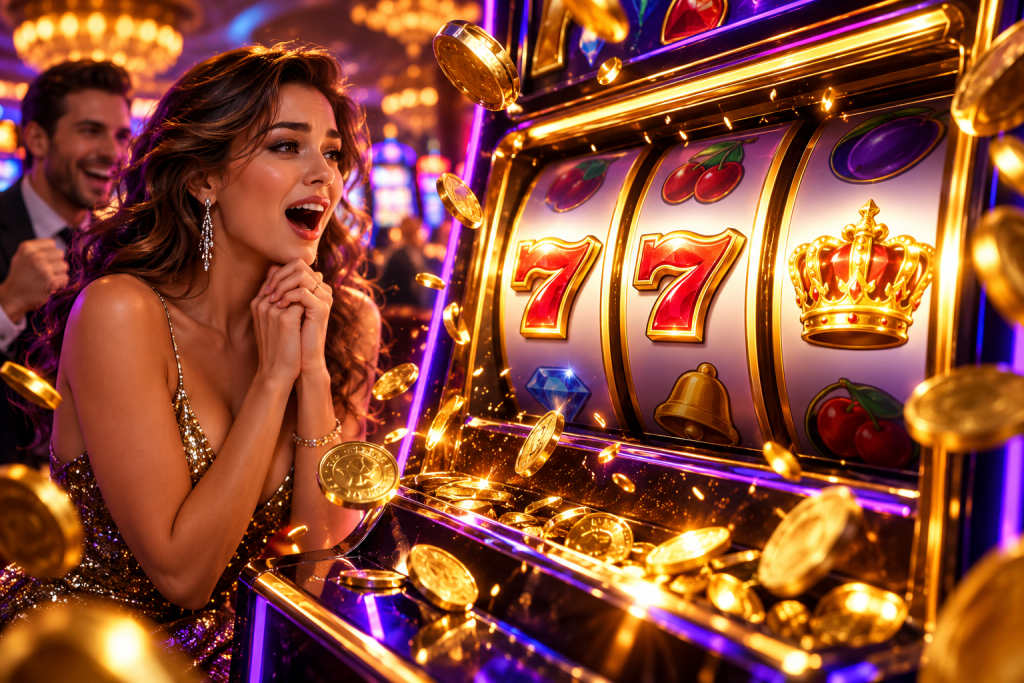
The outcome on the screen is not what it looks like
A player watches the reels stop and sees two jackpot symbols land on the payline, with the third sitting one position above or below. The screen flashes, the machine plays a short sound, and the player feels they were close to a large payout. That feeling is a designed part of the display, but the outcome itself was already fixed before the reels began to spin.
On most modern machines, the symbols shown on screen are a presentation of a result that was selected by a random number generator the moment the spin started. The visual near miss does not mean the machine considered a jackpot and then changed its mind. It means the selected result included two jackpot symbols and one other symbol, and the machine displayed that result in a way that draws attention to the symbols that did not line up.
What a player should understand is that a near jackpot is not a separate category of outcome. It is an ordinary losing spin whose display happens to place high-value symbols close to the payline. The machine has no memory of it, and the next spin is not more or less likely to produce a jackpot because of it.
Why the display is built that way
Slot machine designers have long understood that a result which appears close to a win holds a player's attention longer than a result that shows nothing of interest. The reels, the sounds, and the animations are presentation layers. They communicate the result, but they also shape how the player experiences it.
Publicly published reference sources describe the random number generator as selecting outcomes continuously, with each outcome mapped to a set of reel positions. The machine then shows those positions. If the mapped positions include two jackpot symbols, the player sees what looks like a near miss. The machine did not aim for that display; the display followed from the outcome.
This matters because players sometimes read a near jackpot as a signal that the machine is building toward a payout, or that the machine is teasing them. Neither reading matches the mechanism. The outcome is independent of previous spins, and the display is a translation of that outcome, not a commentary on it.
What "legal" means for a slot machine
The question of whether near jackpots are legal is really a question about what rules apply to slot machines in a given place. Different jurisdictions write different technical standards, and those standards describe what a machine may display and how outcomes must be selected. A player who wants a definitive answer for their own location needs to check the rules published by the gaming authority that oversees the venue where they play.
No single statement can cover every machine in every place. What this article can explain is the general architecture: jurisdictions that permit slot machines typically require that outcomes come from a certified random process, that the odds of each outcome match the machine's published specifications, and that the display accurately represents the selected outcome. A near jackpot display that shows two jackpot symbols and one other symbol is an accurate representation of an outcome that did not include three jackpot symbols.
A player can check three things. First, whether the venue they are in operates under a gaming authority that publishes machine standards. Second, whether that authority's standards address the presentation of near misses. Third, whether the machine itself carries any visible certification marking. None of those steps requires trusting a website or a forum post; they require reading the authority's own published documents.
The difference between a near miss and a malfunction
A near jackpot is not a malfunction. A malfunction is a specific technical event: the machine stops paying correctly, the display does not match the selected outcome, the random number generator fails, or the machine enters an error state. A near jackpot is a normal display of a normal losing outcome.
That distinction matters because players sometimes report a near jackpot as if the machine had cheated them. The machine did not cheat; it displayed a result that included two high-value symbols and one low-value symbol. The player lost the spin, and the display showed why. There is no rule that a machine must avoid showing high-value symbols close to the payline, and many jurisdictions' standards explicitly permit displays that draw attention to near misses as long as the display does not misrepresent the outcome.
If a player believes a machine displayed a result that does not match the outcome, that is a different matter. The venue's staff can review the machine's history, and the gaming authority can inspect it. But a near jackpot, on its own, is not evidence of a fault.
How to check the rules for your location
The authoritative source for whether a given machine's behavior is permitted is the gaming authority that oversees the venue. The reader should find the authority's published technical standards, which are usually available on the authority's website. The relevant sections are typically titled something like "electronic gaming device standards" or "slot machine technical requirements."
What to look for:
- Whether the standards require outcomes to be selected by a certified random number generator.
- Whether the standards address the display of near misses or "near win" presentations.
- Whether the standards require the display to accurately represent the selected outcome.
- Whether the machine must carry a certification mark or identification number.
The venue itself can also confirm which authority oversees it and whether the machine has been certified. A player who wants certainty should ask the venue which gaming authority regulates its machines, then read that authority's published standards. That is the channel that holds the current answer, not a general article.
What the machine is doing
On a modern slot machine, the sequence is this: the player presses the button, the random number generator selects a number, the machine maps that number to a set of reel positions, and the display shows those positions. The mapping is fixed in the machine's software and is part of what gets certified. The display cannot change the outcome, and the outcome cannot change after the spin starts.
This means the near jackpot the player sees is the result of a mapping that placed two jackpot symbols near the payline. The machine did not decide to show a near miss as a psychological trick. The designer decided, when building the game, how to display outcomes that include high-value symbols near the payline. The machine simply follows that design.
For a player, the practical takeaway is that a near jackpot is a losing spin with an attention-grabbing display. It carries no information about the next spin, and it does not indicate that the machine is about to pay. The next spin's outcome is selected independently, from the same process, with the same odds as every other spin.
What to confirm before you go
Before spending money on a slot machine, a player should confirm three things that change by location and by machine.
| Item to confirm | Why it matters | Where to find the current answer |
|---|---|---|
| Which gaming authority oversees the venue | Different authorities publish different technical standards for machine behavior | The venue's own signage or guest services desk, or the authority's website |
| Whether the machine's display standards address near misses | Some jurisdictions have specific rules about near-win presentations | The authority's published technical standards document |
| Whether the machine carries a certification mark | A visible mark indicates the machine was submitted for certification, though the mark's meaning varies by jurisdiction | The machine cabinet itself, usually near the manufacturer's nameplate |
The player should also confirm that the machine they are playing is the same machine described by the certification, and that the venue has not modified it. Those are checks the venue's staff can perform, and the gaming authority can inspect.
FAQ
Does a near jackpot mean the machine was about to pay?
No. The outcome was selected before the reels stopped, and a near jackpot is a losing outcome whose display places high-value symbols close to the payline. The machine has no memory of the spin, and the next spin's odds are unchanged. The display is designed to hold attention, but it does not signal an upcoming payout.
Are near jackpots allowed on slot machines?
The answer depends on the jurisdiction. Some gaming authorities publish technical standards that address near-win displays, and others do not. A player should check the standards published by the authority that oversees the venue where they play. The venue can identify that authority. This article does not state that any specific jurisdiction permits or prohibits the display.
How can I tell if a machine is malfunctioning?
A near jackpot is not a malfunction. A malfunction is a technical failure: the display does not match the selected outcome, the machine stops paying correctly, or it enters an error state. If a player suspects a malfunction, the venue's staff can review the machine's history, and the gaming authority can inspect it. A near miss alone is not evidence of a fault.
Play responsibly
Gambling should be treated as paid entertainment, never as a way to earn income or recover losses. 1-800-MY-RESET (1-800-697-3738)
18+ or 21+ depending on where you are; follow the minimum age that applies to you.
This article is general information about how these mechanics work. It is not legal advice and not a recommendation to gamble or to use any particular operator. Availability and legality differ by jurisdiction — check the rules that apply where you are.