


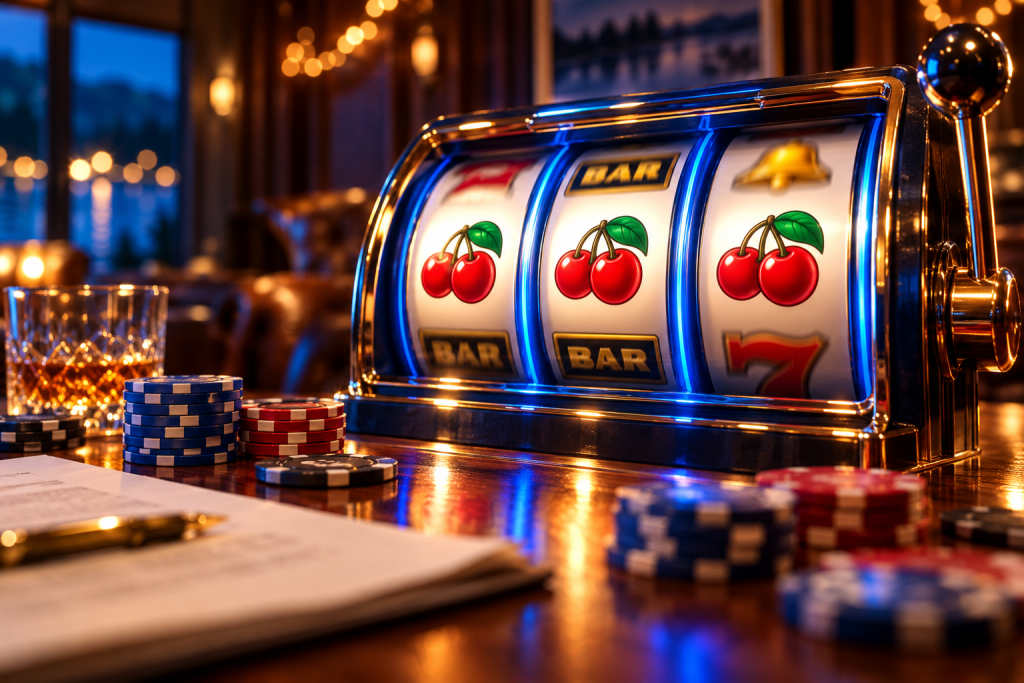
The question has no single fixed answer
Whether a person can have a slot machine in Michigan depends on who the person is, where the machine sits, what the machine is under state definitions, and which legal framework applies to that specific location. The answer comes from state statutes, administrative rules, and, on tribal land, from compacts and tribal law. No article can give a single yes or no that holds for every reader.
The most useful first step is to separate the two very different situations that look identical in everyday language. One is a commercial or charitable operation where the public plays. The other is a private person keeping a machine in a home, club, or business back room. Michigan law treats these differently, and the enforcement risk differs sharply between them.
The structural split that decides the question
Most jurisdictions, Michigan included, regulate slot machines through a layered structure. The first layer defines what counts as a slot machine or gambling device. The second layer says who may possess or operate one. The third layer sets out exceptions, such as antique machines, non-operational displays, or devices used in a private residence under narrow conditions.
A machine that looks like a slot machine but does not meet the statutory definition may not be regulated as one. A machine that meets the definition but is not connected to a permitted operation may be contraband regardless of who owns it. The reader's task is to find which layer their situation falls into, not to reason from the word "slot machine" alone.
| Situation | What governs it | Where to confirm |
|---|---|---|
| Public or commercial play | State gaming statutes and licensing rules | Michigan Gaming Control Board |
| Charitable or fraternal operation | Separate charitable gaming provisions | Michigan Gaming Control Board charitable gaming division |
| Tribal land operation | Federal law, tribal-state compact, tribal ordinance | The specific tribe's gaming commission |
| Private possession in a home | State possession and gambling-device statutes | Michigan Gaming Control Board or a licensed Michigan attorney |
| Antique or non-operational machine | Statutory exceptions and age thresholds | Statute text and the enforcing agency |
What "slot machine" means in a legal reading
State law usually defines a gambling device by what it does rather than by its cabinet shape. The definition commonly turns on three elements: consideration paid, an element of chance, and a prize or thing of value awarded. A machine that takes money, produces an outcome by chance, and pays something back is likely to fall inside the definition even if it is called something else.
That means the reader cannot answer the question by looking at the label on the machine. A device marketed as a "skill game," a "redemption game," or a "sweepstakes kiosk" may still meet the statutory definition if the outcome is predominantly chance and a prize is awarded. The Michigan Gaming Control Board publishes guidance on what it treats as a gambling device, and that guidance is the authoritative current reading.
Private ownership is the strictest reading
Many people asking this question mean a machine in a private home, garage, or private club. The possession statutes in most states are written broadly. They often prohibit possession of a gambling device with the intent to use it for gambling, and sometimes prohibit possession outright outside permitted locations. The reader should not assume that a home machine is harmless merely because it is not open to the public.
The enforcement reality is that a machine in a private home is rarely the subject of an active investigation on its own. But the legal exposure exists, and it becomes serious the moment the machine is used for money play, placed where others can play it, or connected to a larger gambling operation. A licensed Michigan attorney can give a person-specific reading of the possession statute as applied to their facts.
Tribal land is a separate jurisdiction
Michigan has federally recognized tribes that operate gaming under the Indian Gaming Regulatory Act and tribal-state compacts. On tribal land, the tribe's gaming commission and tribal ordinance govern what machines may be possessed and operated. State law does not simply extend onto tribal land in the same way it applies elsewhere in the state.
A person on tribal land who wants to know whether they can have a slot machine must ask the tribe's gaming commission, not only the state agency. The two systems sit side by side and answer different questions. The state agency regulates commercial casinos in Detroit and charitable gaming; the tribal commissions regulate tribal casinos and, on tribal land, the possession rules that apply there.
Where the authoritative answer lives
The Michigan Gaming Control Board is the state agency that administers the commercial casino, charitable gaming, and gambling-device statutes. Its website carries the statute references, administrative rules, and any published guidance on what devices it treats as regulated. That is the first place to check for a state-level answer.
For a person-specific answer, the channel is a licensed Michigan attorney who practices gaming law. The attorney can read the statutes against the reader's exact facts: the machine model, whether it operates, where it sits, who has access, and whether any play for value occurs. That is the only channel that can responsibly answer "can I" for a particular person.
What to confirm before you act
Before buying, moving, or keeping a machine, confirm the current statutory definition of a gambling device in Michigan and whether the machine falls inside it. Confirm whether any exception applies to the machine's age, condition, or intended use. Confirm whether the location is on tribal land, because that changes which authority answers the question.
Confirm the possession statute's exact language, because it may prohibit possession with intent, possession in a place of public accommodation, or possession outright. Confirm whether the machine is operational, because a non-operational or antique machine may sit in a different category. Each of these items is changeable and must be checked against the current public text, not against a summary.
FAQ
Can a private person keep a slot machine at home in Michigan?
The answer depends on the machine's statutory classification, whether it operates, and the possession statute's current text. A home machine used for private, non-commercial purposes may sit differently from one used for money play. The Michigan Gaming Control Board publishes the governing statutes, and a licensed Michigan attorney can apply them to a specific person's facts.
Does an antique slot machine fall under the same rules?
Many states, Michigan included, write age-based exceptions into their gambling-device statutes. An antique machine that meets the statutory age threshold and is not used for gambling may be treated differently from a modern device. The reader must check the current statute text for the age threshold and the conditions attached to the exception, because both can change.
Who decides whether a machine is a gambling device in Michigan?
The Michigan Gaming Control Board administers the state's gambling-device statutes and publishes guidance on what it treats as regulated. On tribal land, the tribe's gaming commission makes that determination under tribal law and the tribal-state compact. The reader's location and the machine's specific function determine which authority's reading applies.
Play responsibly
Gambling should be treated as paid entertainment, never as a way to earn income or recover losses. 1-800-MY-RESET (1-800-697-3738)
18+ or 21+ depending on where you are; follow the minimum age that applies to you.
This article is general information about how these mechanics work. It is not legal advice and not a recommendation to gamble or to use any particular operator. Availability and legality differ by jurisdiction — check the rules that apply where you are.