


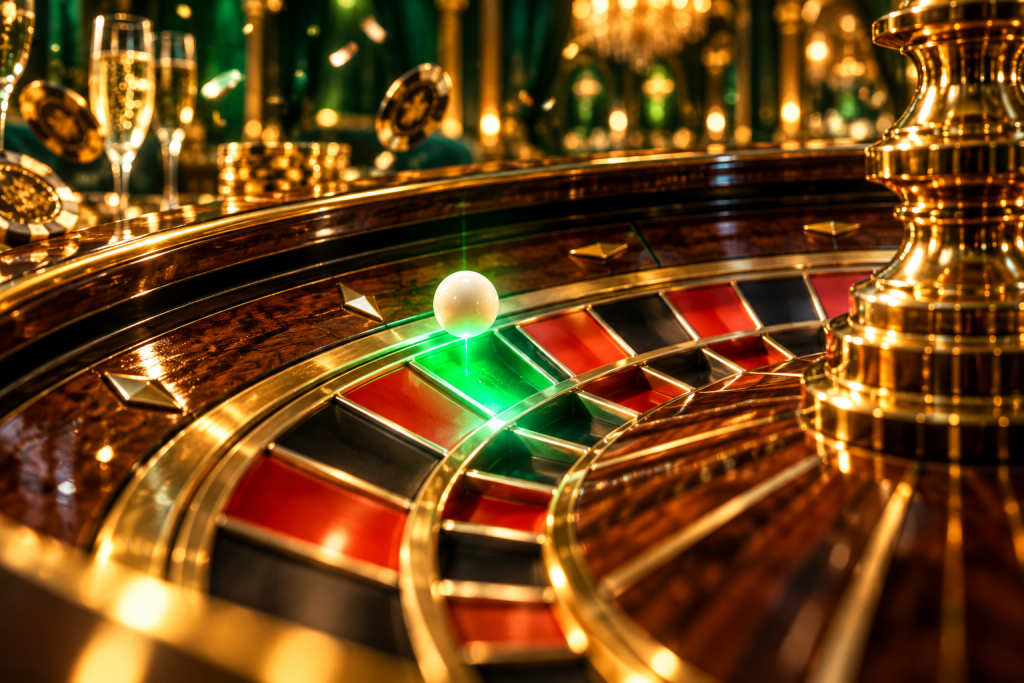
The Zero Pocket Is Where the House Lives
When you look at a roulette layout, the zero sits apart from the red and black numbers, the odd and even numbers, and the high and low ranges. That separation is the whole point. Every even-money bet on the table — red, black, odd, even, low, high — loses when the ball lands in zero. The zero does not pay even money. It pays like any other single number, and it quietly collects every even-money wager on the table at the same time.
This single pocket is the reason the game has a built-in edge for the house. If the wheel had only the 36 numbered pockets, an even-money bet would be a true 50/50 proposition. The zero breaks that symmetry. Understanding what zero pays, and what it does to the other bets, is the first thing to sort out before you put a chip down.
What the Zero Pays
A straight-up bet on zero pays 35 to 1, the same as a straight-up bet on any other single number. If you place one unit directly on the zero and the ball lands there, you receive your original unit back plus 35 more. That is the standard payout for a single-number bet on both European and American wheels.
What zero does not do is pay even money. A player who bets on red and sees the ball land in zero loses the entire red bet. The same applies to black, odd, even, low, and high. On some tables, certain rules soften this — the en prison and la partage rules found on some European tables return half the even-money stake or hold it for the next spin — but the zero itself never pays even money.
European and American Wheels: One Zero or Two
The number of zero pockets on the wheel changes the arithmetic of every bet you can make. A European wheel carries a single zero. An American wheel carries both a zero and a double zero. The second zero pocket does not change what a straight-up zero bet pays — both pay 35 to 1 — but it does change how often you can expect to lose an even-money bet to a green pocket.
| Feature | European wheel | American wheel |
|---|---|---|
| Total pockets | 37 | 38 |
| Zero pockets | 1 (single zero) | 2 (single and double zero) |
| Straight-up zero payout | 35 to 1 | 35 to 1 |
| Even-money bets lose on | Zero only | Zero and double zero |
| Effect on house edge | Lower edge on all bets | Higher edge on all bets |
The extra pocket on the American layout increases the house edge on every bet, including the even-money bets. The zero does not pay more on an American wheel to compensate for the second green pocket. A straight-up bet on zero still pays 35 to 1, but there are now two pockets that collect even-money wagers.
How the Zero Affects Every Bet Type
Roulette bets fall into broad groups, and the zero interacts with each group differently. Inside bets — straight-up numbers, splits, streets, corners, and six-lines — treat zero as just another number. A split between zero and one pays 17 to 1, a street covering zero, one, and two pays 11 to 1, and so on. The zero is a losing pocket for any inside bet that does not include it.
Outside bets are where the zero does its quiet work. Every even-money bet loses to zero outright on a standard table. The dozen and column bets also lose when zero appears, because zero belongs to no dozen and no column. The only outside bet that can include zero is a small number of layouts that allow a zero-and-double-zero split, but that is an inside bet in practice.
What the Zero Means for Even-Money Bets
An even-money bet on a European wheel has 18 winning pockets and 19 losing pockets. The 18 winning pockets are the colour or parity you chose; the 19 losing pockets are the opposite colour or parity plus the zero. That one-pocket imbalance is the entire house edge on the bet. It is not a large edge, but it is relentless, and it is built into the wheel rather than added by the operator.
On an American wheel, an even-money bet has 18 winning pockets and 20 losing pockets — the opposite colour or parity, the zero, and the double zero. The second green pocket roughly doubles the house edge on even-money bets compared with the European layout. The payout is still even money, which is why the American wheel is the less favourable version of the same game.
Special Rules That Change What Zero Costs You
Some European tables publish a rule that changes what happens to an even-money bet when zero lands. Under the la partage rule, the player receives half the even-money stake back immediately. Under the en prison rule, the full stake is held in place for the next spin; if the next spin wins, the stake is returned without profit, and if it loses, the stake is collected. Both rules reduce the cost of the zero pocket to even-money bettors, but neither makes the zero pay even money.
These rules are printed on the table layout or in the game information panel. They apply only to even-money bets and only on tables that advertise them. A straight-up bet on zero is unaffected — it still pays 35 to 1 whether la partage is in force or not.
The Sequence of a Round from Buy-In to Settlement
A roulette round moves through a fixed sequence. You buy in at the table or load the game screen and receive chips. You place bets on the layout until the dealer or the software closes betting. The ball is released, the wheel slows, and the ball settles in a pocket. The dealer or system marks the winning number, collects losing bets, and pays winning bets according to the posted paytable. The layout clears, and the next round opens.
Every decision point in that sequence is a bet selection. You choose which numbers or groups to cover, how much to stake on each, and when to stop. None of those choices changes what the zero pays or what the house edge is on any given bet. They change only how your money is distributed across the wheel.
What New Players Get Wrong About Zero
The most common misreading is that zero is some kind of neutral pocket that returns even-money bets. It is not. On a standard table, zero collects every even-money wager on the layout. The second mistake is assuming that a straight-up bet on zero pays more than other single numbers because it looks special. It pays the same 35 to 1 as any other number. The third is betting on zero as a hedge against even-money losses without working through the cost: covering zero alongside an even-money bet changes the distribution of losses, but it does not remove the house edge, because the zero bet itself carries the same edge as any other straight-up number.
A fourth error is playing an American wheel without noticing the double zero. The two green pockets sit apart on the layout, but a player focused on red and black can miss them entirely. The wheel type is printed on the table or shown in the game information panel, and it is worth checking before the first spin.
How to Read the Payout Table for Yourself
Every roulette table, physical or digital, carries a payout table. The straight-up payout of 35 to 1, the split payout of 17 to 1, the street payout of 11 to 1, and the even-money payouts are all listed there. The wheel type is also stated, either on the layout itself or in the game information panel. If a special rule like la partage or en prison applies, it is printed on the table or listed in the game rules.
The payout table is the document that settles any question about what a bet pays. House edge figures are not printed on the table, but they follow directly from the wheel type and the payout schedule. A European wheel with standard payouts produces one set of edges; an American wheel with the same payouts produces higher edges on every bet. If you want to compare two tables, compare the wheel type first, then the payouts, then any special rules.
FAQ
Does zero count as red or black in roulette?
Zero is neither red nor black. It is a green pocket, and it loses on both red and black even-money bets. The same applies to odd and even, high and low: zero belongs to none of those groups.
What is the best bet to cover zero in roulette?
There is no bet that covers zero while also paying even money on the other outcomes. A straight-up bet on zero pays 35 to 1 but loses on every other number. A split or street that includes zero pays less than a straight-up bet and still loses on most spins. Covering zero changes how losses are distributed, not the house edge on the combined wagers.
Is zero a losing bet on a European wheel?
Zero is a losing bet whenever the ball lands anywhere else, which is most spins. It pays 35 to 1 when it hits, but the house edge on a straight-up zero bet is the same as on any other single number on that wheel. The zero pocket is not a better or worse number to bet than any other; it is simply the pocket that also collects even-money wagers when it appears.
If you or someone you know is struggling with gambling, help is available. Contact the National Gambling Helpline at the helpline printed in the footer below for free, confidential support, around the clock, every day of the week. You can also visit www.ncpgambling.org for resources and treatment options. Please play responsibly and within your limits.
Play responsibly
Gambling should be treated as paid entertainment, never as a way to earn income or recover losses. 1-800-MY-RESET (1-800-697-3738)
18+ or 21+ depending on where you are; follow the minimum age that applies to you.
This article is general information about how these mechanics work. It is not legal advice and not a recommendation to gamble or to use any particular operator. Availability and legality differ by jurisdiction — check the rules that apply where you are.