


The fixed position of the machine is the venue, not your screen
Electronic bingo machines sit in a physical venue, and that venue has a fixed geographic location. This article explains the mechanism of the machine itself, not the distance from where you are reading this. If your question is about a specific venue, the venue's city and state are the fixed reference point, and your own starting point is the variable you already know.
No road mileage or travel time appears in this article. Road distance is always longer than a straight line between two points, and the difference depends on terrain, water crossings, and the road network.
What the machine does
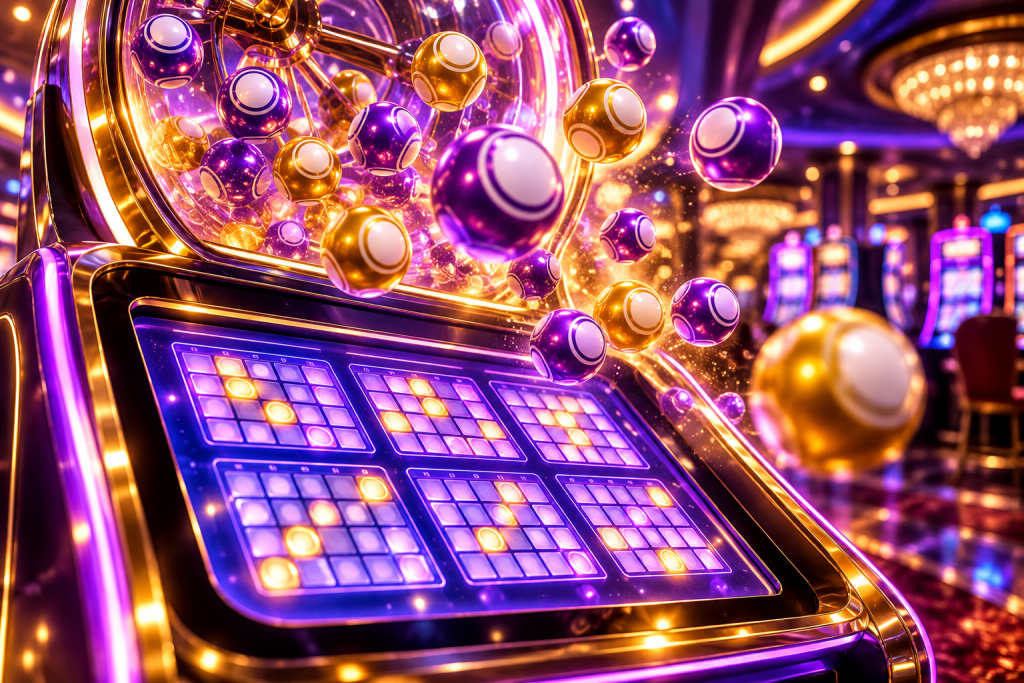
An electronic bingo machine automates the same sequence as a live bingo game. It draws numbers, marks them on one or more bingo cards, and checks whether any card has completed a winning pattern. The player's role is to choose cards and observe the draw, not to mark anything by hand.
The machine does not change the underlying game. A bingo card is still a grid of numbers, a draw is still a random sequence, and a win is still the first card to complete a declared pattern. The electronics replace the physical ball cage, the paper cards, and the manual daubing.
The draw
Every electronic bingo machine contains a random number generator. That generator produces the sequence of numbers called in the game. The sequence is produced at the moment of play, not stored in advance, and each draw is independent of the previous one.
The machine's software compares each drawn number against every active card in play. When a number matches a square on a card, the machine marks that square automatically. The player does not need to tap the square or confirm the mark.
Cards and patterns
A bingo card is a grid of numbers arranged under columns. The machine can hold many cards at once, far more than a person could manage on paper. Each card is generated independently, so two cards in the same game can share some numbers but not the full layout.
The winning pattern is set before the draw begins. Some games require a single line, others require a full card, and still others use a shape such as a letter or a frame. The machine checks every active card against the declared pattern after each drawn number.
How a win is detected
The machine stops the game the moment any active card completes the winning pattern. It does not wait for the player to notice. The winning card is displayed, the matched numbers are highlighted, and the game result is recorded.
If two or more cards complete the pattern on the same drawn number, the prize is split according to the rules of that game. The machine applies that split automatically. The player does not need to claim a win or compare cards against anyone else's.
What the player controls
The player chooses how many cards to play and which card set to use. Some machines let the player pick cards from a displayed pool; others assign cards automatically. The player does not choose the numbers on a card, and cannot change a card after the draw begins.
The player can usually set the speed of the draw. A faster draw completes the game sooner but changes nothing about the odds. The same numbers are drawn in the same sequence regardless of speed.
Electronic bingo versus live bingo
| Element | Live bingo | Electronic bingo machine |
|---|---|---|
| Draw method | Physical ball cage or blower | Random number generator |
| Card marking | Player daubs by hand | Machine marks automatically |
| Cards per player | Limited by manual speed | Many cards at once |
| Win detection | Player calls out | Machine stops and displays |
| Prize split | Announced by caller | Applied by software |
How the machine differs from a slot machine
An electronic bingo machine looks like a slot machine and sits in the same room, but the underlying game is bingo. A slot machine resolves each spin independently. An electronic bingo machine resolves a bingo draw, and the outcome is shared across all cards in that draw.
The visual presentation on the screen may show reels or symbols, but those images are only a display layer over the bingo result. The machine is not a slot machine in its game logic, even when the cabinet looks identical.
Where the current rules are published
The exact rules for a specific machine are shown on the machine's own help or rules screen. That screen states the card price, the winning patterns, the prize split rules, and the draw speed options. It is the authoritative source for that machine.
The venue's own bingo desk or guest services can also provide the house rules for electronic bingo in that room. Rules differ between venues, so a player should read the machine's rules screen before the first draw.
What to confirm before you play
Before playing, confirm the card price and the minimum number of cards. Confirm the winning patterns for the game you are about to start. Confirm whether the machine auto-daubs or requires any input during the draw. Confirm what happens if two cards win on the same number. These items are shown on the machine's rules screen and may differ from the next machine over.
FAQ
Is an electronic bingo machine the same as a slot machine?
No. The cabinet may look identical, but the game logic is bingo. A slot machine resolves each spin independently, while an electronic bingo machine draws numbers and checks cards against a bingo pattern. The screen graphics are a display layer over the bingo result, not the game itself.
Can I choose my own numbers on an electronic bingo machine?
No. The machine generates each card's numbers. You can choose how many cards to play and sometimes which card set to use, but you cannot edit the numbers on a card. Each card is fixed once the draw begins.
Does the draw speed change my chances?
No. The same numbers are drawn in the same sequence regardless of speed. A faster draw completes the game sooner but does not change the odds, the card layout, or the winning pattern. Speed is a display preference, not a game variable.
Play responsibly
Gambling should be treated as paid entertainment, never as a way to earn income or recover losses. 1-800-MY-RESET (1-800-697-3738)
18+ or 21+ depending on where you are; follow the minimum age that applies to you.
This article is general information about how these mechanics work. It is not legal advice and not a recommendation to gamble or to use any particular operator. Availability and legality differ by jurisdiction — check the rules that apply where you are.