


Counting the Wheel Before You Sit Down
You walk up to a roulette table, glance at the felt, and see a long line of numbered boxes. Before you place a chip, the number that matters most is sitting at the top of the layout: a single zero. That one pocket is what makes the wheel European, and it determines how many numbers you are playing against.
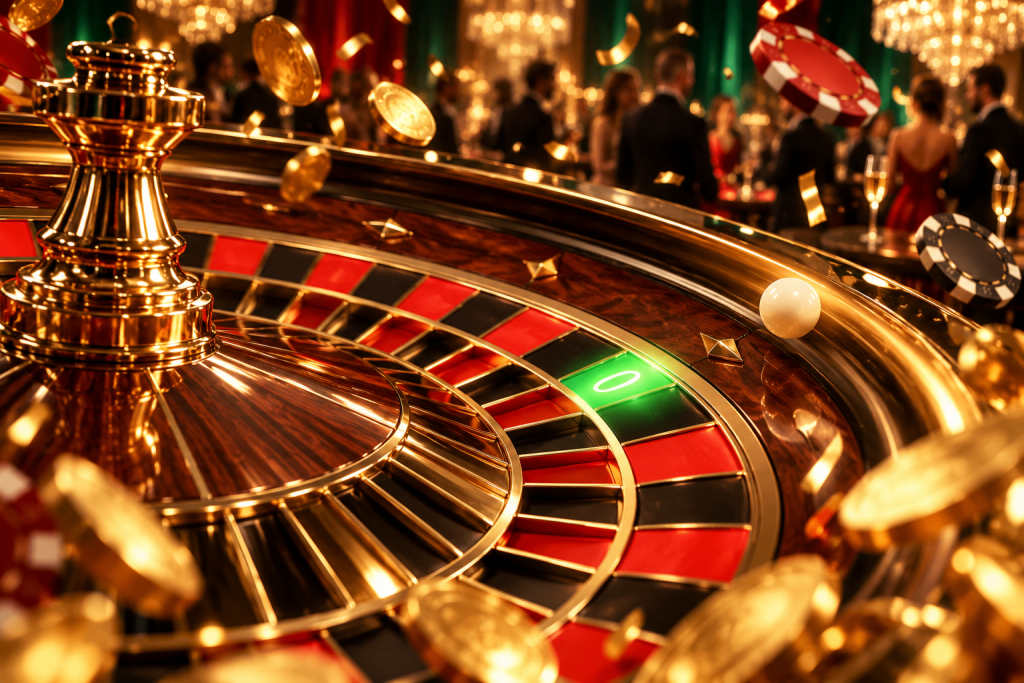
A European roulette wheel carries 37 pockets in total. The numbers run from 0 to 36, which means there are 36 numbered pockets plus the single zero. The zero is usually green, while the numbers 1 through 36 alternate between red and black in a sequence that is fixed for the wheel type. The layout on the table mirrors those numbers, with the zero placed at the head of the betting area.
The count is not a detail. Every bet you place is priced against those 37 pockets. When you bet on a single number, the payout is built as if there were 36 numbers, but the wheel has 37. That gap between the payout and the true odds is the house edge, and on a European wheel it comes entirely from the zero. There is no double zero to widen the gap further.
What the Single Zero Changes
The zero is not just another number. It is the pocket that belongs to the house on the outside bets. When the ball lands in zero, bets on red or black, odd or even, and high or low all lose under the standard European rule set. Some tables soften this with a rule that returns half the stake or holds it for the next spin, but the baseline is a loss on those even-money wagers.
Inside bets treat the zero like any other single number. A straight-up bet on zero pays the same as a straight-up bet on 17. The difference is structural: the zero is the 37th pocket, and it is that extra pocket, not any manipulation of the wheel, that gives the operator the mathematical advantage.
The wheel sequence itself is designed to scatter numbers so that no section of the wheel is an obvious run of high, low, red, or black. The sequence is standardised for European wheels, and a dealer or croupier will spin the wheel in one direction while sending the ball in the other. None of that changes the count: 37 pockets, one of them zero.
European and American Wheels Side by Side
The question of how many numbers are on a European wheel usually comes up because a player has seen an American wheel and noticed the extra pocket. The difference is one number, and it changes the price of every bet on the table.
| Feature | European wheel | American wheel |
|---|---|---|
| Total pockets | 37 | 38 |
| Zero pockets | 1 (single zero) | 2 (single zero and double zero) |
| Number range | 0 to 36 | 0, 00, and 1 to 36 |
| House edge on most bets | Lower, driven by one zero pocket | Higher, driven by two zero pockets |
| Effect on outside bets | Zero loses red/black, odd/even, high/low | Both zeros lose red/black, odd/even, high/low |
The extra pocket on the American wheel is the double zero, and it is the reason the house edge on an American layout is higher than on a European one for the same bet. The payout for a winning straight-up bet does not change between the two wheels; only the number of losing pockets does. A player choosing between tables is choosing between 37 and 38 pockets, and that single pocket is the entire difference in the long-run expected loss on most wagers.
How the Numbers Map to the Bets
The 37 numbers are grouped on the felt into inside and outside bets, and each group is priced differently. Inside bets sit on the numbered grid itself and cover specific numbers or small clusters. Outside bets sit around the grid and cover broad categories.
A straight-up bet covers one number. A split covers two adjacent numbers on the layout. A street covers three numbers in a row. A corner covers four. A six-line covers six. Each of these pays less than the true odds of hitting, and the shortfall is the house edge created by the zero.
Outside bets cover 18 numbers at a time on red or black, odd or even, and high or low, or cover 12 numbers on a dozen and a column. The even-money outside bets pay 1 to 1, but because there are 18 winning numbers and 19 losing numbers on a European wheel, the player loses slightly more often than they win. That is the zero doing its work.
The payout for a straight-up bet is 35 to 1. If the wheel had 36 pockets, that would be a fair game. With 37 pockets, the operator keeps the difference over the long run. The same logic applies to every other bet on the table: the payout is set as if the zero did not exist, but the zero is always there.
The Sequence of a Round
Understanding the count is one part of playing correctly. The other part is knowing what happens between the moment you sit down and the moment the next spin begins.
You buy in by placing cash on the table, never into the dealer's hand. The dealer exchanges it for roulette chips, which are often colour-coded to you so that bets can be identified at a glance. These chips have no value away from the table and must be converted back to cash chips before you leave.
Bets are placed while the wheel is still. The dealer announces that betting is closing, spins the wheel, and sends the ball in the opposite direction. Once the ball drops, the dealer marks the winning number, clears losing bets, and pays winners. You do not touch your chips after the result is called; the dealer handles all payouts and removals.
The decision points are simple: which numbers or groups to cover, and how much to stake on each. There is no strategy that changes the 37-pocket structure. What changes is the rate at which you expose money to the edge. A straight-up bet has a larger potential payout but loses far more often than an outside bet. A player covering many numbers at once is effectively buying a higher hit rate at the cost of a payout that does not cover the total stake when a win lands.
Where Players Go Wrong at the Table
The most common procedural mistake is touching chips after the result is announced. Once the ball has dropped, the layout is the dealer's to settle. Reaching in to adjust or remove a bet is treated as a serious breach of table procedure, and it is the fastest way to have a win voided or to be asked to leave.
The second mistake is confusing roulette chips with cash chips. Roulette chips are table-specific and often have no denomination printed on them. A player who walks away with them will find they cannot be cashed at the cage. You must ask the dealer to colour you up to cash chips before you step away from the table.
The third is assuming that a number is due because it has not appeared in a while. Each spin is independent. The wheel has no memory, and the 37 pockets do not redistribute themselves to balance past results. A number that has not hit in 50 spins has the same chance on the next spin as it did on the first: one in 37.
Reading the Table Before You Bet
The table itself tells you most of what you need to know. The layout shows the number range, the position of the zero, and the minimum and maximum stakes for inside and outside bets. Those limits are usually printed on a small sign at the table, and they differ from table to table and venue to venue. The wheel type is visible at a glance: a single green zero means European, while a second green pocket marked 00 means American.
If a table offers a rule that changes what happens when zero lands on an outside bet, that rule is printed on the felt or posted at the table. It changes the effective house edge on those bets, so it is worth reading before you commit. No rule removes the zero from the wheel; some rules merely soften its effect on even-money wagers.
The house edge on a European wheel is the same structural fact for every player at the table. What differs is how much money each player puts through the game per hour. A player making many small inside bets is wagering more total units than a player making one outside bet per spin, and that total wagered amount is what the edge applies to over time.
FAQ
Does the zero count as a number in European roulette?
Yes. The zero is one of the 37 pockets on the wheel and one of the numbers on the layout. It is not included in the red, black, odd, even, high, or low groups, which is why it wins for the house on those outside bets under the standard rule set.
Why does European roulette have 37 numbers instead of 36?
The 36 numbered pockets would produce a fair game if payouts matched true odds. The single zero is the 37th pocket, and it is the mechanism that gives the operator a mathematical edge. The payouts are calculated as if the zero were not there, but the wheel always has it.
Is the number sequence the same on every European wheel?
The sequence of numbers around the wheel is standardised for European roulette, so the order is the same from one table to the next. The table layout also follows a standard arrangement. What varies between venues is the table limits, the chip values, and any special rule applied to even-money bets when zero lands.
Gamble responsibly. If you or someone you know has a gambling problem, call the helpline printed in the footer below.
Play responsibly
Gambling should be treated as paid entertainment, never as a way to earn income or recover losses. 1-800-MY-RESET (1-800-697-3738)
18+ or 21+ depending on where you are; follow the minimum age that applies to you.
This article is general information about how these mechanics work. It is not legal advice and not a recommendation to gamble or to use any particular operator. Availability and legality differ by jurisdiction — check the rules that apply where you are.