


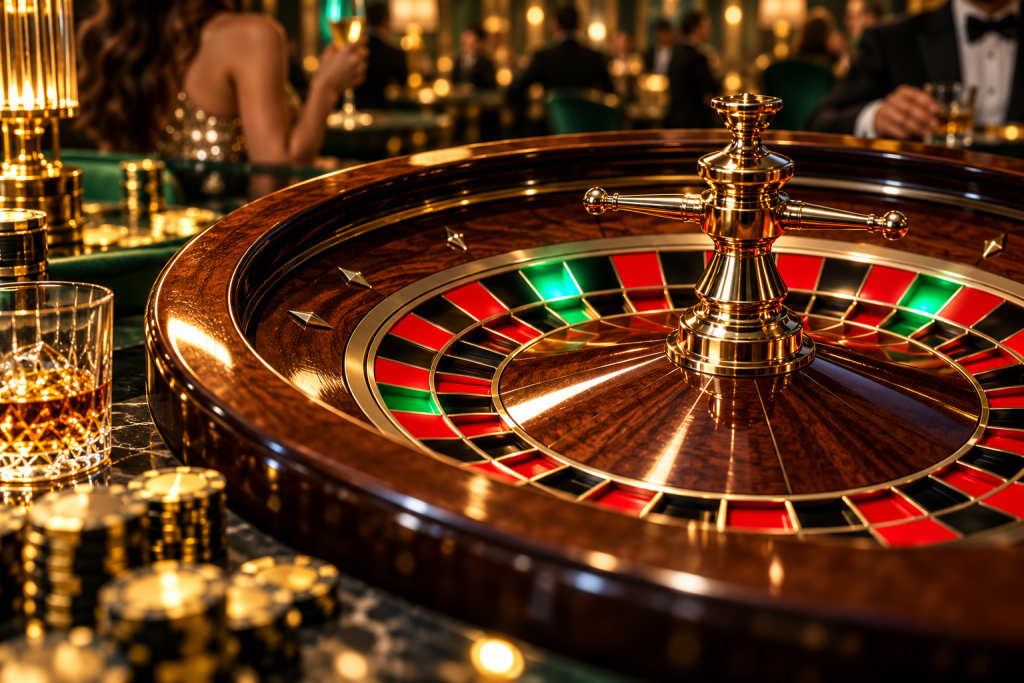
The wheel you are describing is a recent layout change
Most roulette players learn the game on one of two wheels. A European layout carries 37 pockets: the numbers 1 through 36 plus a single green zero. An American layout carries 38 pockets: the same 36 numbers plus a green zero and a green double zero. A wheel with a third green pocket is a newer variant, and it changes the arithmetic of every bet placed on it.
The third green pocket is usually marked as a triple zero, often styled as three zeros or a symbol representing them. When that pocket is added, the wheel no longer matches the pocket counts that most published roulette guides assume. The total number of pockets becomes 39, and that single addition is enough to shift the house edge on all the standard bets.
What the third green pocket does to the game
Roulette payouts are built around the 36 numbered pockets. A straight-up bet on one number pays 35 to 1, which would be a fair game if the wheel had only 36 pockets. The green zero pockets are how the house creates its edge. Each extra green pocket adds one more losing outcome for every bet that does not cover it, without increasing the payout.
On a wheel with one green zero, the house edge on most bets sits at the level created by that single extra pocket. On a wheel with two green pockets, the edge is larger. On a wheel with three green pockets, the edge is larger still. The exact percentage depends on the bet, because some bets cover the green pockets and some do not, but the direction is the same: more green pockets means a higher expected loss per wager.
Pocket counts across the three wheel types
| Wheel type | Green pockets | Numbered pockets | Total pockets |
|---|---|---|---|
| European-style | 1 (single zero) | 36 | 37 |
| American-style | 2 (zero and double zero) | 36 | 38 |
| Triple-green variant | 3 (zero, double zero, triple zero) | 36 | 39 |
The numbered pockets do not change. What changes is how many losing green pockets sit among them, and therefore how often a bet on red, black, odd, even, high or low will lose outright.
How to read the edge on any roulette wheel you sit down at
You do not need to memorise a house-edge table for every variant. You need to count the green pockets before you buy in, because that count is the single most important fact about the wheel in front of you. A single-zero wheel, a double-zero wheel and a triple-zero wheel can sit side by side in the same venue, and the difference between them is not cosmetic.
For a bet that does not cover the green pockets, such as red or black, the house edge is the number of green pockets divided by the total number of pockets. On a 37-pocket wheel that is one pocket in 37. On a 38-pocket wheel it is two in 38. On a 39-pocket wheel it is three in 39. The arithmetic is simple enough to do at the table, and it tells you which wheel is the more expensive place to put the same bet.
For inside bets on individual numbers, the payout of 35 to 1 stays the same across all three wheel types, but the chance of hitting the number falls as the pocket count rises. The same straight-up bet is worth less on a wheel with more green pockets, because the payout has not been adjusted upward to match the lower hit rate.
Where the triple-green wheel appears
The triple-green layout is not a standard wheel in the sense that European and American wheels are standard. It appears as a variant on some electronic terminals and on some live tables, often in venues that want a higher-hold version of the game. The layout is sometimes labelled with the triple-zero symbol rather than the words, so a player who glances at the felt and assumes a standard American wheel can miss the change.
Before you sit down, look at the wheel itself, not just the table sign. Count the green pockets. If there are three, every bet you had planned to make has a different expected value than it would on the wheel you may have learned on.
The sequence of a round on a triple-green wheel
The round moves the same way it does on any roulette table. You buy chips at the table, the dealer or terminal opens betting, you place wagers on the layout, betting closes, the wheel spins, the ball lands in a pocket, and losing bets are cleared before winning bets are paid. The third green pocket does not change the sequence; it changes the frequency with which the ball lands in a pocket that pays no one on most bets.
If you are playing an electronic version, the terminal will usually display the wheel layout and the paytable before you commit money. Read that paytable. Some triple-green variants adjust payouts on certain bets, and the only reliable way to know what a specific machine pays is to read the information screen on that machine.
Bet types and what the extra pocket does to each
| Bet | Covers | Effect of a third green pocket |
|---|---|---|
| Straight-up | One number | Lower hit rate, same 35-to-1 payout |
| Split | Two adjacent numbers | Lower hit rate, same 17-to-1 payout |
| Street | Three numbers in a row | Lower hit rate, same 11-to-1 payout |
| Red or black | 18 numbers | Three losing green pockets instead of one or two |
| Odd or even | 18 numbers | Three losing green pockets instead of one or two |
| High or low | 18 numbers | Three losing green pockets instead of one or two |
The even-money bets feel the change most directly, because a player who bets red on a triple-green wheel is betting on 18 winning pockets against 21 losing pockets. The same bet on a single-zero wheel faces 18 winning pockets against 19 losing ones. The difference is not a detail; it is the whole economics of the bet.
Mistakes new players make on this wheel
The first mistake is not looking at the wheel before buying in. A triple-green wheel is sometimes placed near standard wheels, and a player who assumes all roulette is the same will play at a worse edge without knowing it. The fix is simple: count the green pockets before you put money down.
The second mistake is applying a strategy chart or a house-edge figure from a standard wheel to the triple-green layout. Any published edge for red, black, odd, even, high or low assumes a specific pocket count. A figure quoted for a single-zero wheel does not hold on a triple-green wheel, and a progression system does not change that. The edge is built into the wheel, not into the sequence of your bets.
The third mistake is assuming the triple-green wheel pays more on the inside bets to compensate. It generally does not. The straight-up payout remains 35 to 1 while the hit rate falls, which is precisely how the extra green pocket raises the house edge. Read the paytable on the specific game you are playing rather than relying on what roulette usually pays.
FAQ
Is a triple-green roulette wheel the same as an American wheel?
No. An American wheel has two green pockets, the zero and the double zero, for 38 total pockets. A triple-green wheel adds a third green pocket, bringing the total to 39. The two wheels look similar on the felt, but the house edge differs.
Does the triple zero pay more than a single zero?
Not on the standard bets. A straight-up bet pays 35 to 1 on both wheels, but the chance of hitting the number is lower on the triple-green wheel because there are more pockets. The payout stays the same while the hit rate falls, which is what creates the higher edge.
How do I know if the wheel I am looking at has three green pockets?
Look at the wheel itself and count the green pockets. A single-zero wheel has one, an American wheel has two, and the triple-green variant has three, usually marked with a triple-zero symbol. On an electronic game, the paytable and layout screen will show the pocket count before you wager.
Play responsibly
Gambling should be treated as paid entertainment, never as a way to earn income or recover losses. 1-800-MY-RESET (1-800-697-3738)
18+ or 21+ depending on where you are; follow the minimum age that applies to you.
This article is general information about how these mechanics work. It is not legal advice and not a recommendation to gamble or to use any particular operator. Availability and legality differ by jurisdiction — check the rules that apply where you are.