


The Short Answer: Almost None, With a Few Historical Exceptions
The overwhelming majority of casino tokens contain no silver at all. They are composite discs made from clay, ceramic, or plastic, sometimes with a metal insert for weight. The metal insert, when present, is typically brass, zinc, or another base metal, not silver. If you are holding a modern casino chip and wondering whether it has melt value, the answer is almost certainly no.
That said, a small and specific category of collectible tokens does contain silver. These are usually called silver strikes or silver tokens, and they were issued as limited-edition souvenirs rather than as standard table chips. They are the exception, not the rule, and they are rarely found in active play.
What Casino Tokens Are Made Of
Casino chips are engineered for durability, security, and feel. A chip that sits on a table for years gets handled, stacked, dropped, and occasionally spilled on. The materials reflect that. Modern chips are typically compression-molded from clay or a clay composite, with inlays and edge spots that help staff identify denominations and detect counterfeits. Ceramic chips are also common, especially for custom or high-end sets.
Some chips include a metal core, known as an insert or slug, to give them weight and a distinctive sound when stacked. That insert is not silver. It is usually a base metal chosen for density and cost. The chip's value comes from what the casino will redeem it for, not from the metal inside it.
| Token type | Typical materials | Silver content | Where you encounter it |
|---|---|---|---|
| Standard table chip | Clay composite, ceramic, or plastic | None | Active play at table games |
| Weighted chip | Clay composite with base-metal insert | None | Active play, especially higher denominations |
| Silver strike / silver token | Silver center surrounded by a brass or base-metal ring | Varies, often a fraction of a troy ounce | Collector market, souvenir shops, limited releases |
| Vintage token (pre-1960s) | Sometimes sterling silver or silver plate | Varies widely | Antique and numismatic markets |
Silver Strikes: The One Category That Contains Silver
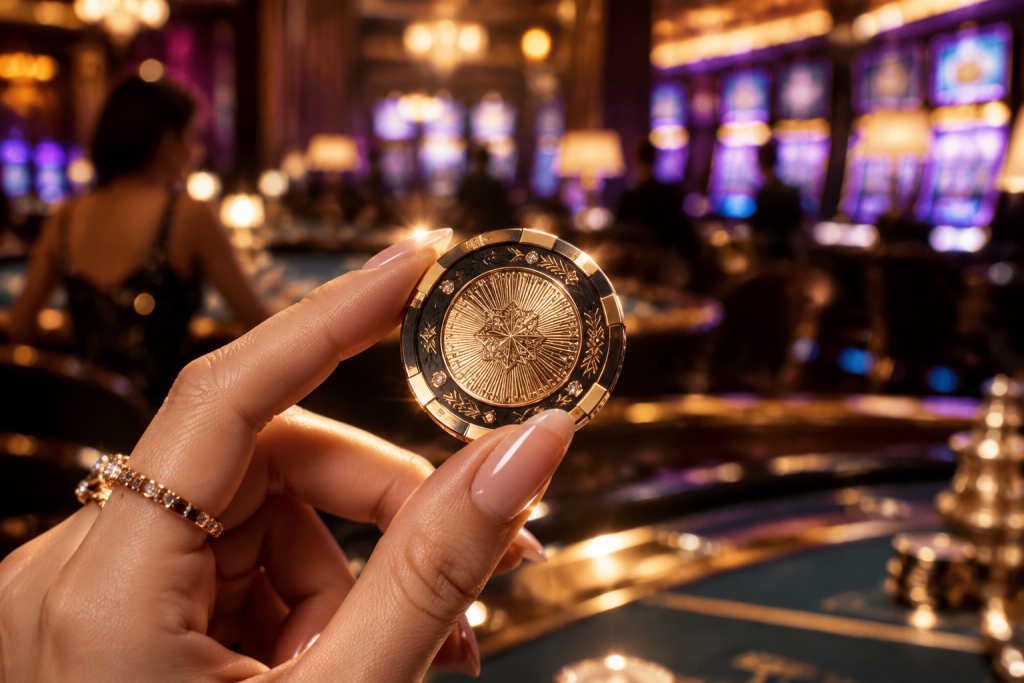
Silver strikes are the main reason the question about silver in casino tokens comes up at all. They are commemorative tokens, often about the size of a half-dollar or larger, with a thin silver center piece surrounded by a brass ring. Casinos issue them in limited runs for events, anniversaries, or as part of slot machine promotions.
The silver content varies. Some silver strikes contain a fraction of a troy ounce of silver, often marked on the token itself. Others are silver-plated rather than solid silver. If a token does not carry a clear marking of its silver weight or fineness, the only way to know the melt value is to have it tested or to find documentation from the issuer. The silver content is a collectible feature, not a functional part of the token's use in a casino.
How to Check a Token's Composition
If you have a token and want to know whether it contains silver, start with what is printed or stamped on it. Many silver strikes carry a fineness mark, such as .999 fine silver, or a weight in troy ounces. A token that says nothing about silver is probably not silver, but markings can wear off or be absent on older pieces.
Beyond markings, weight is a useful clue. Silver is denser than most base metals used in token inserts. A token that feels unusually heavy for its size may warrant a closer look. A jeweler, coin dealer, or precious-metals buyer can perform a non-destructive test to confirm composition. Magnetism is a rough screen: silver is not magnetic, though neither are several base metals, so a non-magnetic result does not prove silver content.
Why Casinos Stopped Using Precious Metals
Casino chips were never widely made from silver, even in the early days of Nevada gambling. The cost would have been prohibitive for a token that circulates by the thousands and gets replaced regularly. Casinos need chips to be cheap to produce, difficult to counterfeit, and easy to distinguish by color and edge pattern. Precious metals fail the first test outright.
What did change over time was the shift away from any metal content at all. Early chips were sometimes made from ivory, bone, or mother-of-pearl, and some mid-century chips had metal cores. As manufacturing improved, clay and ceramic composites became standard because they offered better security features and lower cost. The metal insert in a modern chip is there for weight and feel, not for intrinsic value.
What a Token Is Worth
A casino token's worth depends on where you are and what kind of token it is. A live table chip is worth its face value at the issuing casino. It is a bearer instrument in practice: whoever holds it can redeem it at the cage. Outside the casino, that chip has no guaranteed value, and other venues will not accept it.
A silver strike or vintage token is worth whatever a collector will pay. That price reflects rarity, condition, and the silver market, but it is not a fixed redemption value. If you are holding a token and wondering what to do with it, the first step is to identify whether it is a live chip, a collectible, or a souvenir. The answer determines everything else.
FAQ
Are any casino chips made of solid silver?
Not as standard table chips. The only casino tokens that contain meaningful silver are commemorative silver strikes and some vintage pieces, and even those are often silver-plated or use a silver center within a base-metal ring.
How can I tell if my token is a silver strike?
Look for a two-tone design with a silver-colored center and a brass or copper-colored outer ring. Many are marked with a weight or fineness. Silver strikes are typically larger than standard chips and are sold or given away as collectibles rather than used in table play.
Does the metal insert in a casino chip have any value?
No. The insert in a weighted chip is a base metal chosen for density and feel. It has no meaningful scrap value, and the chip's only redeemable value is its face amount at the issuing casino.
Gambling involves risk. Please gamble responsibly. If you or someone you know needs help, contact the helpline printed in the footer below.
Play responsibly
Gambling should be treated as paid entertainment, never as a way to earn income or recover losses. 1-800-MY-RESET (1-800-697-3738)
18+ or 21+ depending on where you are; follow the minimum age that applies to you.
This article is general information about how these mechanics work. It is not legal advice and not a recommendation to gamble or to use any particular operator. Availability and legality differ by jurisdiction — check the rules that apply where you are.