


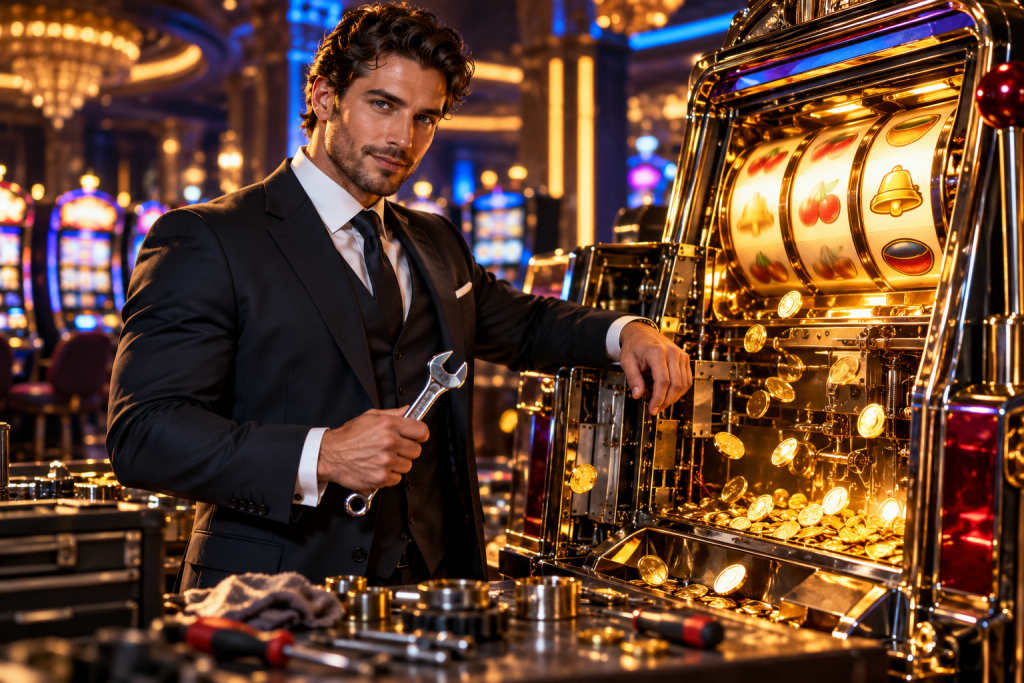
You Are Looking at a Supply Chain, Not a Store Purchase
A working slot machine does not move from a warehouse shelf to a buyer the way a refrigerator or a vending machine does. The path from manufacturer to a floor where the machine can accept wagers runs through a defined set of commercial and regulatory steps, and the step you are allowed to take depends on where you are and what you intend to do with the machine.
This article explains the general mechanism of how a working slot machine is obtained, who the parties in that chain are, and which official body in a given jurisdiction holds the current answer. It does not tell you that any particular purchase is permitted in your location, and it does not quote a price, a licence fee, or a processing time, because those figures are set jurisdiction by jurisdiction and change.
The Three Parties in Every Machine Transaction
Almost every working slot machine reaches its operating floor through three distinct roles, even when two of the roles are performed by the same company. Understanding the roles matters more than remembering brand names, because the rules attach to the role, not to the logo on the cabinet.
- Manufacturer. Designs, builds, and certifies the cabinet, the game software, and the random number generator that drives the outcome. The manufacturer sells or leases to distributors and directly to large operators.
- Distributor or supplier. Holds regional inventory, handles shipping, installation, and sometimes service. In many jurisdictions the distributor must hold a supplier licence separate from the manufacturer's licence.
- Operator. The venue that places the machine on a floor and takes wagers on it. The operator holds the gaming licence or operates under the licence of a host venue, depending on the jurisdiction.
A private individual trying to obtain a working machine is, in most jurisdictions, none of these three parties. That is the central difficulty the question runs into, and it is why the answer changes so sharply by location.
What "Working" Means in This Context
A slot machine is not working merely because it powers on and the reels spin. A machine is working in the commercial sense only when it can accept money, generate outcomes, and pay out according to the game's certified rules. Those functions are controlled by software that is tested and sealed by a technical certification body before the machine is placed.
Removing that seal, altering the software, or changing the payout configuration without re-certification breaks the technical standard the machine was certified under. Whether that act also breaks a law depends on the jurisdiction's gaming statute, and that is a question for the gaming authority in the specific state or country, not for this article.
| Path | Who Uses It | What the Transaction Includes | Where the Rules Are Set |
|---|---|---|---|
| Manufacturer direct sale | Licensed operators with large floor counts | New cabinets, game software licences, service agreements | State or national gaming authority |
| Distributor sale or lease | Licensed operators of any size | New or refurbished machines, delivery, installation | State or national gaming authority |
| Secondary market resale | Operators replacing inventory, sometimes collectors | Used machines, often with software removed or disabled | Varies sharply; often restricted or prohibited |
| Private purchase for home use | Individuals in a small number of jurisdictions | Machines with wagering and payout functions disabled | State law; check the gaming authority's published guidance |
The Ownership Models That Exist
Broadly, a working slot machine is obtained under one of four arrangements. Which arrangement is available to you is a function of the jurisdiction's licensing structure, not of how much you are willing to pay.
Operator-owned. The venue buys the machine outright from a manufacturer or distributor and owns the cabinet and the game software licence. This is the most common model for large commercial casinos and many tribal properties.
Leased or revenue-share. The operator pays a recurring fee or shares a percentage of the machine's win with the supplier. The supplier retains ownership and often handles maintenance. This model is common in smaller venues and in jurisdictions where capital costs are high.
Route or concession. A licensed route operator places machines in a host venue such as a bar, truck stop, or fraternal club. The host venue does not own the machine and does not hold the gaming licence; the route operator does. The host receives a share of the machine's net win under a contract.
Private, non-wagering ownership. In a limited number of jurisdictions, an individual may own a machine that has been permanently disabled from accepting wagers or paying out. The machine is a display piece or a home amusement device, not a working gaming machine in the commercial sense.
Why the Same Machine Is Obtainable in One Place and Not Another
The machine itself is identical across state lines. What differs is the legal category the jurisdiction assigns to the person who wants to own it. A jurisdiction that licenses route operators may allow a distributor to sell to a route operator but not to a private individual. A jurisdiction that permits only casino-based gaming may restrict machine ownership to the casino licensee itself.
This is not a matter of the manufacturer's policy. The manufacturer will sell to anyone the jurisdiction says it may sell to. The restriction sits in the gaming statute, the licensing regulation, and the technical certification rules, all of which are published by the gaming authority of the specific state or country.
What a Private Buyer Is Usually Buying
When a private individual finds a slot machine for sale online or through an auction, the machine has almost always been converted. The conversion removes the bill acceptor, the payout hopper, or the game software that enables wagering, or all three. The machine powers on and the reels may spin in a demonstration mode, but it cannot take money and cannot pay out.
Restoring such a machine to wagering function is not a matter of reconnecting a wire. It requires the original certified software, a configured payout percentage, and a jurisdiction that permits the restored machine to operate. The first two are controlled by the manufacturer and the certification body; the third is controlled by the gaming authority. A buyer who assumes the machine is one step from working has misread what the sale is.
The Official Source to Check Before You Do Anything
The authoritative current answer for any location is the gaming authority or commission that regulates gaming in that state or country. That body publishes the list of licence categories, the application requirements, and the rules for who may own, sell, or operate a gaming machine. The name of the body differs by jurisdiction: it may be a gaming commission, a control board, a lottery authority, or a racing and gaming agency.
Search for the body by the name of the jurisdiction plus the words "gaming authority" or "gaming commission." Look for the published page on machine ownership, supplier licensing, or private possession of gaming devices. That page, not a marketplace listing or a forum post, is the source that tells you whether the path you are considering exists at all.
What to Confirm Before You Spend Money
Before any payment changes hands, confirm each of the following against the gaming authority's published materials for the specific jurisdiction. These items change and are not knowable in the abstract.
- Whether private ownership of a gaming machine is permitted at all in that jurisdiction, and under what conditions.
- Whether the machine you are considering has been converted to non-wagering function, and whether the seller can document that conversion.
- Whether the seller holds a supplier or distributor licence in the jurisdiction where the machine will sit.
- Whether the machine's software and cabinet are certified for the jurisdiction, and whether the certification is current.
- Whether moving the machine across a state or national border requires an import, export, or transfer approval.
FAQ
Can I buy a working slot machine for my home?
In most jurisdictions, a private individual cannot buy a machine that accepts wagers and pays out. Machines sold to private buyers are typically converted to disable wagering and payout functions. Whether any form of private ownership is permitted in your location is set by the gaming authority of that state or country, and you should check its published guidance before purchasing.
Who is allowed to sell working slot machines?
Manufacturers and distributors sell to licensed operators. In many jurisdictions the distributor must hold a supplier licence separate from the operator's licence. The gaming authority publishes the list of licensed suppliers and the rules for who may sell to whom. A seller without a licence in the relevant jurisdiction is not part of the authorised supply chain.
What makes a slot machine "working" in the legal sense?
A machine is working commercially only when it can accept money, generate outcomes, and pay out under certified software. A machine that powers on and spins reels in demonstration mode is not working in that sense. Restoring wagering function requires certified software, a configured payout percentage, and a jurisdiction that permits the restored machine to operate.
Play responsibly
Gambling should be treated as paid entertainment, never as a way to earn income or recover losses. 1-800-MY-RESET (1-800-697-3738)
18+ or 21+ depending on where you are; follow the minimum age that applies to you.
This article is general information about how these mechanics work. It is not legal advice and not a recommendation to gamble or to use any particular operator. Availability and legality differ by jurisdiction — check the rules that apply where you are.