


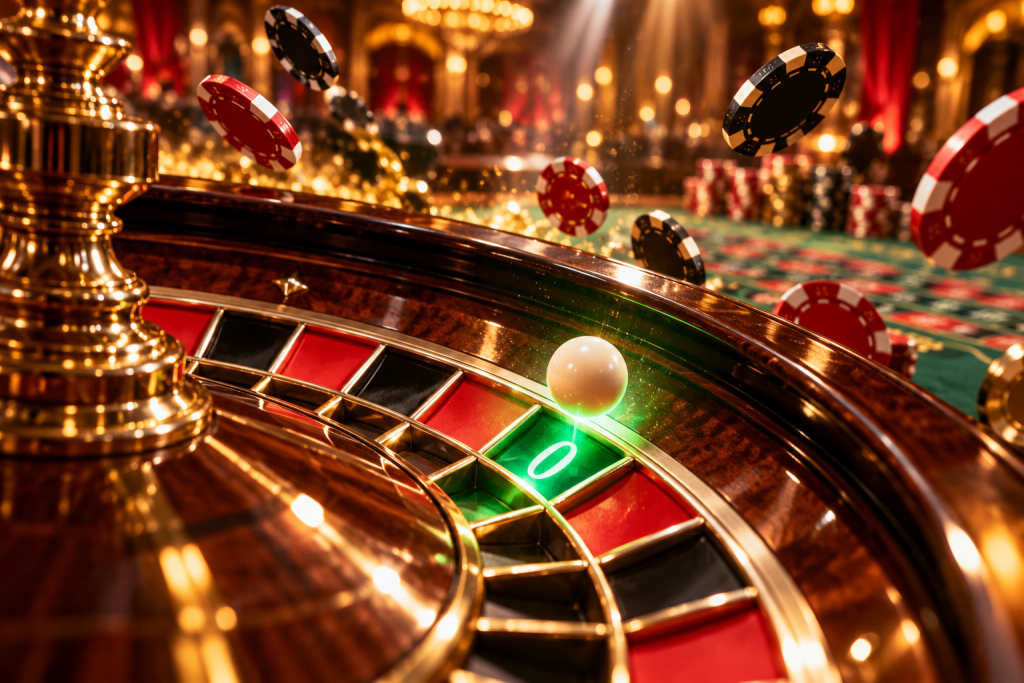
The zero pocket is not part of the even-money bet
A player who has just bought in and is looking at the felt for the first time sees two large boxes labelled EVEN and ODD, and a green pocket marked 0. The natural question is whether the zero belongs in one of those boxes. It does not. On every standard roulette layout, the zero sits outside the even and odd bets entirely, along with the red and black bets and the high and low bets. When the ball lands in zero, every one of those even-money wagers loses, or is held under a rule variant some tables use.
This is not a quirk of the numbering. It is a deliberate structural feature. The zero pocket is what gives the house its mathematical advantage on the even-money bets. If zero simply counted as even, or as red, or as low, the even-money wagers would pay at true odds and the operator would earn nothing on them over time. The green pocket exists so that the bettor has fewer winning numbers than the layout appears to offer at first glance.
What the even-money bets cover
Roulette offers a set of bets that pay 1 to 1, meaning a winning unit returns the original unit plus one more. They are grouped in pairs of opposites: red or black, odd or even, and 1-18 or 19-36. A player betting even is wagering that the winning number will be one of the even numbers from 2 through 36. A player betting odd is wagering on the odd numbers from 1 through 35.
The zero is excluded from all three pairs. It is neither red nor black, neither odd nor even, neither low nor high. On a European wheel there are 37 pockets: 18 even numbers, 18 odd numbers, and the single zero. On an American wheel there are 38 pockets: the same 36 numbers plus a zero and a double zero. The extra green pocket on the American layout is the reason the house edge on every even-money bet is higher there than on a European wheel.
| Bet | Winning numbers on a European wheel | Losing numbers | What the zero does |
|---|---|---|---|
| Even | 18 numbers (2-36 even) | 18 odd numbers plus zero | Counts as a loss |
| Odd | 18 numbers (1-35 odd) | 18 even numbers plus zero | Counts as a loss |
| Red | 18 red numbers | 18 black numbers plus zero | Counts as a loss |
| Black | 18 black numbers | 18 red numbers plus zero | Counts as a loss |
| 1-18 | 18 low numbers | 18 high numbers plus zero | Counts as a loss |
| 19-36 | 18 high numbers | 18 low numbers plus zero | Counts as a loss |
The table shows the arithmetic plainly. A player betting even has 18 winning pockets and 19 losing pockets on a European wheel. The payout is 1 to 1, which would be fair if there were 18 winning and 18 losing pockets. The extra losing pocket is the entire source of the house edge on that bet. The same logic applies to every even-money wager on the layout.
Why the zero is green and sits alone
The colour coding on a roulette wheel is functional, not decorative. The alternating red and black pockets let the eye read the wheel quickly, but the zero is deliberately green so that no player can mistake it for part of the red or black bet. The same is true of the double zero on an American wheel. The green colour is a visual signal that the pocket belongs to none of the even-money propositions.
On the felt, the zero also has its own betting area. A player may bet on the zero directly, and it pays as a single-number wager. The payout for a straight-up bet on any single number, including zero, is set by the table rules and printed on the layout. It is a separate proposition from the even-money bets, with its own odds and its own edge. Betting the zero does not make the even-money bets behave differently; it simply places a wager on a different outcome.
How the zero shapes the house edge
House edge and Return to Player are complements: they sum to 100% for the same bet under the same rule set. On a European wheel with 37 pockets, a player betting even wins on 18 of 37 spins and loses on 19, assuming a fair wheel. The difference between the true odds of winning and the payout odds is what the house keeps over a very large number of spins. It is a long-run statistical average, not a per-session guarantee. A player can win on any given spin, and can win over an evening, but the edge is built into the structure of the bet and does not change with betting patterns.
The American wheel makes the edge larger by adding a second green pocket. The even-money bettor now has 18 winning pockets and 20 losing ones. The payout has not changed, so the gap between the true odds and the paid odds widens. This is why the wheel type matters when a player sits down: a European wheel has 37 pockets and a single zero; an American wheel has 38 with a double zero. The extra pocket increases the house edge on the American layout.
Rule variants that change what zero does to an even-money bet
Some tables use a rule that softens the effect of the zero on even-money bets, and a player should check the posted table rules before buying in. Under one common variant, when the ball lands in zero, an even-money wager is not collected immediately. It is held in place, and the next spin decides its fate. If the next spin wins, the player gets the original stake back without profit. If the next spin loses, the stake is collected. If another zero appears, the wager may be held again or collected, depending on the house rule.
This changes the effective edge on the even-money bets, but it does not make the zero an even number. The zero still does not pay as a winning even-money bet. The rule merely delays the loss under one specific outcome. A player who wants to know exactly what happens when the ball lands in zero should read the table's posted rules or ask the dealer before placing the first wager. The rule is a property of the table, not of the number zero itself.
Where new players go wrong with zero
The first mistake is assuming the zero is covered by an even-money bet because it feels like it should be. A player who puts chips on even and then sees the ball land in zero has lost that bet, unless the table uses the hold rule described above. The second mistake is betting the zero as a hedge without understanding what the hedge does. A straight-up bet on zero pays at single-number odds and carries its own edge. Placing it alongside an even-money bet does not cancel the edge on either wager; it simply adds a second bet with its own expected loss. The third mistake is not checking which wheel is in use. The number of green pockets changes the arithmetic on every even-money bet, and a player who does not look at the wheel before sitting down is playing a different game than the one they may have read about.
The zero is a structural part of roulette, not a numbering afterthought. It is excluded from the even-money bets because that exclusion is what makes those bets profitable for the house over the long run. A player who understands that single fact reads the whole layout more clearly.
FAQ
Does 0 count as odd in roulette?
No. The zero is excluded from the odd bet in exactly the same way it is excluded from the even bet. It is neither odd nor even, and it is not part of the red, black, high or low wagers either. A ball landing in zero loses all of those bets unless the table uses a rule that holds the wager for the next spin.
What happens to an even-money bet when the ball lands on 00?
On an American wheel, the double zero behaves like the single zero. It is a green pocket outside all even-money propositions, so an even, odd, red, black, high or low wager loses when the ball lands there, subject to any hold rule the table posts. The double zero is the second extra losing pocket that widens the house edge on the American layout.
Can I bet on zero and even at the same time?
You can place both wagers, but they remain separate bets with separate payouts and separate edges. A straight-up bet on zero pays as a single-number wager and wins only when the ball lands in that pocket. The even bet wins on the 18 even numbers. Placing both does not change the odds of either, and each bet carries its own expected loss over time.
Gambling involves risk. Please only gamble with funds that you can comfortably afford to lose. While we do our best to provide good quality information, we cannot guarantee the accuracy or reliability of any information contained in this article. We do not provide financial advice, and you should not rely on our information to make (or refrain from making) any decision. If you or someone you know is struggling with gambling addiction, please seek help from a professional organisation. For UK readers, visit BeGambleAware.org. For US readers, contact the National Council on Problem Gambling at the helpline printed in the footer below.
Play responsibly
Gambling should be treated as paid entertainment, never as a way to earn income or recover losses. 1-800-MY-RESET (1-800-697-3738)
18+ or 21+ depending on where you are; follow the minimum age that applies to you.
This article is general information about how these mechanics work. It is not legal advice and not a recommendation to gamble or to use any particular operator. Availability and legality differ by jurisdiction — check the rules that apply where you are.