


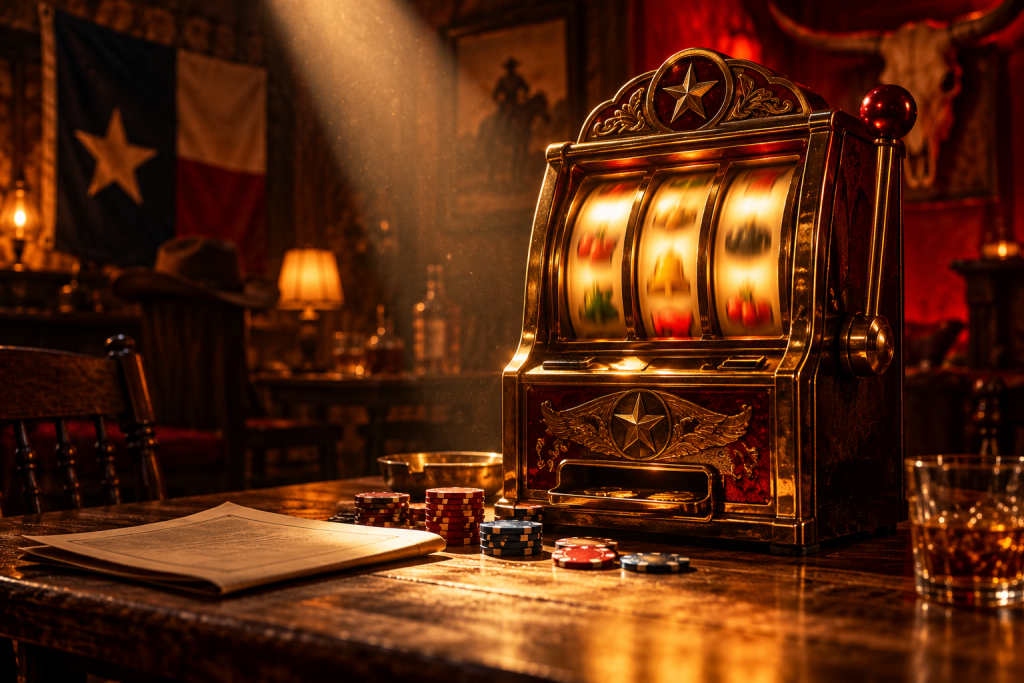
The Short Answer on Private Ownership
Owning a slot machine in Texas is not a simple yes-or-no question, and the answer depends almost entirely on the machine's age, its intended use, and where it is kept. Texas law takes a restrictive view of gambling devices, and private ownership is treated differently from commercial operation. The state's Penal Code generally prohibits possessing a gambling device, but there are narrow exceptions for antique machines and for devices used in private, non-commercial settings under specific conditions.
This article explains the legal structure around ownership, not a path to acquiring or operating a machine. It does not provide legal advice, and no statement here should be read as a promise that any particular machine is lawful to own. The authoritative source is the Texas Penal Code and the Texas Attorney General's published guidance, not this article.
What the Law Prohibits
Texas law defines a gambling device broadly. A slot machine falls within that definition if it is designed to deliver something of value based on chance, even if the machine is not currently connected to a payout mechanism. The prohibition is not limited to operating the machine for money; mere possession can be enough to trigger the statute, depending on the machine's condition and the owner's intent.
The key distinction in Texas is between a device that is purely for amusement and one that can award anything of value. A machine that has been permanently altered so that it cannot pay out, cannot accept money, and cannot record a right to a prize may fall outside the gambling device definition. But a machine that retains its payout mechanism, even if disabled, may still be treated as a gambling device under Texas case law.
Antique and Collectible Machines
Texas law contains a specific exception for antique gambling devices. A machine that is at least 25 years old and is not used for gambling purposes may be possessed and displayed as a collectible. The age is measured from the machine's date of manufacture, not from the date of purchase. This exception is narrow: the machine must be genuinely old, and it must not be used in any gambling activity.
The antique exception does not create a general right to own any old slot machine. If the machine is restored to working order and used for gambling, the exception no longer applies. Collectors who own antique machines should keep documentation of the machine's age and should not operate the machine for any purpose that involves a prize, a payout, or a wager.
Private Use and the Home Exception
Texas law does not contain a broad "home use" exception that would make any slot machine legal to own simply because it is kept in a private residence. Some other states have such exceptions, but Texas does not. The fact that a machine is in a home rather than a commercial establishment does not, by itself, remove it from the gambling device definition.
What matters is whether the machine is used for gambling. A machine that is used only for amusement, with no possibility of winning anything of value, is less likely to be treated as a gambling device. But the burden of proving that the machine is not a gambling device falls on the owner, and the machine's physical characteristics matter more than the owner's stated intent.
What This Article Cannot Tell You
This article cannot tell you whether a specific slot machine is legal to own in Texas. That determination depends on facts that are not available here: the machine's date of manufacture, its mechanical condition, whether it has been altered, where it will be kept, and how it will be used. Those facts are specific to the machine and to the owner's situation.
The authoritative answer comes from the Texas Penal Code, particularly the sections defining gambling devices and the antique exception, and from the Texas Attorney General's published opinions. A person considering acquiring a slot machine in Texas should review those sources directly and should consider consulting a Texas-licensed attorney who practices in gambling law.
Documented Casino Venues in Texas
Texas is home to three documented casino venues, all classified as Native American operations. They are located in three different cities: Eagle Pass, Livingston, and El Paso. These venues are documented in publicly published reference sources, and their presence does not change the general prohibition on private slot machine ownership in Texas.
| Venue | City | Classification |
|---|---|---|
| Kickapoo Lucky Eagle Casino | Eagle Pass | Native American |
| Naskila Gaming | Livingston | Native American |
| Speaking Rock Entertainment Center | El Paso | Native American |
These venues operate under tribal authority and are not relevant to the question of private slot machine ownership. A person cannot rely on the existence of these venues to argue that private ownership is lawful. The legal framework for tribal gaming is separate from the Penal Code provisions that govern individual possession of gambling devices.
How to Confirm the Current Law
Texas gambling statutes change infrequently, but they do change. The Texas Legislature has considered bills affecting gambling devices in recent sessions, and the Texas Attorney General occasionally issues opinions that interpret the Penal Code. A person who needs a current, authoritative answer should check the Texas Penal Code as published by the Texas Legislature and should review any recent Attorney General opinions on gambling devices.
The Texas Department of Licensing and Regulation does not license or approve slot machines for private ownership. There is no state agency that will issue a permit to own a slot machine for home use. The absence of a licensing pathway is itself a signal that private ownership is not generally permitted.
What to Confirm Before You Acquire a Machine
- The machine's date of manufacture, which determines whether the antique exception applies.
- Whether the machine retains any payout mechanism, even if disabled.
- Whether the machine has been altered to prevent gambling use.
- The current text of the Texas Penal Code gambling device provisions.
- Any recent Texas Attorney General opinions on gambling devices.
- Whether the machine will be used for any purpose involving a prize, payout, or wager.
Each of these items is changeable or fact-specific. The Penal Code is the authoritative source for the statutory text, and the Attorney General's office publishes opinions that interpret the statute. No private website, including this one, can substitute for those sources.
FAQ
Is it legal to own an antique slot machine in Texas?
Texas law contains a narrow exception for gambling devices that are at least 25 years old and are not used for gambling. The machine must be genuinely antique and must not be operated for any gambling purpose. The owner should keep documentation of the machine's age and should not restore it to working order for gambling use. The exception does not create a general right to own any old machine.
Can I keep a slot machine in my home if I never use it for gambling?
Texas does not have a broad home use exception. Keeping a machine in a private residence does not by itself make it lawful. What matters is whether the machine is a gambling device under the Penal Code definition, which depends on its mechanical condition and intended use. A machine that cannot pay out and is used only for amusement may fall outside the definition, but the owner bears the burden of proof.
Where can I find the authoritative Texas law on slot machine ownership?
The authoritative source is the Texas Penal Code, particularly the sections defining gambling devices and the antique exception. The Texas Attorney General publishes opinions interpreting the statute. The Texas Legislature's website publishes the current statutory text. A person considering acquiring a slot machine should review those sources directly and may consult a Texas-licensed attorney who practices in gambling law.
Play responsibly
Gambling should be treated as paid entertainment, never as a way to earn income or recover losses. 1-800-MY-RESET (1-800-697-3738)
18+ or 21+ depending on where you are; follow the minimum age that applies to you.
This article is general information about how these mechanics work. It is not legal advice and not a recommendation to gamble or to use any particular operator. Availability and legality differ by jurisdiction — check the rules that apply where you are.