


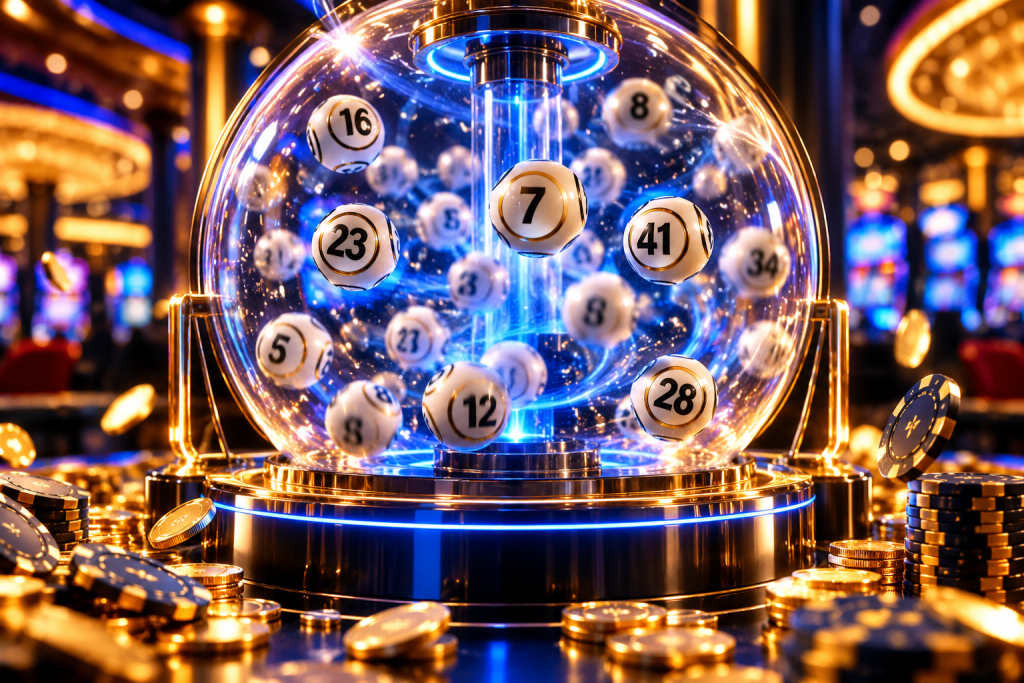
The draw happens before you see it, and that matters
In most modern keno games, the numbers you see appear on screen only after a random number generator has already selected them. The animation of balls tumbling or numbers lighting up is a presentation layer. The actual selection was a computational event, completed in milliseconds, using an algorithm designed to give every number from the pool the same chance of being picked on every draw. Understanding that separation between the draw and its display changes how you read the game: nothing about the previous round, your ticket, or the time you spent choosing spots influences the next selection.
Keno is a lottery-style game. You mark a set of numbers, called spots, from a fixed pool, and the house draws a larger set of winning numbers. Your payout depends on how many of your spots match the drawn numbers. The draw itself is the part of the game where the operator has no discretion, at least in principle, because the mechanism is supposed to be indifferent to who is playing and what they picked.
Two draw mechanisms: RNG and physical blower
Keno exists in two operational forms, and the draw mechanism differs between them. Video keno and online keno use a random number generator. Live keno, still found in some venues, uses a physical machine that mixes numbered balls and blows or tumbles a selection into view. Both are intended to produce a uniformly random subset of the pool, but they are audited and verified in different ways.
| Feature | RNG keno | Blower-machine keno |
|---|---|---|
| Selection method | Algorithm selects numbers from the pool | Numbered balls are mixed and drawn physically |
| Draw speed | Near-instant, with animation added for display | Takes the time the machine needs to mix and select |
| Verification | RNG certification by an independent testing laboratory | Physical inspection of balls and machine, plus draw observation |
| Where found | Video keno, online and app-based games | Live keno lounges in some venues |
| What the player sees | A rendered draw sequence | The actual physical draw |
What the RNG does in a keno draw
A random number generator is the algorithm that determines game outcomes. In keno, it maps random outputs onto the game's number pool, typically 1 through 80, and selects the draw count, commonly 20 numbers, without replacement. Without replacement means a number cannot be drawn twice in the same round. Every number remaining in the pool has an equal probability of being the next one selected, which is what makes the draw uniform.
Independent testing laboratories are commonly used to certify RNG behaviour. That certification covers the mechanics of the draw, not the operator's financial conduct. A certified RNG means the algorithm has been tested for statistical randomness and for the absence of predictable patterns. It does not mean the game is generous, and it does not mean the operator is solvent. It means the draw mechanism behaves as a fair lottery should.
Some crypto-based keno games add a provably fair layer. Provably fair is a cryptographic scheme where a hashed server seed is published before play and revealed afterwards, letting a player verify that the outcome was not altered after their bet. It verifies individual round integrity. It is not a licence, an audit, or a guarantee of solvency. If a keno game advertises provably fair play, the verification step is something you can perform yourself, but the house edge on the game remains whatever the paytable sets it to be.
Why the number pool and draw count define your odds
Keno's mathematics come from combinatorics, not from the draw mechanism. The standard pool is 80 numbers, and the standard draw is 20 numbers. Your ticket marks a smaller set, and your payout depends on how many of your marked spots appear in the 20 drawn. The probability of matching a given number of spots is fixed by those parameters, not by anything the draw machine does differently from one round to the next.
Because the draw is uniform, every spot you mark has the same chance of being drawn as every other spot. A number that has not appeared in many rounds is not more likely to appear next time. A number that appeared in the last three draws is not less likely. The RNG and the blower machine both have no memory. Each draw is an independent event, and the pool resets completely between rounds.
The house edge in keno is built into the paytable, not the draw. The operator sets payouts for each match count so that the total expected return to players is below 100% over a very large number of rounds. Return to Player (RTP) is a theoretical percentage of total wagered money a game returns to players over a very large number of spins or hands, and in keno the same concept applies over a very large number of draws. It is a long-run statistical average, not a per-session guarantee. House edge and RTP are complements: they sum to 100% for the same game.
Can you watch a draw and verify it?
For physical blower keno, the draw is observable. You can watch the balls mix and the selection emerge. The verification is procedural: the balls are weighed and measured, the machine is inspected, and the draw is supervised. What you cannot do by watching is determine whether the machine is biased. A bias would show up only over thousands of observed draws, which is why venues and regulators rely on equipment inspection rather than spectator intuition.
For RNG keno, the draw is not observable in any meaningful sense. You see a rendering. Verification therefore depends on the testing laboratory's certification and, in crypto implementations, on the provably fair seed scheme. The game's information panel or help file should state which laboratory certified the RNG, if any. That statement is the operator's claim about the draw mechanism, and it is the closest thing to transparency a player gets in a purely digital draw.
If you want to check a specific game's draw parameters, open the game's rules or paytable screen. It should state the number pool, the draw count, the paytable for each match count, and sometimes the RTP. If a number is missing, that absence is itself information about how much the operator wants you to know before you play.
What changes between keno variants is the paytable, not the draw
Keno variants differ in how many spots you may mark, how the payouts scale, and whether there are side features like multipliers or bonus rounds. The draw itself remains a uniform selection of 20 numbers from 80 in almost every variant. A game with a higher maximum spot count is not drawing numbers differently; it is paying differently for the same draw.
Some keno games let you choose fewer spots for a flatter payout structure, while others encourage more spots with a larger top prize. The probability of matching all your spots falls sharply as the spot count rises, and the paytable reflects that. None of this changes the draw mechanism. The draw is the fixed, indifferent part of the game. The paytable is where the operator sets the terms.
FAQ
Are keno draws truly random?
A certified RNG or a properly maintained blower machine is designed to produce a uniform draw, meaning every number has the same chance of selection on every round. Certification covers the mechanism, not the operator's business conduct. In practice, the randomness of a digital draw rests on the testing laboratory's work and the operator's honesty in running the certified build.
Can I predict keno numbers from past draws?
No. Each draw is independent, and the number pool resets completely between rounds. A number's absence or frequency in past draws carries no information about the next draw. Any system that claims to identify hot or cold numbers is describing a pattern in noise, not a mechanism that changes the underlying probabilities.
Does the draw mechanism affect my odds?
No. Your odds of matching a given number of spots are set by the pool size, the draw count, and how many spots you mark. Whether the numbers come from an RNG or a blower machine, the underlying probabilities are the same. What differs is how the draw is verified, not the mathematics of the game.
Gambling involves risk. Please only gamble with funds that you can comfortably afford to lose. While we do our best to provide good quality information, we cannot guarantee the accuracy or completeness of any information presented. Gambling can be addictive. If you or someone you know is struggling with gambling addiction, please seek help from a professional support service. You can find resources and support at begambleaware.org or by calling the National Gambling Helpline at the helpline printed in the footer below.
Play responsibly
Gambling should be treated as paid entertainment, never as a way to earn income or recover losses. 1-800-MY-RESET (1-800-697-3738)
18+ or 21+ depending on where you are; follow the minimum age that applies to you.
This article is general information about how these mechanics work. It is not legal advice and not a recommendation to gamble or to use any particular operator. Availability and legality differ by jurisdiction — check the rules that apply where you are.