


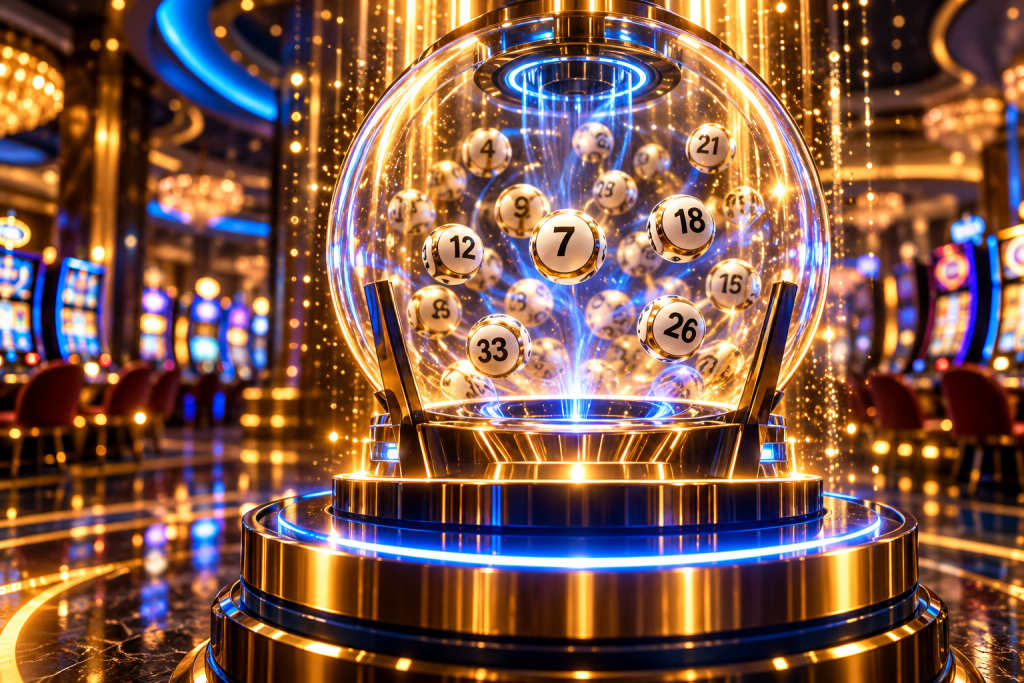
The Draw Happens Before You See It
When you watch a keno machine display its numbers, you are watching a presentation of a result that has already been determined. The machine does not pick numbers in response to your ticket, your timing, or anything you did at the screen. It runs a random number generator, selects the winning set, and then animates the reveal. The order in which the balls appear on screen is cosmetic.
This matters because keno players often look for patterns in the display. A number that appears twice in a row feels significant. A cluster of high numbers looks like a trend. None of that is real. The next draw has no memory of the last one.
What the Random Number Generator Does
A keno machine uses the same underlying technology as a slot machine or an online card game. The random number generator is an algorithm that produces a sequence of numbers with no predictable relationship between one output and the next. When a keno draw needs twenty numbers from a field of eighty, the RNG maps its outputs onto that range and selects the set.
The key property is independence. Each number has the same chance of being selected on every draw, regardless of whether it appeared in the previous draw, the previous ten draws, or never in the last hour. The machine does not compensate for overdue numbers and does not avoid recently drawn ones.
Independent testing laboratories commonly certify RNG behaviour. That certification covers whether the algorithm produces the statistical distribution it should. It does not mean the game is profitable for the player, and it does not speak to anything about the operator beyond the mechanics of the game itself.
Why the Odds Stay Fixed
Keno is a negative-expectation game. The payout table is built so that the operator holds a mathematical advantage on every ticket, and that advantage does not move based on what has happened in previous draws. The RNG does not know your bet size, your ticket pattern, or how long you have been playing.
Volatility in keno is high. A player can hit a seven-spot or eight-spot and see a large multiple of the ticket cost, but those hits are rare. The small pays that come more often do not cover the gap. Volatility changes how bumpy the session feels; it does not change the long-run expected rate of loss.
Different keno pay tables carry different house edges. The number of spots you choose, the specific payouts for each catch count, and whether the game offers any side feature all shift the edge. Two keno games that look similar can have materially different returns, which is why the pay table itself is the document to read before you play.
What a Player Controls
You control which numbers you mark, how many spots you play, how much you wager per ticket, and how long you sit at the machine. You do not control which numbers are drawn, and no selection method changes the probability that your numbers will be among the twenty.
Some players pick birthdays, some use the machine's quick-pick, some rotate through patterns. All of these have the same expected value for a given number of spots. A quick-pick ticket is not luckier or unluckier than a ticket you filled in by hand. The RNG does not care how the ticket was generated, and the draw does not care either.
What does vary is the number of draws you play per hour. Keno machines can run draws quickly, especially in a video format with a fast reveal. More draws per hour means more total wagers, which means the expected loss accumulates faster. Slowing down the pace is a genuine control, but it is a control over time and total exposure, not over the outcome of any single draw.
Common Misreadings of the Display
The animation on a keno machine is designed to look like a physical draw, but it is not a mechanical process. There is no blower, no ball set, no physical mixing. The numbers are chosen by the RNG and then rendered on screen. The visual order, the way numbers bounce, and the timing of the reveal are presentation layers.
This creates a common confusion. A player sees a number appear early in the animation and assumes it was drawn first, or sees a number appear at the last moment and assumes it was almost not drawn. Neither is true. All twenty numbers were selected in the same instant, before the animation began.
Another misreading involves the machine's history display. Many keno machines show recent draws or hot and cold numbers. That history is real data about past draws, but it has no predictive value. A number that has appeared in five of the last ten draws has the same chance of appearing in the next draw as a number that has not appeared in fifty.
| What changes between draws | What stays fixed |
|---|---|
| The specific twenty numbers selected | The probability of any single number being selected |
| The animation order and pacing | The payout table for a given spot count |
| The player's ticket and wager | The house edge on that ticket type |
| The session's short-run results | The long-run expected rate of loss |
| The history display's recent numbers | The independence of the next draw |
Where the Pay Table States the Edge
If you want to know how much a particular keno game returns, the pay table is the document that carries the answer. It lists every spot count, every catch count, and the payout for each. From that table you can calculate the return for a given number of spots, because the probabilities of catching a certain number of your spots are fixed by the eighty-number field and the twenty-number draw.
Some machines bury the pay table behind a help or info button. Others show it on the main screen. Either way, the pay table is the only reliable statement of what the game pays, and it is the thing to check before you commit to a spot count. A machine that pays the same for a six-spot as its neighbour but differs on the lower catch counts is a different game, even if the cabinet looks identical.
No betting pattern changes what is printed on that table. Doubling your wager after a loss does not alter the probability of the next draw. Skipping draws does not make a number more likely to appear. The machine is not due, and neither are your numbers.
How to Read a Session Honestly
A keno session can produce a large win. The high volatility means that occasionally a ticket catches enough spots to pay many times its cost. That win is a real event, and it is part of the distribution the pay table describes. It is not evidence that the machine is loose, that the RNG has a flaw, or that your number selection was skilled.
The honest way to read a session is to separate the outcome from the process. The process is random and fixed-edge. The outcome is a sample from a distribution with high variance. A winning session and a losing session are both ordinary draws from that distribution, and neither tells you anything about the next session.
If you track your results over many sessions, the average will move toward the expected value implied by the pay table. That is what a long-run statistical average means. In the short run, anything can happen, and that is exactly why keno feels streaky even when the underlying process is uniform.
FAQ
Can a keno machine be rigged to avoid paying out?
The RNG determines the numbers, and the pay table determines the payout. A certified RNG produces the distribution it should, but certification covers game mechanics, not the operator's financial conduct. The payout table already embeds the house edge, so the operator does not need to alter the draw to make money on keno over time.
Do quick-pick tickets have different odds than manual picks?
No. For the same number of spots, every ticket has the same probability of catching any given count. The RNG that selects the winning numbers has no information about how your ticket was created, and the quick-pick generator is simply another random process. The expected value is identical.
Why do some keno machines show hot and cold numbers?
The history display is a record of past draws, and past draws have no influence on future ones. Hot and cold numbers are a presentation of variance, not a prediction tool. A number's recent frequency does not change its probability in the next draw, which remains the same as every other number in the field.
Play responsibly
Gambling should be treated as paid entertainment, never as a way to earn income or recover losses. 1-800-MY-RESET (1-800-697-3738)
18+ or 21+ depending on where you are; follow the minimum age that applies to you.
This article is general information about how these mechanics work. It is not legal advice and not a recommendation to gamble or to use any particular operator. Availability and legality differ by jurisdiction — check the rules that apply where you are.