


Why the Table Looks Different Before a Single Spin
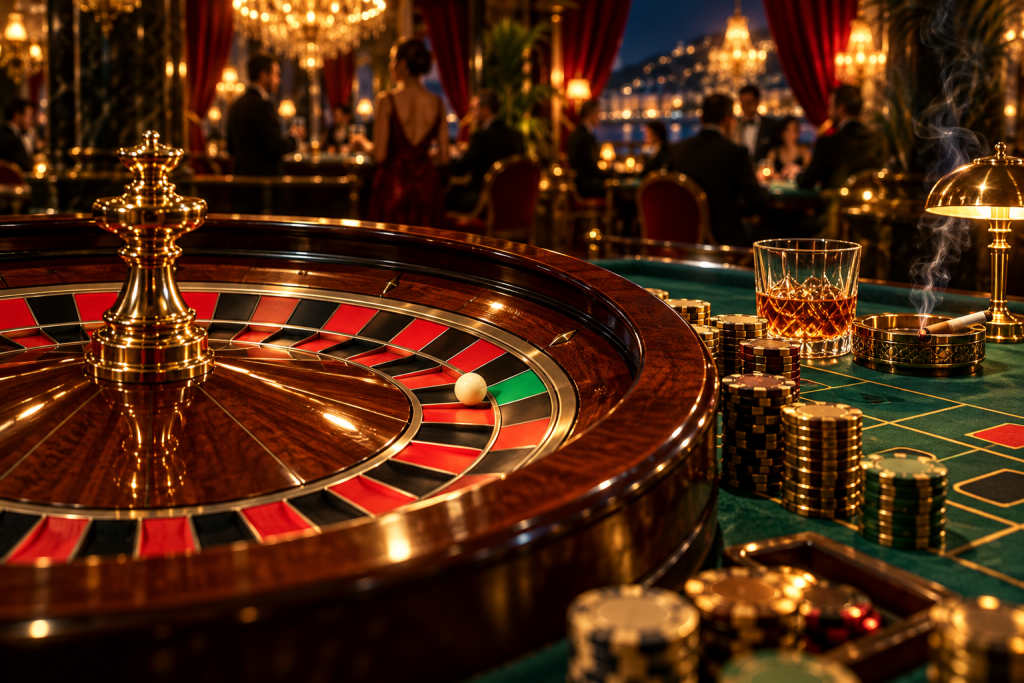
A player walking up to a French roulette table usually notices two things immediately: the betting layout is printed in French, and the wheel has only one zero. That single zero is the entire structural difference between this game and the double-zero layout found on many other floors. A European wheel carries 37 pockets, numbered 0 through 36. The French table uses that same wheel. The table felt, however, is a different piece of furniture: the words for the outside bets are written in French, the sequence of numbers around the wheel is the same as the European arrangement, and two rules may be in force that change what happens to a losing even-money bet when the ball lands in zero.
None of that changes what the game is. The dealer spins a wheel in one direction and sends a small ball around a track in the other. The ball loses momentum, falls into one of the numbered pockets, and every bet on the layout is settled against that single result. What makes the French version worth understanding separately is not the wheel but the combination of the single-zero layout and the table rules attached to it.
The Object and the Sequence of a Round
The objective is to predict which numbered pocket the ball will settle in, or to bet on a group of outcomes defined by the layout: a colour, a parity, a range of numbers, or a specific section of the wheel. A player is not playing against other players and is not trying to beat a hand. Every wager is a prediction about one physical event.
A round moves through a fixed sequence. The dealer opens betting, and players place chips on the layout. On a French table the croupier traditionally uses a long rake rather than the hand-sweep common elsewhere, and the pace is often slower because call bets and the two zero rules add settlement steps. The dealer announces that bets are closed, spins the wheel, and launches the ball. From that point no chip may be touched. When the ball lands, the dealer marks the winning number, clears losing bets, and pays winners. Only after the layout is cleared does the next round open.
Buy-in works like any table game: a player exchanges cash for chips at the table, and those chips are specific to that table until converted back at the cage. On some French tables the chips used for call bets are different from the standard value chips, which matters because a call bet is an announcement of a pattern that covers several straight-up positions at once.
What the Two Zero Rules Do
French roulette is known for two rules that apply only to even-money wagers: red or black, odd or even, and high or low. Both rules concern what happens when the ball lands in zero while an even-money bet is on the table.
Under the la partage rule, the player loses half the wager and the house takes the other half. The bet is not carried forward; it is simply split. Under the en prison rule, the losing even-money bet is held on the layout, imprisoned, and carried to the next spin. If the next spin wins, the original stake is returned without profit. If it loses, the stake is collected. Some tables apply one rule, some the other, and some neither. The rule in force is printed on the table or displayed on the electronic sign above it, and a player should confirm it before relying on it.
Both rules reduce the expected loss on the affected bets compared with a table where an even-money bet loses outright on zero. They do not change the odds of the next spin, and they do not make any bet positive expectation. They change what happens to the stake after a zero, and only on the bets named.
Bet Types and How Their Edges Differ
Every bet on the layout has a different probability of winning and a different payout. The payout is always below what the true odds would require, and that gap is the house edge. On a single-zero wheel, the edge on most bets is the same, but the zero rules change the even-money picture, and the call bets add a layer of complexity because they bundle several straight-up wagers into one announced pattern.
| Bet | What it covers | Payout | What changes its edge |
|---|---|---|---|
| Straight-up | A single number | 35 to 1 | No zero rule applies; edge set by the single zero |
| Split | Two adjacent numbers | 17 to 1 | No zero rule applies |
| Street | Three numbers in a row | 11 to 1 | No zero rule applies |
| Even-money | Red/black, odd/even, high/low | 1 to 1 | La partage or en prison lowers expected loss on zero |
| Call bet | A fixed pattern of numbers on the wheel | Varies by pattern | Acts as multiple straight-up bets; no zero rule applies |
The table shows the structure, not a ranking of what to play. A straight-up bet pays more because it wins far less often. An even-money bet wins close to half the time, which is why the zero rules matter so much for it. The call bets are the part of French roulette most players never see elsewhere, and they deserve their own look.
Call Bets: Betting the Wheel, Not the Layout
A call bet is a wager on a section of the wheel rather than a block of numbers on the felt. The player announces the bet, and the croupier places the chips on the corresponding positions. The most common are the voisins du zéro, a group of numbers around the zero; the tiers du cylindre, the third of the wheel opposite zero; and the orphelins, the numbers left over between those two sections. Some tables also offer finales, which cover all numbers ending in the same digit.
Each call bet is really a bundle of straight-up and split wagers in fixed amounts. The payout for a winning number inside the bundle is the same as it would be for that bet placed individually, but the total stake is spread across the whole pattern. A player who wants to understand what a call bet costs must read the table's printed breakdown of how many units go to each position, because the total stake is not obvious from the announcement alone.
What a Strategy Chart Can and Cannot Do
Roulette has no decision points after the bet is placed, so there is no basic strategy in the blackjack sense. What a player controls is which bets they make and how much they stake. A published roulette strategy chart is a staking or bet-selection plan, and its value depends entirely on the rule set of the table where it is used. A chart built for a single-zero table with la partage assumes a different expected loss on even-money bets than a double-zero table with no zero rule. The same chart applied to the wrong table is not the same strategy.
No chart changes the fact that every bet on the layout carries a house edge. A chart can organise a player's choices, but it cannot turn a negative-expectation game into a positive one. The honest reading of any roulette system is that it redistributes when wins and losses land, not whether the house keeps its edge over time.
Procedural Mistakes That Cost More Than They Should
The first mistake is touching chips after the dealer has announced that bets are closed. On a French table the pace can feel slower, and a player who reaches for a chip during the spin will be corrected, and the bet may be disallowed. The second is assuming the zero rule applies to every bet. La partage and en prison cover even-money wagers only; a straight-up bet that loses to zero loses in full. The third is placing a call bet without knowing its total cost. Because the croupier spreads the announced amount across several positions, a player who thinks they have wagered one unit may have wagered several.
A fourth mistake is treating the French layout as a different game with different odds. The wheel is the same single-zero wheel used on a European table. The felt is different, the language is different, and the zero rules are different, but the underlying probabilities of the wheel are identical. The value in the French version is in the rules attached to the even-money bets, nowhere else.
FAQ
Is French roulette the same as European roulette?
The wheel is the same single-zero wheel with 37 pockets. The difference is the table: the French layout uses French terms for the outside bets, the croupier typically uses a rake, and the table may apply la partage or en prison to even-money bets. European roulette generally does not carry those two zero rules.
Which is better, la partage or en prison?
Both reduce the expected loss on an even-money bet when zero lands, compared with losing the full stake. La partage returns half the wager immediately. En prison carries the stake to the next spin, where it is returned without profit on a win or collected on a loss. Which one a player prefers is a matter of session style, not a difference in the underlying wheel.
Do call bets have better odds than regular bets?
No. A call bet is a bundle of straight-up and split wagers placed across a section of the wheel. Each position inside the bundle pays at its normal rate, and the total stake is spread across the pattern. The house edge on each component bet is the same as if it had been placed individually.
Gambling can be addictive. If you or someone you know needs help, contact local support services or visit a responsible gambling resource in your area. Please play responsibly and within your limits.
Play responsibly
Gambling should be treated as paid entertainment, never as a way to earn income or recover losses. 1-800-MY-RESET (1-800-697-3738)
18+ or 21+ depending on where you are; follow the minimum age that applies to you.
This article is general information about how these mechanics work. It is not legal advice and not a recommendation to gamble or to use any particular operator. Availability and legality differ by jurisdiction — check the rules that apply where you are.