


The green pocket is the quiet tax on every other bet
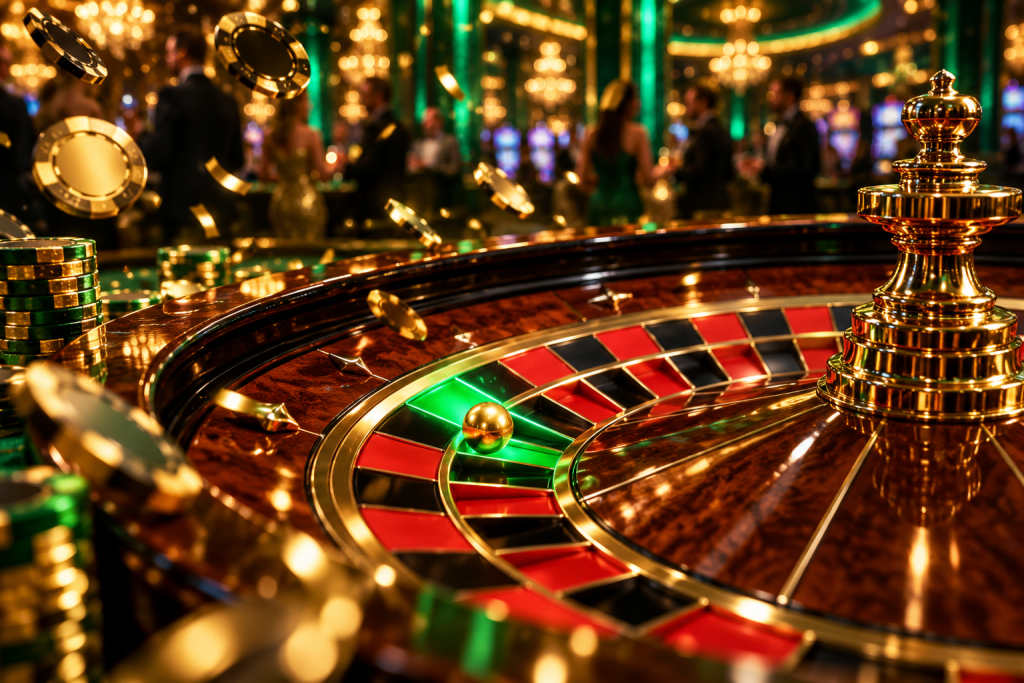
A roulette wheel looks like a carnival of colour, but the green pocket is the only number that belongs to neither red nor black. When a player asks about the chance of green, they are usually trying to understand why the game behaves the way it does over a session: why a bet on red does not win half the time, and why the casino does not need to cheat to stay ahead. The answer sits in the wheel itself, in the number of pockets and the colour of the zero.
The chance of green is not a single number across the game. It changes with the wheel. A European-style wheel carries 37 pockets, one of them a single green zero. An American-style wheel carries 38 pockets, with two green pockets: a single zero and a double zero. The extra green pocket on the American layout is not a cosmetic difference. It changes the probability of every other bet on the table, because every spin now has one more outcome that pays no even-money wager.
How to read the probability of a green pocket
Probability in roulette is a count of favourable pockets against total pockets. On a European wheel, one pocket in 37 is green. On an American wheel, two pockets in 38 are green. That is the whole calculation for a single spin. The wheel has no memory, so the chance is the same on the next spin regardless of what just landed. A run of red numbers does not make green more likely, and a green landing does not make another green less likely.
Because the wheel is a physical or software device with fixed pockets, the probability is fixed for the life of that wheel under that rule set. What changes is the player's exposure to it. If a player bets on red, the green pocket is the reason a red bet is not a coin flip. The red pockets are fewer than half the wheel once the green is counted. The same applies to black, odd, even, high and low. Green is the outcome that sits outside all of those categories.
| Wheel type | Total pockets | Green pockets | What the green pocket does to an even-money bet |
|---|---|---|---|
| European (single zero) | 37 | 1 | One losing outcome sits outside red, black, odd and even |
| American (single and double zero) | 38 | 2 | Two losing outcomes sit outside the even-money categories |
Some tables also offer a bet directly on the green pocket itself. A straight-up bet on zero pays at the same rate as a straight-up bet on any other single number. The difference is that the player is now betting on the pocket that normally works against them. The probability of winning that bet is the same as the probability of the pocket landing: one in 37 on a European wheel, two in 38 on an American wheel.
Why the green pocket is where the house edge lives
The house edge in roulette is not a fee printed on a ticket. It is built into the payout structure. A winning straight-up bet pays less than the true odds of the number landing. On a European wheel, a single number has one chance in 37, but a winning straight-up bet pays as if the wheel had fewer pockets. The gap between the true odds and the payout odds is the house edge. The green pocket is the visible marker of that gap: it is the pocket that would need to be removed for the payouts to match the true odds.
House edge and return to player are complements. For the same bet under the same rule set, they sum to 100%. If a game returns a given percentage to players over a very large number of spins, the house edge is the remainder. The green pocket is the structural reason the return is below 100% on the even-money bets. On the American layout, the second green pocket widens that gap, because there are now two pockets that pay nothing on red, black, odd, even, high or low.
This is why the wheel type matters more than the colour of the felt. A player choosing between two roulette tables is choosing between two different probabilities on every spin. The American wheel does not offer a compensating advantage elsewhere on the layout. The extra green pocket simply adds a losing outcome to the bets most players make most often.
Short sessions look nothing like the long-run average
A probability is a long-run statement. Saying that green lands one time in 37 on a European wheel does not mean a player will see exactly one green in every 37 spins. In a short session, the count can be far from that average. A player might see three green pockets in twenty spins, or none in fifty. Neither outcome means the wheel is biased or that the probability was wrong. It means variance is doing what variance does: distributing outcomes unevenly over small samples.
This matters because players often judge a wheel by what they just saw. A table that has just produced two green numbers in a row is not more likely to produce another, and a table that has gone an hour without a green is not due for one. Each spin is independent. The probability of green on the next spin is the same as it was on the first spin of the session.
The long-run average is approached only over a very large number of spins. The more spins a player makes, the more the observed frequency of green tends toward the theoretical probability, but there is no point at which the wheel owes the player a correction. The average is a description of the whole distribution, not a promise about any particular stretch of it.
What decisions per hour do to total exposure
The chance of green is a per-spin probability, but the cost of the green pocket is a per-wager cost. A player who makes more spins per hour exposes more total money to the same edge. If a player wagers a fixed amount on red for an hour, the total amount wagered is the stake multiplied by the number of spins. The expected loss over that hour is the house edge applied to that total. The green pocket does not become more likely on any individual spin, but the player gives it more opportunities to appear.
As an example, suppose a player wagers one unit on red for 100 spins. The total wagered is 100 units. The expected loss is the house edge on that bet applied to those 100 units. On a European wheel, the green pocket is one of the 37 outcomes that loses that bet. On an American wheel, two of the 38 outcomes lose it. The player cannot change the probability of green, but the player can change how many times they face it. Slower play, shorter sessions and smaller stakes all reduce total exposure without changing the underlying probability.
This is the honest way to think about the chance of green: it is a fixed property of the wheel, and the player's only real decisions are how much to wager, how often, and for how long. None of those decisions changes the probability. They change the size of the sample the player lives through.
Why progression systems do not remove the green pocket
Some players respond to the green pocket by changing their bet size after a loss, doubling up in the hope that a win will recover what the green pocket took. This is a progression system, and it does not change the probability of green or the house edge on any bet. What it changes is the shape of the outcomes. A progression system turns many small losses into a smaller number of larger wins, while leaving the expected loss unchanged for the same total wagered.
The green pocket is still there on every spin. A doubling progression on red still loses when green lands, and the loss is now larger because the stake is larger. The progression redistributes when the losses land, not whether they land. Over a long series of spins, the expected loss is the house edge times the total amount wagered, regardless of the pattern of the stakes.
The only bets that change the expected loss are bets with a different house edge. On a roulette table, different bets carry different edges. A straight-up bet on a single number has a different expected loss per unit wagered than an even-money bet, because the payout structure is different. The green pocket sits behind all of them, but the size of the edge varies by bet type. A player who wants to understand their expected loss should look at the edge on the specific bet they are making, not at the colour of the felt or the pattern of their previous stakes.
FAQ
Is green more likely on an American wheel than a European wheel?
Yes, in the sense that there are two green pockets on an American wheel and one on a European wheel. The probability of a green landing on any single spin is therefore higher on the American layout. That higher probability is part of why the house edge on even-money bets is larger on the American wheel.
Does the chance of green change after a long run of red or black?
No. Each spin is independent. The wheel does not remember previous outcomes, and the probability of green is the same on every spin for a given wheel type. A long run of red does not make green more likely, and a recent green does not make another green less likely.
Can I bet directly on the green pocket?
Yes. Most roulette layouts allow a straight-up bet on zero, and on American wheels on the double zero as well. The payout for a winning straight-up bet on green is the same as for any other single number. The probability of winning is the same as the probability of that pocket landing: one in 37 on a European wheel, two in 38 on an American wheel.
Play responsibly. If you or someone you know needs support, contact the helpline in your area. 18+ only.
Play responsibly
Gambling should be treated as paid entertainment, never as a way to earn income or recover losses. 1-800-MY-RESET (1-800-697-3738)
18+ or 21+ depending on where you are; follow the minimum age that applies to you.
This article is general information about how these mechanics work. It is not legal advice and not a recommendation to gamble or to use any particular operator. Availability and legality differ by jurisdiction — check the rules that apply where you are.