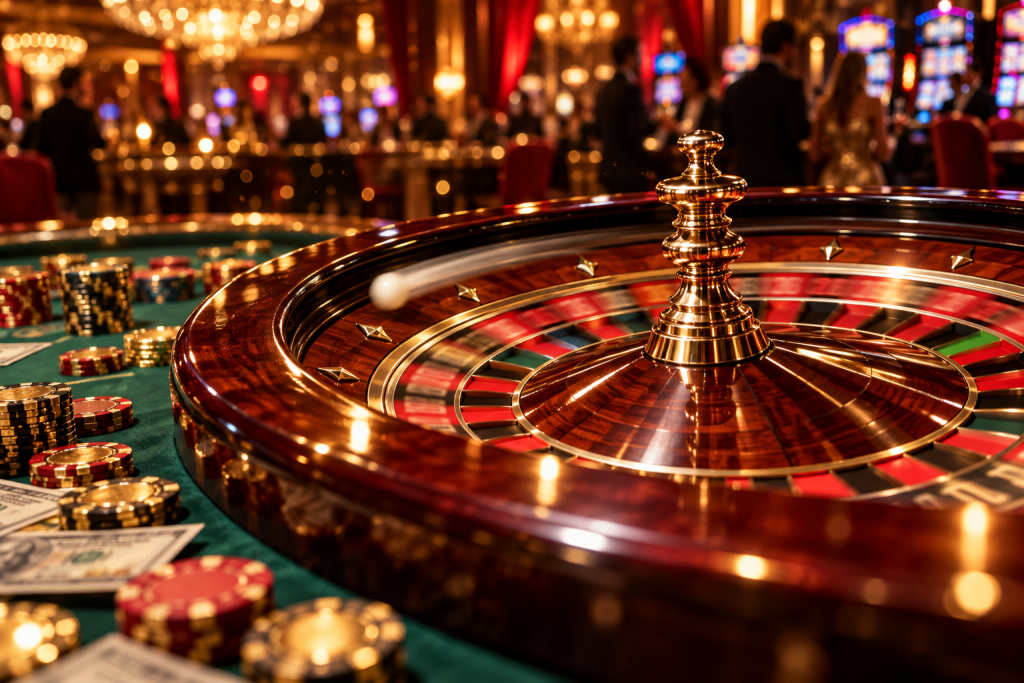
Does Benford's Law Apply to Roulette?
Benford's law describes digit patterns in naturally occurring datasets, not the uniform physics of a roulette wheel. Here is why the law does not predict or detect patterns in roulette outcomes.
4030

Benford's law describes digit patterns in naturally occurring datasets, not the uniform physics of a roulette wheel. Here is why the law does not predict or detect patterns in roulette outcomes.
Apple Pay is a payment rail, not a game library. This article explains how a wallet deposit reaches a casino account, why the cashier page controls what you can fund, and what to check before you play slots with it.
A slot symbol's appearance rate is not a fixed schedule but a product of the game's reel mapping and random number generator. Understanding paytables, volatility, and symbol weighting explains why some icons show up more often than others.
A slot spin is decided by a random number generator and a reel map, not by timing or patterns. Learn how to read the paytable and information panel, and what volatility and stake size change.
AP in blackjack stands for advantage play, a set of techniques built around the idea that some hands carry less of a house edge than others. This article explains what the term covers, how the core methods work, and why the edge never disappears.
The roulette wheel is built so the odds stay with the house on every spin. This article explains where that edge comes from, what betting systems can and cannot change, and what shifts your expected loss.
Keno results are checked against the draw you entered, not a universal list. Here is how draws, paytables and result-checking work across different keno formats.
Blackjack has no mid-hand cash-out button. Learn what happens when you leave a table, how chips convert to money, and why the cashier's rules matter more than the felt.