How Dealing Works in a Casino Blackjack Game
A step-by-step look at how a blackjack round is dealt, from the initial two cards to the dealer's own hand, and what each dealing action means for the player.
1980

A step-by-step look at how a blackjack round is dealt, from the initial two cards to the dealer's own hand, and what each dealing action means for the player.
The way blackjack cards are dealt depends on the table format and the number of decks in play. This guide explains why cards are dealt face up in shoe games, face down in pitch games, and what the difference means for how you handle your cards.
The dealer starts each blackjack hand by dealing two cards to every player and two to themselves, with one dealer card face up. The number of cards a dealer takes after that depends on the table's rule for soft 17, which changes how the hand plays out.
A step-by-step walkthrough of dealing blackjack from the first card to the final settlement, including the decisions a dealer makes and the mistakes that slow down a game.
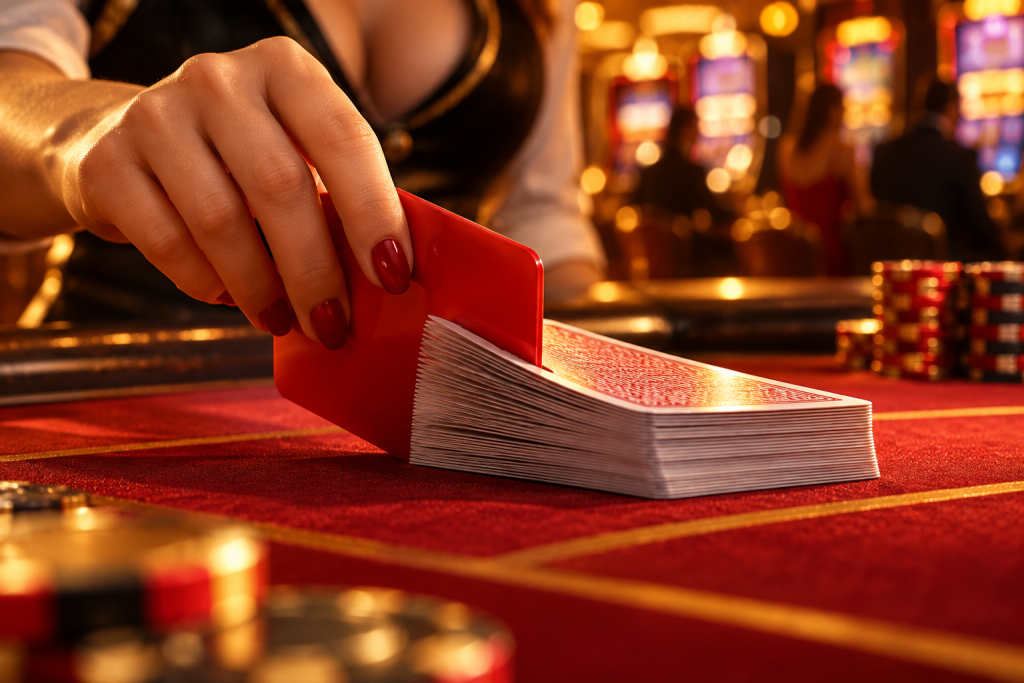
A cut card is a plastic marker that ends the current shuffle and limits how far into the deck the dealer can deal. Learn how it works, why casinos use it, and what it means for your play.
Casino surveillance and pit staff use behavioural tells, bet-spread analysis, and computerised tracking to identify advantage players at blackjack, even though counting itself is a mental skill rather than a device.
Card counting is a memory and betting technique some blackjack players use to track the ratio of high to low cards left in the shoe. This article explains the mechanic, why it is not cheating in a criminal sense, and how venues detect and react to it.
Blackjack without counting is a negative-expectation game: short sessions can end ahead, but the built-in edge and the number of hands you play decide the long-run trend. This article explains how that edge is constructed and what changes your results.