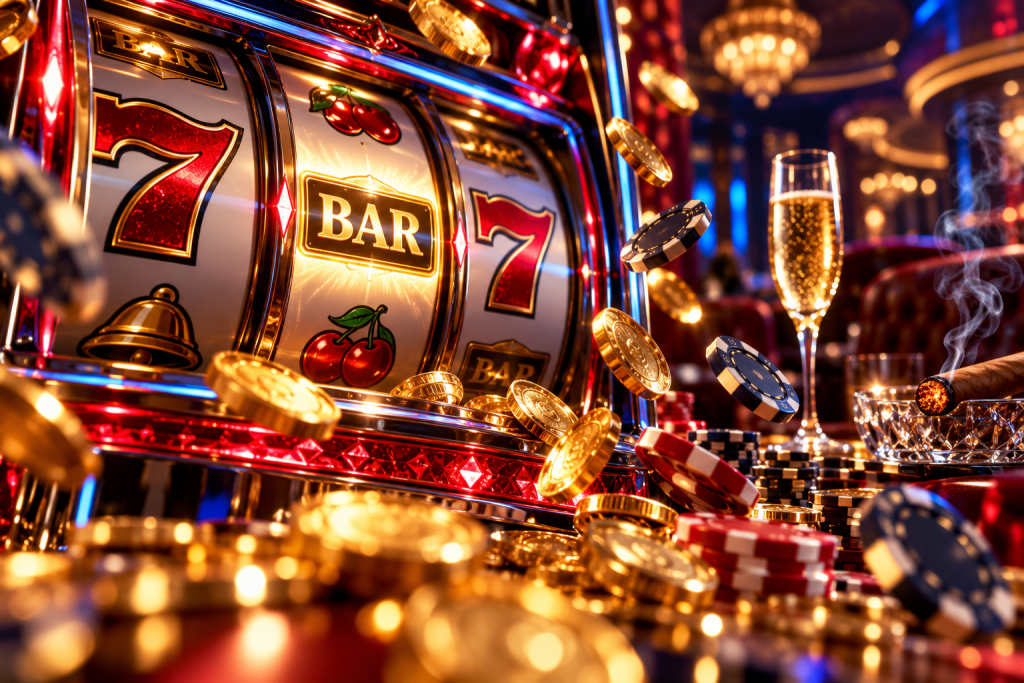
slot machinesWhy Do Slot Machines Say Bar?The bar symbol on slot machines is a leftover from early gambling devices that paid out in drinks and tobacco. Here is the full history and what the symbol means on a modern game.210
slotsReading a Bao Zhu Zhao Fu-Style Slot Before You SpinHow a game in the Bao Zhu Zhao Fu style resolves each spin, what the paytable and information panel tell you, and which settings change the shape of a session rather than the programmed return.220
slotsHow Piggy Bank Slot Machines Resolve Each SpinA piggy bank slot works like any modern video slot: an RNG picks the outcome, the paytable maps it to symbols, and volatility shapes how wins arrive. Here is how to read the game's own information panel before you play.290
slotsHow a Slot Resolves a Win and What You Can ChangeA slot spin is settled by an RNG and a reel mapping, not by timing or bet size. This explains how to read a paytable and what volatility changes.180
slotsHow Slot Machines Resolve Each SpinSlot outcomes come from a random number generator mapped to reel positions, not from a machine's memory or a player's timing. The game's information panel and paytable show the return, volatility, and jackpot structure that shape how results play out.310
slotsHow a Slot Jackpot Gets WonA jackpot on a mirror ball slot is not a skill outcome but a rare event produced by a random number generator, the game's reel mapping, and its volatility. Understanding the mechanics and the paytable is the only reliable way to know what a given jackpot requires.250
slotsHow a Money-Bags Style Slot Resolves Every SpinLearn the mechanics behind a money-themed slot: how the RNG and reel mapping decide an outcome, how to read the paytable and info panel, and what volatility and stake size change.330
slotsDoes Pressing Spin Fast Change a Slot's Outcome?The speed at which you press the spin button does not change a slot machine's programmed return. What fast play does change is how many decisions you make per hour, which affects the pace of your session and the size of your expected loss over time.150