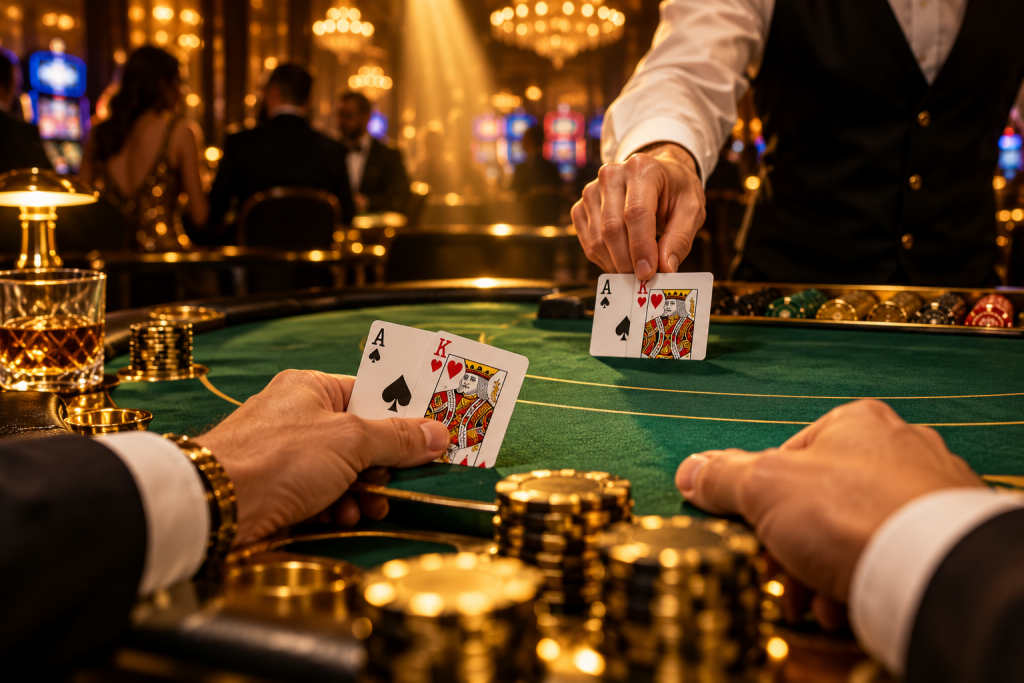
What Happens When You Tie in Blackjack
A tie in blackjack is called a push: your stake is returned and the hand ends. Here is how pushes work, when they occur, and how they fit into the wider rules of the game.
1620

A tie in blackjack is called a push: your stake is returned and the hand ends. Here is how pushes work, when they occur, and how they fit into the wider rules of the game.
A practical guide to self-exclusion, deposit limits, blocking tools, and cooling-off periods for anyone who wants to stop or pause blackjack play, including what to say and what happens next.
Insurance is a side bet on the dealer's hole card, not a way to protect a good hand. Here is how the bet works, why it is priced the way it is, and what changes when you hold a blackjack.
A natural blackjack on both sides of the table usually ends in a push, but the exact outcome depends on who holds the hand and the table's posted rules. Here is how the round is settled and why the dealer's hand changes the result.
Perfect blackjack play means making the mathematically best decision on every hand under a specific rule set. The result is a very low long-run loss rate, but short sessions are still dominated by variance.
Insurance is a side bet on the dealer's hole card, and it is settled independently of your own hand. Having a blackjack does not change the math of the insurance wager itself.
A 3 to 2 payout means a winning blackjack returns one and a half times your stake, and the difference between that rate and a 6 to 5 rate changes how much each win is worth.
Understand how blackjack's legal standing is determined, what a casino licence and testing certificate cover, and how to escalate a dispute if one arises.