
Chinese companies are entering a new phase of going global. The focus is moving away from chasing incremental growth and toward the slower, harder work of operating overseas businesses over the long term.

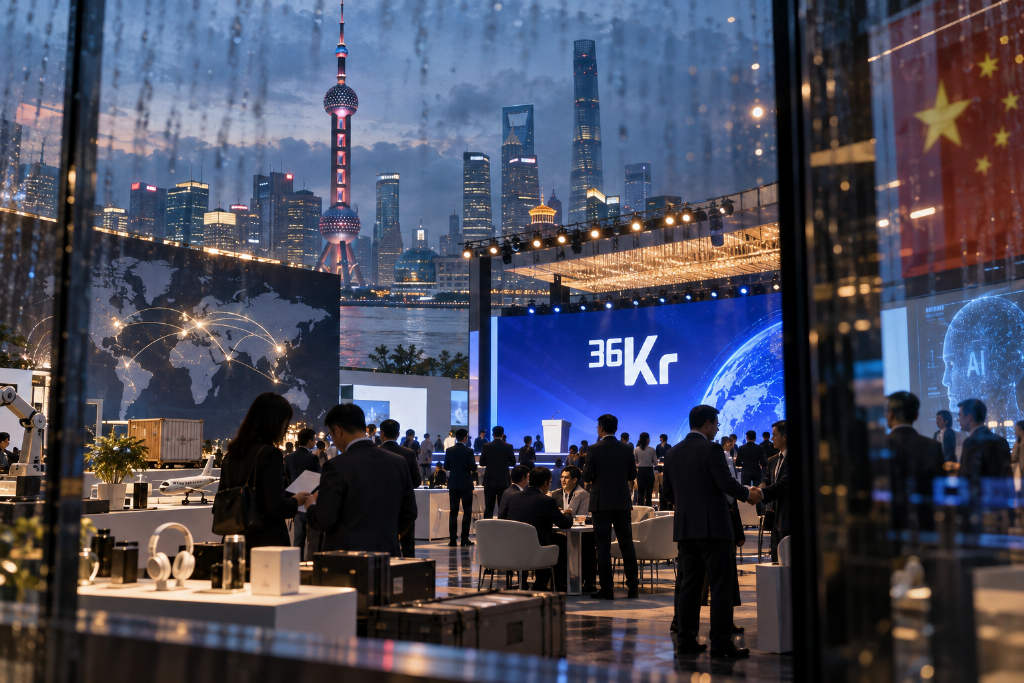
That shift framed 36Kr’s 2026 East Forward conference, held under the theme 「潮起之时,靠岸相见」 in Shanghai. The event brought together companies expanding abroad across consumer, technology and manufacturing sectors, along with investment firms and globalization service providers, to discuss how businesses can build steadier operating capability in volatile international markets and find a path to durable growth.
From finding growth to building staying power
Over the past few years, more Chinese companies in areas such as automobiles, new energy, cross-border e-commerce and AI applications have entered overseas markets. But a single market breakthrough or one stretch of revenue growth does not mean globalization is complete. As overseas expansion becomes routine rather than experimental, the key question has changed from how to get out to how to stay.
Rules and market conditions continue to shift. Supply chains, channels and local teams often need to be rebuilt. Brands also face different cultures and consumer habits. In earlier years, the debate centered on whether companies should go global. Now the tougher question is whether they can survive abroad, put down roots, operate steadily and eventually form their own global competitiveness.
On Sept. 17, the 2026 East Forward conference was held in Shanghai. Companies from new energy vehicles, cross-border e-commerce, AI and smart hardware, content going global, consumer electronics and new consumer brands gathered with investment institutions and service providers in logistics, finance, marketing, human resources and M&A. Discussions ranged from shared operating problems to sector-specific expansion paths.

In his opening remarks, 36Kr Vice President Xie Zuoqiang said overseas business is not unfamiliar territory for Chinese companies. Selling goods abroad in the traditional sense has been handled with maturity for decades. The harder issue now, he said, is whether a brand can stand overseas, whether the books can be clearly calculated in the present, and whether operations can deal with governance and compliance challenges.
"Going out" is no longer enough
Once a company actually enters an overseas market, growth is often not the first mandatory problem. Operations are.
Teng Binsheng, professor of strategy and associate dean at CKGSB, used a speech titled "From Going Out to Staying Alive" to place Chinese overseas expansion within what he described as changes in "Globalization 2.0." He said a once relatively stable global industrial chain is turning into a more complex network structure. Companies can no longer rely on exporting products alone. They need to find the right position, spread risk under trade barriers and geopolitical pressure, and build long-term capability across market-entry routes, core competitiveness, local ecosystems, innovation and compliance.
The same point carried into a panel on moving "from exports to local roots." Selling a product does not mean a company has truly entered a market. Understanding local users, building local supply chains, forming brand recognition and managing cross-regional teams remain unavoidable tasks.
Xie Huiqi, product and solutions director for Dun & Bradstreet China and head of its going-global business, said companies often underestimate how quickly local markets change. When teams are still small, customer information can be tracked. As scale increases, though, sales, finance and after-sales data become scattered across departments. Without integration, that fragmentation can produce operating errors and resource mismatches. She said companies need continuously updated and trustworthy commercial data, not personal judgment, for target-market selection, partner identification, customer credit assessment, payment terms and collection-risk management.

AI is becoming a new commerce gateway
As overseas operations mature and companies add more markets and channels, AI is becoming a new entry point in commerce systems.
Vivey Wan, head of Shopify Asia business, discussed how AI is changing the way consumers discover products and complete purchases. She said the move from e-commerce to mobile commerce took about 15 years, the move from mobile commerce to social commerce took 9 years, and the shift from social commerce to today’s agentic commerce may have taken only 7 years. Channel iteration, in her telling, is clearly accelerating, and companies going abroad need to adapt faster to new consumer entry points.
For merchants, AI is not simply replacing traditional search. It is adding new touchpoints and transaction channels alongside advertising, search and email. Wan said Shopify’s current work is centered on making brands easier to discover, understand, trust and buy through AI channels.
AI short dramas cut costs, but winners are concentrating
Content businesses going abroad face a different set of issues. Zhangyue Technology CEO Sun Kai shared his view on changes in global content products through the lens of AI short dramas. Over the past three months, he said, the average production cost of AI short dramas fell 75%, while supply grew about 300% over six months.

Lower production thresholds and higher efficiency do not mean creators broadly benefit, he said. Instead, hit titles and profits are concentrating even more around high-quality content. Sun argued that AI short dramas are not a simple branch of traditional short dramas, and domestic content cannot be exported by translation alone. What still determines whether a content model works overseas is IP, storytelling ability, and an understanding of local payment habits and content demand. In his words, "Short dramas in 2026 are like short video in 2016: the market has only just opened up."
At a panel on brand globalization and long-term growth capability, speakers from Alibaba Cloud, Ocean Stone and Xiaoman Tech pushed the discussion back to duration rather than bursts of success. A single hit product, one channel or one successful market is not the same as globalization, they said. Companies still need to connect their brands, customers, data and operating systems, keep core judgment in-house, and rely on external ecosystems to fill capability gaps. As AI tools take on more repetitive work, human cognition, judgment and aesthetics become more important, not less.
Different sectors are taking different routes
Beyond shared operating problems, industries are carving out their own approaches.
In a session titled "From 30 Million to World-Class: How Changan Auto Turns Speed Into Global Trust," Changan described how it is moving from product trade toward a global operating model that combines manufacturing, investment, service and brand coordination. Its product strategy is also shifting from "global synchronization" to "global native, regionally customized," supported by local teams, service networks and partner ecosystems.
Many mature companies expanding abroad are also addressing growth by moving from isolated breakthroughs to system building. In a panel on how AI is reshaping commerce, speakers discussed the complexity of global markets, internal data coordination and how AI capability can actually enter operating systems.

Shopify senior solutions engineer Liang Yan focused on the need for a unified operating foundation. Once a company enters more markets, she said, it first needs a single data source that truly connects products, inventory, channels and regional operations. In the AI era, it also needs to link different AI channels so products can be understood, discovered and converted by AI. Scaling AI, she said, is not about piling on more tools. It starts with running through the full chain of finding problems, making judgments, taking action and reviewing outcomes, then replicating that process across more markets and teams. Through Shopify, merchants can manage one product set and operate independent sites serving multiple countries and markets on one platform, while using AI channels already integrated into the platform instead of handling separate deployment and maintenance work one by one.
A separate panel titled "Speed and the Human Heart" brought in executives from Kunlun Tech, Linmon International and 41 Finance. Their discussion moved past content efficiency. As AI keeps lowering the cost of production, testing and localization, and as supply keeps rising, what becomes scarce is judgment about what counts as good content and insight into the culture, emotion and needs of users in different markets. AI can amplify efficiency, they said, but topic selection, storytelling and local expression still depend on human judgment and market understanding.
Capital and service systems are also changing as companies go farther abroad. In a panel on industrial capital’s new route, speakers from Sevenseas, Joyoung Industry Fund, PMI China and LianLian Pay discussed where money should go in the second half of overseas expansion. Compared with an earlier period that put greater weight on traffic and short-term conversion, companies are now directing more budget toward localization, brand building, organizational capability, compliance and risk management. Capital, in this discussion, is no longer just money. It also helps reduce the cost of judgment and trial-and-error and connects companies with channels, supply chains and specialized long-term resources.
Methods differ by sector, but the underlying view is converging. It is becoming harder to win globally through a single-point advantage. Products may open a market, but staying power depends on whether a company can keep products, organization, supply chains and markets connected over time.

The support system behind globalization is getting more visible
As globalization shifts from a growth opportunity to long-term operation, going abroad is no longer only a brand’s own task.
Alongside the conference, East Forward released three rosters: globalization leading companies, globalization expansion companies and globalization road-building companies. Together they covered companies that have already formed global capability, those still opening new markets and the service ecosystem that supports global operations.
That points to a larger change. It is now difficult to talk about overseas expansion by focusing only on the brands at the front. Payments, logistics, compliance, technology, marketing, finance, human resources and professional services all shape whether a company can run smoothly after entering a new market.
Outside the main forum, the East Forward business matchmaking session pushed the conversation from diagnosis to execution. A total of 28 companies took part in talks, as brands, service providers and industrial resources exchanged operating experience and matched directly around real business needs.
Rather than searching for the next so-called hot trend in overseas expansion, the matchmaking session focused on concrete issues companies already face: where they are getting stuck after entering a market, what resources they lack, and who can actually help solve those problems. It gave brands, service providers and industrial resources a more direct setting for matching needs with solutions.

Globalization is turning into capability rebuilding
After a full day of discussion, one theme came through clearly: the issue for Chinese companies is no longer just how to go abroad, but how to keep going.
Once companies truly enter different markets, many issues that used to be handled separately start to intertwine. Products, brands, supply chains, technology, compliance and organizational capability affect one another. A shortfall in any one link can alter the result of the whole overseas business. That is one reason globalization is becoming harder to measure with any single number.
Export volume, GMV and overseas revenue still matter. But what really determines the quality of a company’s globalization effort is whether it can understand different markets, build local organizations, respond to changing rules and turn one success into capability that can be repeated. In that sense, globalization for Chinese companies is shifting from external expansion to a rebuilding of the company’s own capabilities.
36Kr said it will continue to report from the front line of Chinese companies’ globalization efforts, documenting how businesses build new capabilities across markets and connect brands, industry, capital and globalization service ecosystems, so that those already overseas can share experience and those still looking for direction can find answers more quickly.