
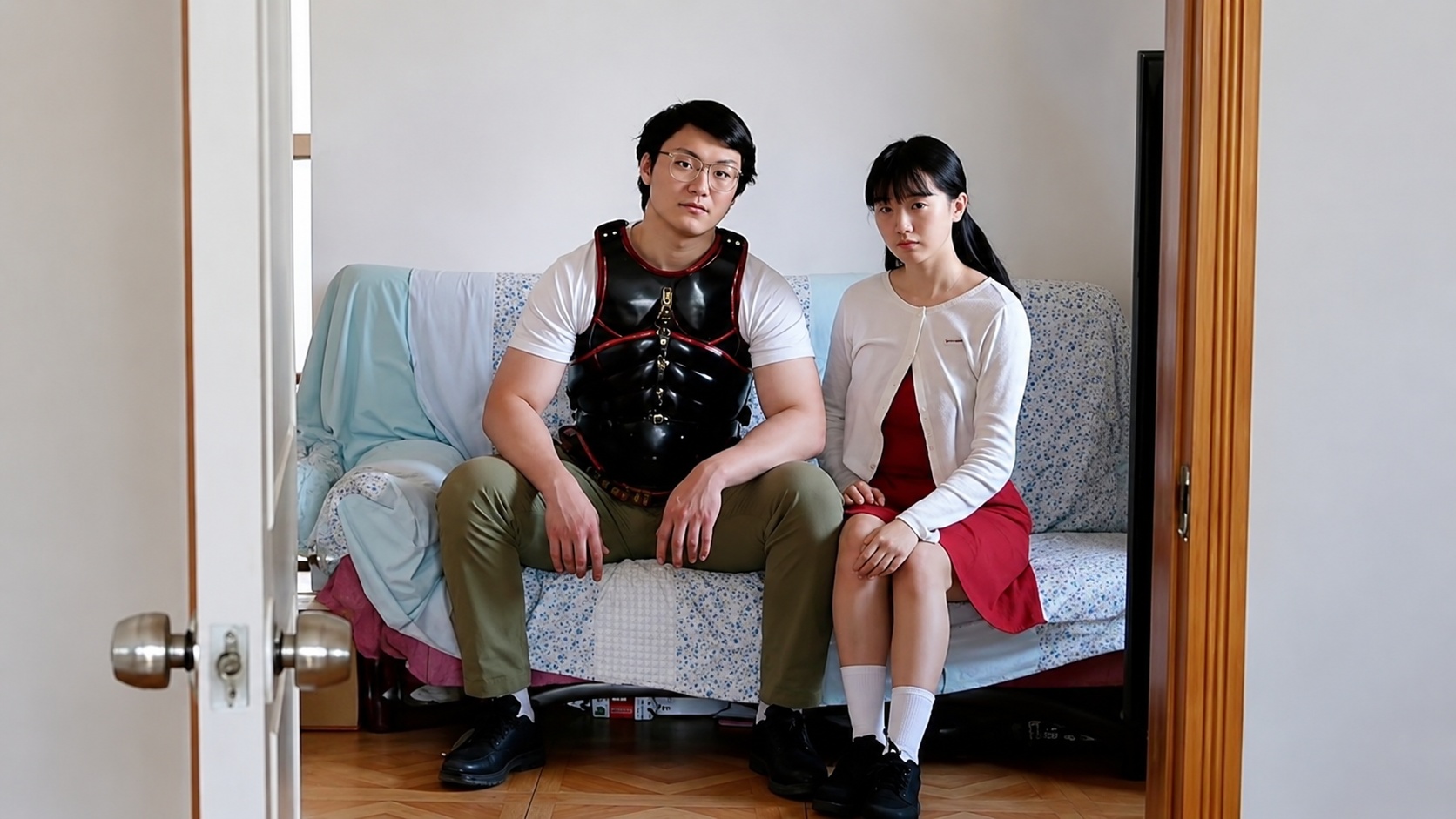
A 21-year-old college student from Beijing was confined for 11 days in an unlicensed “internet addiction” institution after being tricked into a vehicle by her parents, according to the source material. The student, who was studying piano at a teachers college in Beijing, was stopped on March 15 while heading out to teach a lesson. Her father and other relatives told her that a cousin had gotten into trouble and that she needed to return to Yuncheng to cooperate with police. The claim was false. She was then pushed into a white seven-seat van, her phone was taken, and after roughly 12 hours on the road she was brought to a three-story building in Sanmenxia, Henan, secured by both a passcode lock and QR-code access control.
The case later drew wide public attention. On June 2, a joint investigation team in Sanmenxia said “Lixuan Education” was ordered to immediately stop all illegal business activities, and the local education bureau confirmed the institution had never obtained legal school-operating qualifications.
Registered as a consulting company, operated as a closed correction facility
The source identifies the company as Sanmenxia Lixuan Education Information Consulting Co., Ltd., established in 2022 with registered business scopes including education consulting and psychological counseling. In practice, it allegedly ran behavior correction programs. After entering the facility, the student was reportedly forced to undergo a pregnancy test on the second day. Her daily routine began at 6:30 a.m. and included drills, a “filial piety” dance, military-style exercises, and anti-gambling videos.
Living conditions were harsh. She said she ate meat only 4 to 5 times and one egg during the 11-day period, and was not allowed to shower at all. The source says some students there had gone 20 days without bathing. Instructors allegedly told her that her boyfriend was an organ trafficker and showed her a stamped agreement stating she could leave only after “forgetting” him. The report also describes public corporal punishment, kicking, and stress-position penalties. Fees were listed at 26,800 yuan for six months and 36,800 yuan for one year, with a minimum stay of six months and no family visits allowed during the first three months.
Suspicious messages and surveillance footage helped trace her location
Her boyfriend began to suspect something was wrong after receiving messages from her phone that used a term of endearment the couple had never used before. At 4:28 p.m. on March 15, he reported the case to police and flew to Yuncheng. He then used connection data between her iPad and earphones to narrow down a relative’s residence.
He filed another police report there and later found a way to legally obtain surveillance footage from the building where she lived. According to the source, the video showed her being taken away in the stairwell by relatives and two staff members from Lixuan Education. On March 23, he and lawyer Liu Zexin formally filed an illegal detention complaint. The next day, he provided the family’s lawyer with personal records including academic transcripts from a Canadian university, property certificates, company cash-flow records, and divorce documents. During that exchange, the lawyer accidentally mentioned “some gorge,” which led him to infer Sanmenxia. With help from online volunteers, he identified two possible institutions and eventually focused on Lixuan Education.
She was freed on day 11 after a confrontation outside an apartment
On March 25, the 11th day of her confinement, the student was released from the first institution but was not allowed to return to normal life. Instead, her mother intercepted her and took her to an uncle’s apartment in Yuncheng. That same day, her boyfriend drove from Beijing to Yuncheng wearing his Roman-style full armor used for historical combat sports. The source says he did this for self-protection, not for display, after several days of ineffective police responses and because the student’s father was physically stronger and had previously kicked her at a police station.
Once outside the building, he called up and asked whether she was being controlled and whether she wanted freedom. She answered yes from the bathroom and gave her floor location. He located the apartment within 10 minutes. When she rushed out, her mother grabbed her by the neck from behind, and a struggle followed at the doorway. He suffered scratches to his forehead and neck. Video recorded during the incident, according to the source, showed that he did not strike first. Both were later taken to a police station and then released.
The case points to a wider correction-industry problem in China
The report frames the case as part of a much larger system. It says China’s “internet addiction” correction industry generates more than 700 billion yuan annually, with over 800 institutions operating nationwide and compliance rates below 60%. Among adolescents aged 12 to 18, 28.7% were described as showing significant internet dependence tendencies, while the detection rate for ages 10 to 18 was 12.4%. Many of these institutions are registered as consulting companies or service organizations and fall outside direct education-sector oversight.
Publicly documented cases have included corporal punishment, confinement, food restrictions, and physical control. The source says that from 2008 to 2014, at least 12 major incidents were exposed, more than 90% involved corporal punishment, and 7 student deaths were confirmed. In June, Sichuan issued new rules banning any organization or individual from carrying out correction-style education activities for minors, including summer camps, training camps, and off-campus programs. The rules also ban corporal punishment, arbitrary solitary confinement, forced labor, and substandard food and housing.
In this case, the student formally reported illegal detention in Beijing on April 5, but the response she received said there was “no criminal fact,” and the case was not opened. Legal analysis cited in the source argues that forcing any person into an institution may violate personal liberty rights regardless of age, and both parents and institutions may bear legal responsibility where entrustment and confinement are involved.