
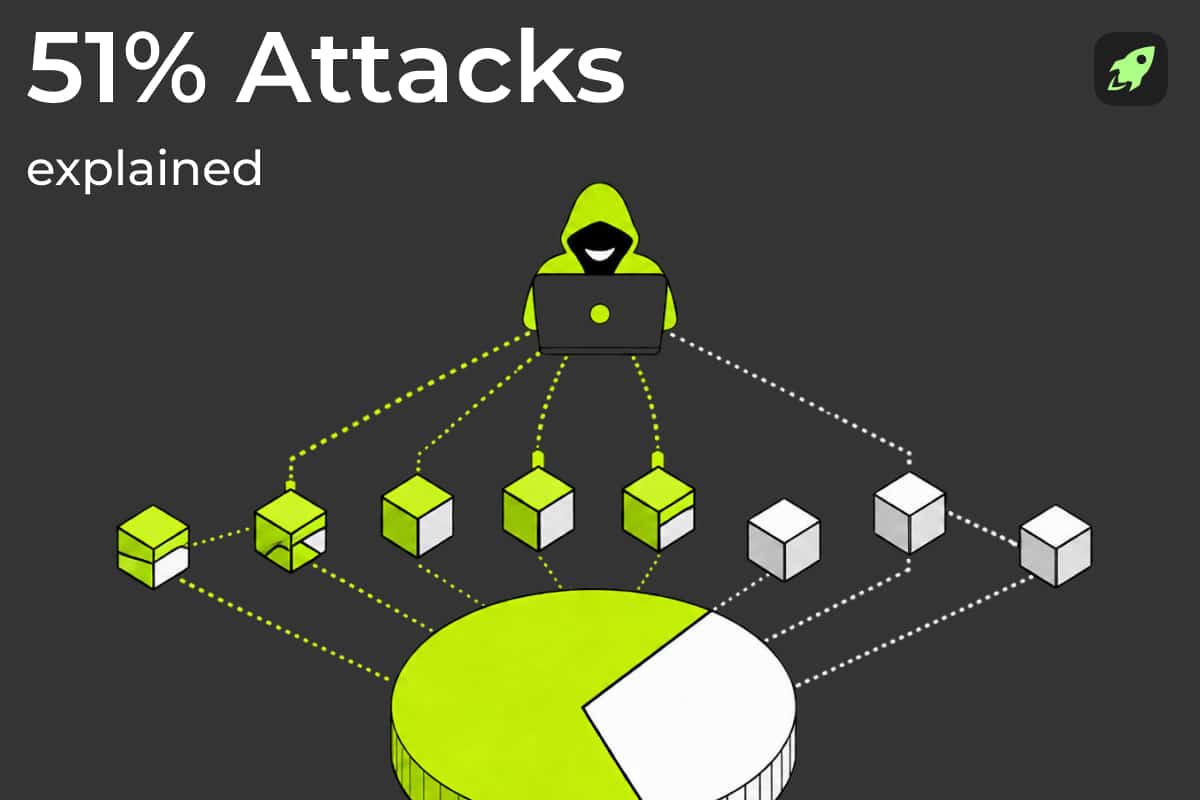
A 51% attack occurs when a single entity or group gains majority control over a blockchain's consensus resources—over 50% of mining hashpower in proof-of-work, or staked tokens in proof-of-stake. With that control, they can rewrite recent transaction history. This isn't a theoretical risk; smaller networks have suffered real damage in hours.
How It Works: Six Steps
- Gain majority control: rent or deploy enough hashpower to outpace honest miners.
- Mine a private chain: start from the latest public block but build new blocks in secret.
- Broadcast transactions publicly: send deposits or payments on the main chain while the private chain excludes them.
- Release the longer chain: when the private fork becomes heavier, nodes adopt it automatically via fork-choice rules.
- Chain reorganization: old blocks become orphans; transactions in them are reversed.
- Double spend or censor: spend the same coins again or block specific transactions from confirming.
Limitations of a 51% Attack
Attackers cannot steal coins from wallets they don't control, forge signatures, mint coins outside protocol rules, rewrite deep history (e.g., 30+ blocks), or change core protocol parameters. Private keys remain secure.
Real-World Cases and Defenses
Networks like Ethereum Classic and Bitcoin Gold have suffered such attacks. Defenses include requiring more confirmations before crediting deposits (each confirmation raises reorg cost), monitoring hash rate anomalies, and implementing exchange-level security checks. In Proof-of-Stake, finality gadgets like Casper FFG make deep reorgs much harder, but the fundamental risk—majority control of consensus resources—persists.
No chain is immune; the attack economics depend on security budget. Small PoW chains remain the most vulnerable targets.