
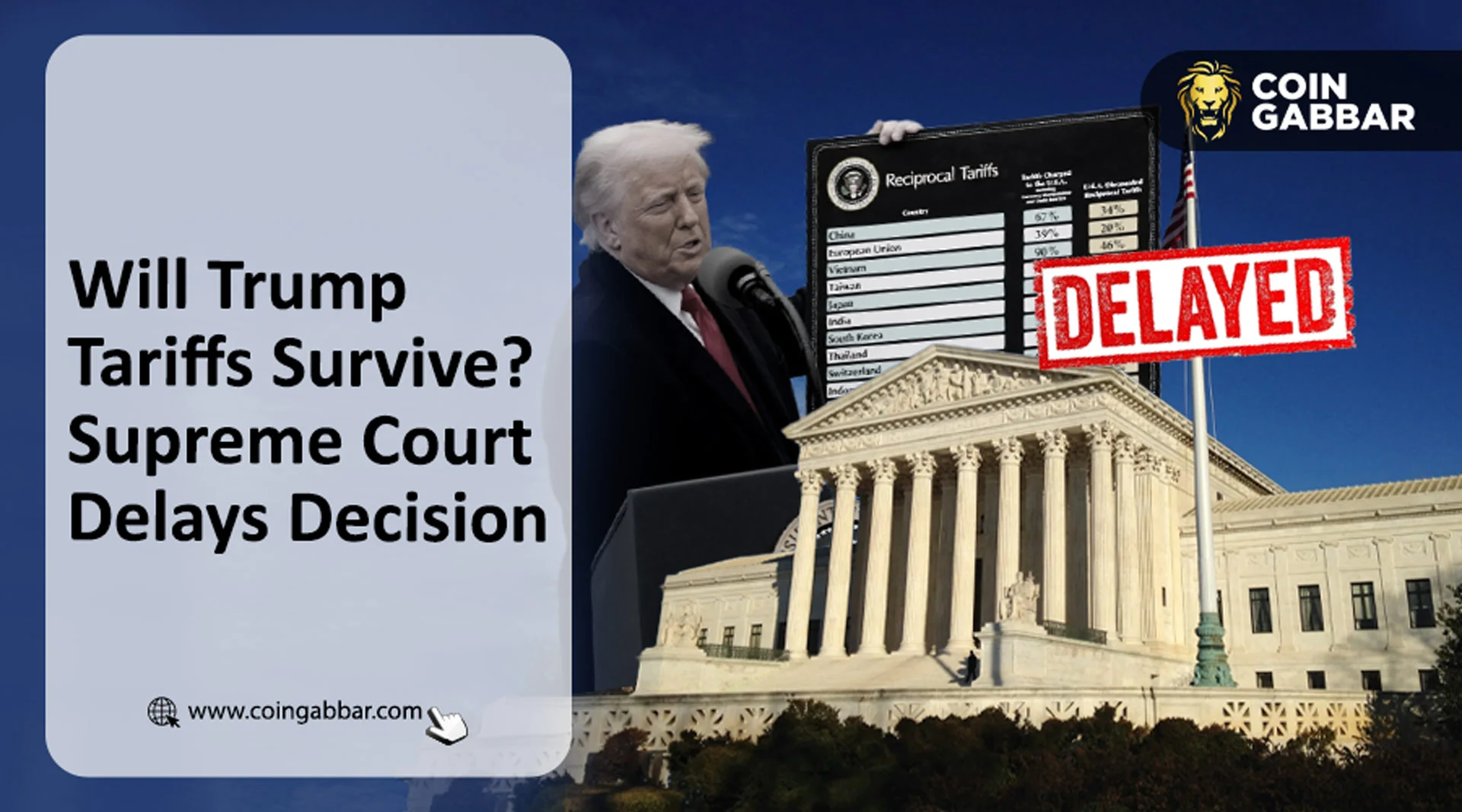
US markets are being pulled by two major developments at once: the Supreme Court still has not issued a ruling on roughly $600 billion in tariffs imposed under Donald Trump, and the US unemployment rate for December came in at 4.4%, below the expected 4.5%. Together, those signals have kept stocks, bonds, and crypto assets moving sharply.
Supreme Court ruling on tariff legality is still pending
The case centers on trade measures Trump began imposing in 2018 under emergency powers that bypassed Congress. A decision had been expected around January 14, but the court has not delivered a verdict. That delay has left traders without a clear policy outcome on one of the largest unresolved legal issues tied to US trade.
Markets had also looked for a faster answer on January 9, but no ruling came. According to Polymarket, the odds of the tariffs being ruled illegal briefly jumped above 70% before easing back to around 31%. That swing showed how unsettled expectations remain.
Potential refund burden could reach $133 billion
If the tariffs are struck down, the US government may have to return about $133 billion collected from importers. The article says that outcome could send effects through global trade and financial markets. More than 1,000 companies have challenged the measures, arguing that emergency legislation was used to support what became a long-term trade policy.
A 2021 Federal Reserve study had estimated that the tariffs cost the US economy nearly $195 billion. Supporters, though, argue that the policy helped protect domestic manufacturing. With no court decision yet, that dispute is still being reflected in market pricing rather than settled in law.
Labor data shows lower unemployment, but weak job creation
The December labor report added another layer. The unemployment rate fell to 4.4%, beating the 4.5% market expectation, and the November figure was also revised lower. At the same time, only 50,000 jobs were added, missing expectations. The picture is mixed: the labor market looks resilient, but the broader economy does not appear to be accelerating.
That matters for rate expectations. The report says a lower unemployment rate reduces pressure on the Federal Reserve to cut rates aggressively, with January rate-cut odds already near 13%. That gives tariff supporters more room to argue that the policy has remained economically workable, while critics keep pointing to inflation and higher consumer prices as the larger risk.
Stocks and crypto are still trading through policy uncertainty
For investors, the issue is not just the legal outcome itself. It is the absence of a clear policy path while the ruling remains pending. If the Supreme Court strikes down the tariffs, one source of uncertainty may be removed quickly. If it upholds them, markets will need to reprice the trade, inflation, and rate implications.
The report also notes that Trump has publicly urged Americans to pray for a favorable court outcome, highlighting how central tariffs remain to his economic and political agenda. Until the court rules, the combination of tariff uncertainty, labor data, and shifting rate expectations is likely to keep US markets and crypto volatile.