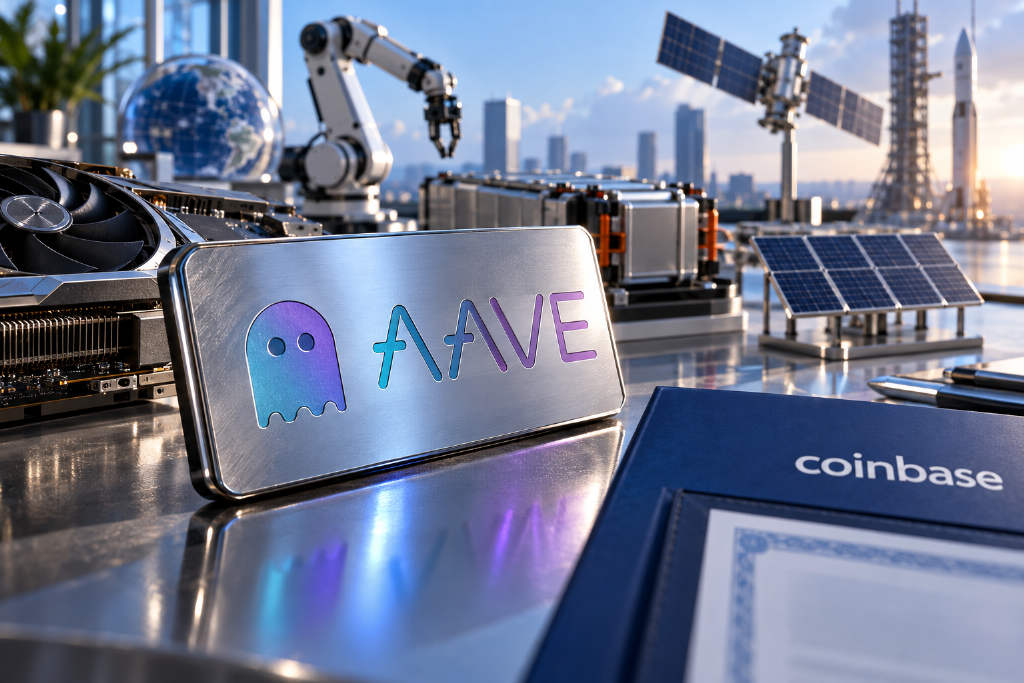
Aave founder and CEO Stani Kulechov said the protocol’s addressable market should be measured by the range of assets that can be used as collateral. In his view, a broader set of collateral translates into a larger lending market. Aave started with crypto assets, then expanded into securities through Coinbase tokenized stocks and Horizon RWA, according to his post. Kulechov added that the next phase could extend collateral-backed finance into sectors tied to what he called an "abundance economy," including solar, batteries, GPUs, robotics and space infrastructure. He said that transition will continue through 2050. Aave’s goal, he wrote, is to finance assets that drive that shift and bring the timeline forward by 10 years.
According to BlockBeats, Aave founder and CEO Stani Kulechov said on Sept. 28 that Aave’s potential market can be measured by the set of reachable collateral assets. The wider the range of assets that can be posted as collateral, the larger the potential lending market.
Aave ties market size to collateral breadth
Aave began with crypto assets and later expanded into securities through Coinbase tokenized stocks and Horizon RWA, according to Kulechov’s post.
He said Aave could next extend into solar, batteries, GPUs, robotics and space infrastructure as part of a broader shift toward what he described as an "abundance economy."
Transition timeline runs through 2050
Kulechov said that transition will continue through 2050. He added that Aave aims to finance assets that support the "abundance economy" and move that process forward by 10 years.
This article was originally published by Bit.Fan. For more cryptocurrency news and market insights, visit www.bit.fan. Disclaimer:
The market information, project data, and third-party content displayed on this platform are for industry information sharing only and do not constitute any form of investment advice or return commitment.
Cryptocurrency trading carries high risks. Users should fully assess their risk tolerance and make independent decisions. All profits, losses, and legal responsibilities are borne by the users themselves.