
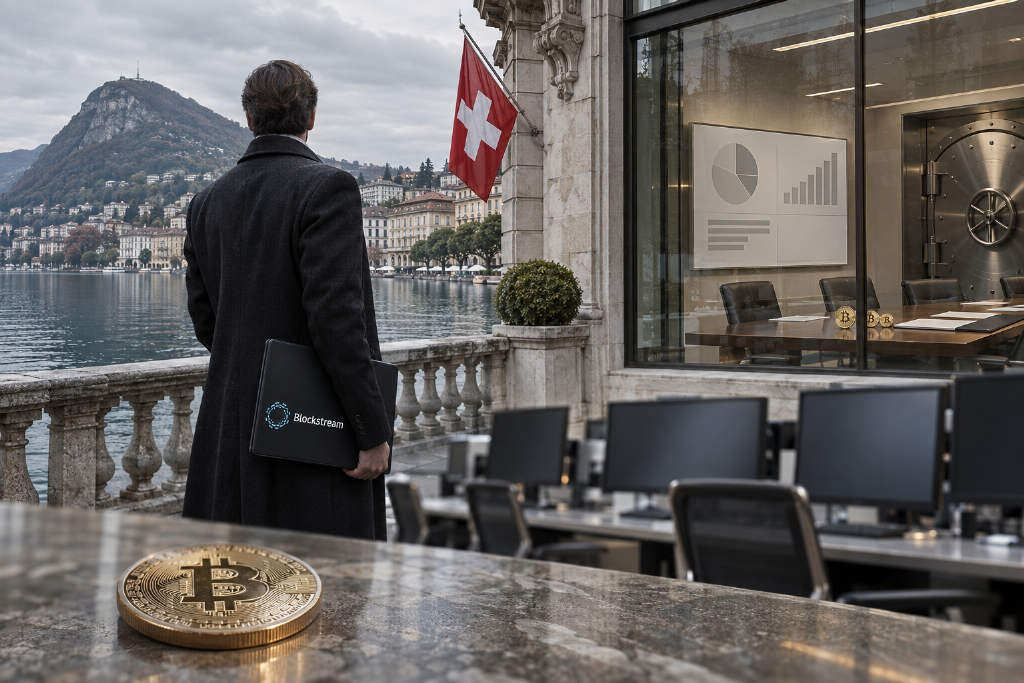
Adam Back, chief executive and co-founder of Blockstream, said on a Bitcoin Magazine program that Bitcoin adoption has moved through two major waves so far, with a third still largely ahead. He described the first wave as individual adoption and the second as exchange-traded funds, then pointed to model portfolios, managed funds, and pension funds as the next group that could drive broader uptake.
Program focused on the next stage of institutional demand
According to the episode description, Back explained why Blockstream opened an office in Lugano and why the company started offering consulting services. The description also said Swiss banks are getting ready for the coming phase of adoption.
The chapter list shows the conversation also covered Swiss banks’ interest in quantum-safe Bitcoin custody, tokenized money market funds versus stablecoins, and tokenized shares on Liquid and Blockstream AMP. It also examined where institutions still get stuck as they try to add Bitcoin exposure.
Custody choices, regulation, and Basel rules were central topics
Other segments in the program addressed whether institutions should build custody infrastructure in-house or use a custodian, and how regulation shapes Bitcoin custody. Later chapters turned to Basel rules and the cost of holding Bitcoin.
In the published timeline, the section titled “The Three Waves of Bitcoin Adoption” appears at 10:40. In that framing, individuals came first, ETFs followed, and model portfolios, managed funds, and pension funds represent the next major phase still to come.
Byline and disclaimer
The post first appeared on Bitcoin Magazine and was written by Mark Mason.
The program’s disclaimer said the views and opinions expressed were those of the participants and did not necessarily reflect the official policy or position of BTC Inc., Bitcoin Magazine, or affiliated entities. It also said the content was provided for informational and educational purposes only and should not be construed as investment, legal, tax, or accounting advice. The disclaimer added that nothing in the show constituted a solicitation, recommendation, endorsement, or offer to buy or sell any securities or financial instruments, and that viewers should consult their own advisers before making financial or business decisions.



