
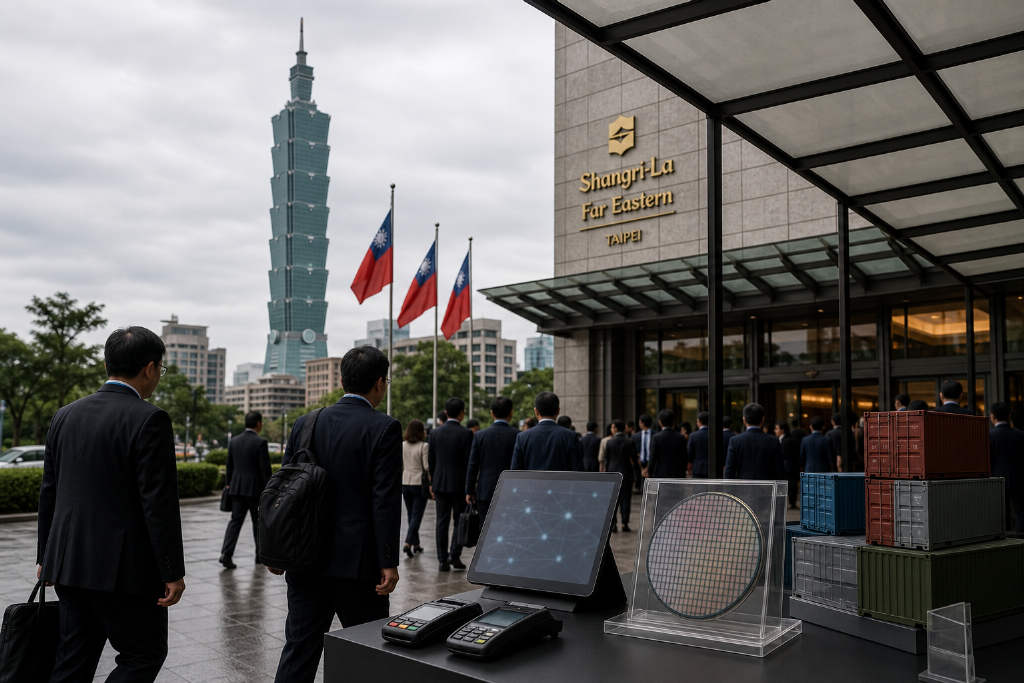
Global supply-chain competition is no longer defined only by manufacturing and logistics efficiency, as artificial intelligence, semiconductors and the digital economy continue to expand. Cross-border payments, financing, data exchange and the ability of financial infrastructure to work in sync have become part of the resilience equation for companies operating across markets.
FinTechOn 2026 and the Asia FinTech Alliance Summit will take place on Sept. 2-3 at the Shangri-La Far Eastern in Taipei. The event will continue last year’s discussion under the theme “FinTech × Global Supply Chain,” with a focus on how fintech can improve cross-border capital movement, strengthen risk management, and support regulatory and industry coordination across Asian markets. Details are available at https://www.tftafintechon.com/
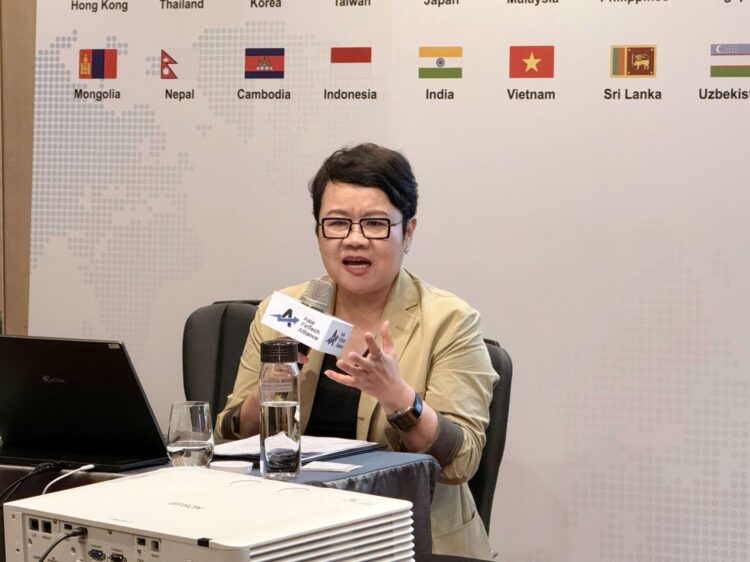
Jaclyn Tsai says resilience depends on payment and financing speed
Jaclyn Tsai, chair of AFA and honorary chairperson of the Taiwan FinTech Association, said, “Global supply-chain resilience is no longer just a question of where production takes place. It also depends on how quickly companies can complete payments, financing and verification, and respond to market changes. In the digital economy, market fragmentation carries a cost. The 16 markets represented by AFA members each have strong capabilities, but the possibilities are greater if they can be linked effectively.”
She also said supply-chain resilience now depends not only on production location, but on how quickly businesses can complete payments, financing and verification while responding to changes in the market.
Delegations from Hong Kong, South Korea and Southeast Asia are expected
Since last year, the annual FinTechOn forum organized by the Taiwan FinTech Association has been held together with the AFA Summit. AFA members sent representatives last year. This year, as the platform’s international reach and industry ties continue to grow, participation is set to expand.
In addition to AFA representatives traveling to Taiwan in person, industry delegations from Hong Kong, South Korea, Malaysia, the Philippines, Indonesia and Cambodia are also expected to attend, reflecting what the organizers described as strong interest in the event.
AFA describes itself as a voluntary international cooperation platform aimed at promoting financial innovation, policy dialogue and industry links across the region. It was formed by 16 leading fintech associations and organizations in Asia, with only one association or organization representing each economy.
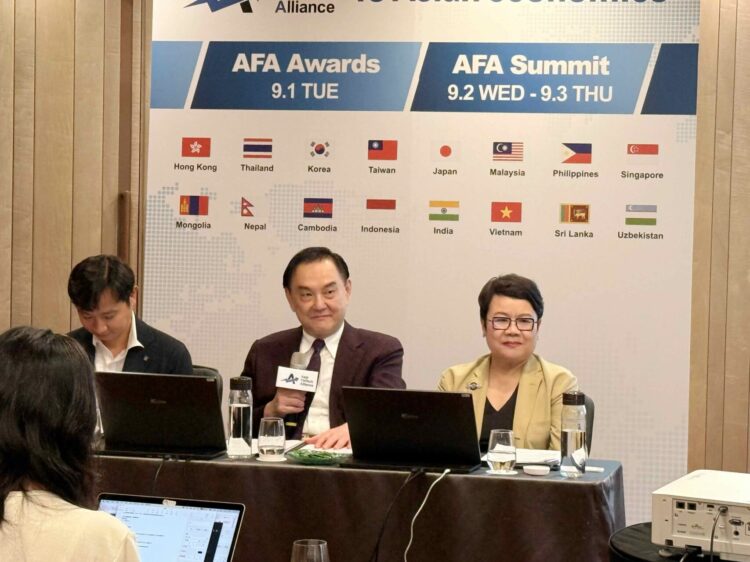
The member economies listed in the release are Taiwan, South Korea, Singapore, Japan, the Philippines, Indonesia, Hong Kong, Malaysia, Thailand, Cambodia, Mongolia, Nepal, India, Vietnam, Sri Lanka and Uzbekistan, spanning fintech ecosystems in both emerging and developed markets.
Nicky Lu says Taiwan’s $670 billion sector needs upgraded financial infrastructure
Nicky Lu, founder, chairman and chief executive officer of Etron Technology, said the global electronics and semiconductor supply chain is vast, and that Taiwan’s electronics and semiconductor industry is estimated to produce about $670 billion in annual output. The financial infrastructure supporting an industrial system of that scale, he said, must be upgraded at the same time.
“For industry, we need speed and efficiency, but at the same time we also need security, reliability and resilience,” Lu said.
Lu has held a number of industry positions cited in the release, including chair of the World Semiconductor Council summit in 2014-15, chair of the Taiwan Semiconductor Industry Association from 2013-17 and current standing director, chair of the board of the Global Semiconductor Alliance in 2009-11 as well as current director and chair of the APAC Leadership Council, president of the AI-on-Chip Taiwan Alliance, and standing director of the Hsinchu Science Park Industries Association.
He said that in global semiconductor or AI supply chains, a single failure in a financial or transaction link may extend beyond one trade and affect production, deliveries, suppliers and customers, and could even spread across supply chains spanning multiple countries.
Asian markets point to AI payments, cross-border standards and stablecoins
AFA said the next phase of fintech development in Asia will not be defined only by more products launched in individual markets. The central issue, it said, is interoperability between markets so that financial services can support real-economy industries operating across borders. That will be one of the main areas of attention at the Sept. 2 opening of FinTechOn and the AFA Summit.
Beyond Taiwan, markets including South Korea, Japan and Malaysia are also moving to upgrade fintech infrastructure through AI payments, cross-border standards and supply-chain finance.
Dongpyo Hong, AFA vice chair and global cooperation chair at the Korea Fintech Industry Association, said South Korea is testing AI agents that can complete micropayments in real time based on actual service usage time. “If such advanced models are to work effectively, stablecoins may become one of the more efficient payment and settlement infrastructures,” he said.
Takafumi Ochiai, AFA treasurer and vice chair of the Fintech Association of Japan, said the key to cross-border financial services is stronger interoperability between markets. He said Financial Action Task Force rules and ISO 20022 are both global standards, adding, “Industry, information technology and finance must be considered together.”
Wilson Beh, an AFA vice chair and adviser to the FinTech Association of Malaysia, said the regional expansion of AI, data center and semiconductor companies is increasing demand for remittances, payments and supply-chain financing. “One of AFA’s missions is to connect the fintech economy with the real economy,” he said.
About the Taiwan FinTech Association
The Taiwan FinTech Association was established in 2017 as a national non-profit organization focused on advancing Taiwan’s fintech industry through policy advocacy, industry exchange, international cooperation and talent development.
The association is also one of the co-initiators of AFA. According to the release, the alliance was promoted by Tsai during her tenure as chairperson of the association, and she became its founding chair, linking fintech organizations across 16 Asian economies to deepen cross-border cooperation and policy exchange.
The association has also worked with industry participants to promote the establishment of the ROC Virtual Currency Commercial Association. It continues to organize industry exchange events and international visits, and hosts the annual FinTechOn international fintech forum and AFA Summit. The release said the platform has become one of Taiwan’s representative venues for international fintech exchange and will continue working with government and industry partners to build Taiwan into an important hub for fintech innovation and international cooperation in Asia.