
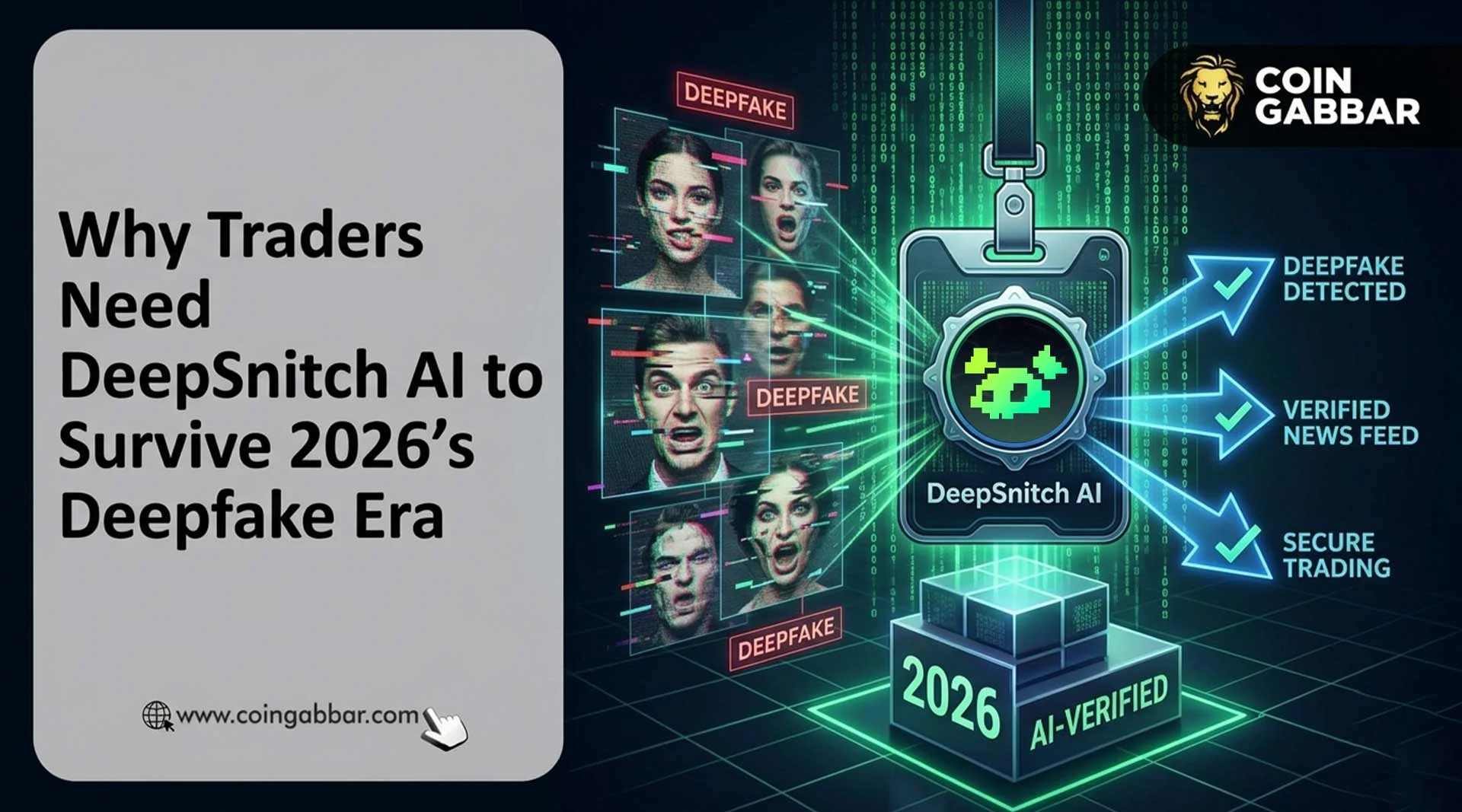
Crypto scam losses hit a record $17 billion in 2025, a 42% jump from $12 billion the year before, according to the Chainalysis 2026 Crypto Crime Report. The FBI reported that Americans alone lost over $21 billion to cyber and crypto fraud in 2025. Deepfakes and voice clones surged 1,400%, making AI-powered scams 4.5 times more profitable than traditional ones. The average victim lost $2,764 per scam, up from $782 in 2024.
Three AI Threat Vectors: Fake Celebrities, Cloned Voices, Perfect Phishing
Criminals now industrialize deception. AI tools generate fake celebrity endorsements, clone family members' voices, and build flawless phishing sites that operate 24/7. Traditional security tools react only after funds are drained. DeepSnitch AI aims to reverse that with five specialized agents, each powered by the DSNT token.
- Whale Tracker: Monitors large wallet moves and social sentiment shifts to spot manipulation early.
- Token Screener: Audits new tokens for honeypots and rug pulls, flagging risky projects.
- Query Agent: Answers complex chain data in plain English for non-technical users.
- News Agent: Pushes real-time alerts on protocol hacks, regulatory changes, and exploit news.
- Contract Auditor: Scans smart contract code for hidden backdoors before users commit funds.
DSNT Token: Pay-as-You-Go Security
Instead of fixed subscriptions, DeepSnitch AI charges users DSNT tokens per use. Listed on Uniswap, DSNT is trading near $0.00225. The model ensures users pay only for the security they consume.
2026 Onslaught: AI-Driven Attacks Outpace Humans
The $17B loss in 2025 proved that DYOR is no match for automated AI attacks. In just the first four months of 2026, millions were drained via exploits on Wasabi Protocol, KelpDAO, and Drift Protocol. Experts warn that AI now plans and executes attacks autonomously, outpacing human response. DeepSnitch AI levels the field by giving retail traders the same intelligence insiders use—staying ahead of deepfakes and phishing before a single dollar is lost.
(Editor's note: This article is adapted from a CryptoComLearn report for informational purposes only. It does not constitute financial or investment advice.)