
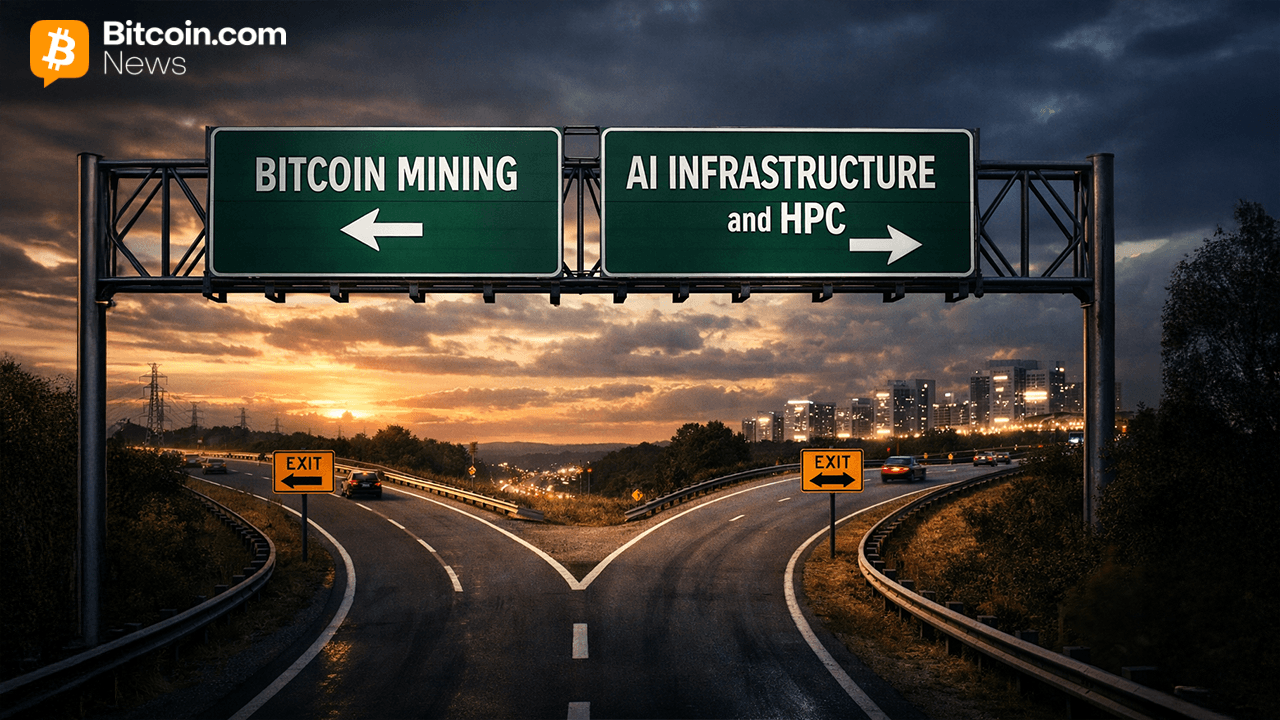
Bitcoin miners are abandoning hashpower at scale. The same megawatt of electricity that once powered proof-of-work now earns several times more running AI models. The shift traces back to April 2024, when the fourth halving cut block rewards from 6.25 BTC to 3.125 BTC overnight, while network difficulty kept climbing—squeezing margins into the worst era since Bitcoin's early days.
AI arrived with a much bigger checkbook. Crypto trader Ran Neuner wrote this week: 'AI became Bitcoin mining's biggest competitor. If AI becomes the highest bidder for electricity, what happens to Bitcoin?' Miners answered with action—more than $65 billion in AI infrastructure contracts have already been signed.
Deal Flow: Microsoft $9.7B, Google $7B, AWS $5.5B
IREN locked a $9.7 billion agreement with Microsoft for GPU cloud services. Hut 8 signed a $7 billion, 15-year AI data center lease backed by Google-linked infrastructure. Terawulf followed with $9.5 billion in long-term contracts. Cipher Mining struck a $5.5 billion deal with Amazon Web Services. Bitfarms went further, announcing plans to exit Bitcoin mining entirely within two years. CEO Ben Gagnon said last year that converting just one site to GPU-as-a-Service could produce more net operating income than the firm ever generated from mining.
By late 2025, over 70% of major mining firms were already generating some revenue from AI infrastructure, a share expected to climb. Quinn Thompson, CIO of Lekker Capital, calls mining economics a 'disaster' that AI is accelerating.
Bitcoin's defenders point to the difficulty adjustment: every 2,016 blocks, the network recalibrates—lowering difficulty when miners exit, restoring profitability for those who stay. Miners also hold structural advantages: existing large power connections, industrial cooling, and fiber connectivity cut AI deployment timelines by up to 75% compared to building from scratch. They are not just leaving Bitcoin—they are cashing in on being early owners of what AI desperately needs: power.
A Split Personality: AI-First Giants vs. Core Miners
The real tension lies ahead. If AI keeps commanding premium compute pricing, the exodus could continue, gradually lowering Bitcoin's security budget. If AI capacity overshoots demand—or Bitcoin's price surges—the pendulum could swing back. For now, the industry splits: publicly traded operators become AI infrastructure providers with Bitcoin as a secondary business, while smaller, energy-efficient miners keep securing the network. Bitcoin ticks along, block by block, even as its former champions redeploy their megawatts elsewhere.