
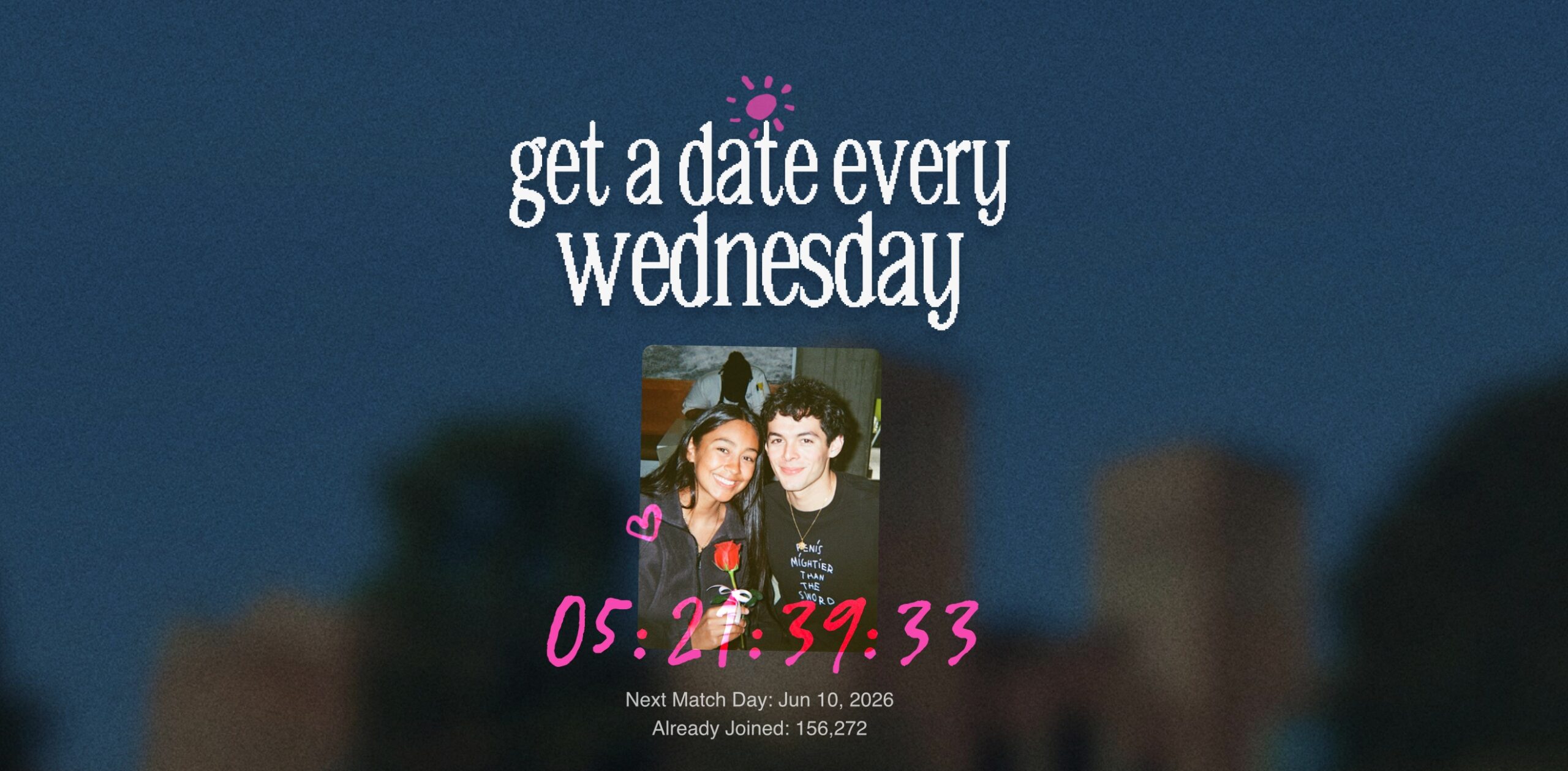
Ditto, an AI campus dating service founded by UC Berkeley dropouts Allen Wang and Eric Liu, has raised $9.2 million in seed funding led by Peak XV Partners (formerly Sequoia India) with participation from Google's AI venture Gradient. The startup's core proposition: no swiping, no app, just an AI that builds a virtual personality for each user and simulates over 1,000 dating scenarios before recommending a match. Ditto claims a 69% match rate, nearly triple the 25% average on traditional swipe-based apps, and currently serves 42,000 college students across six U.S. universities.
From a Dorm Joke to $9.2M in Seed Funding
Wang and Liu's initial motivation was straightforward: find a girlfriend for their roommate before graduation. After spending hours swiping on dating apps with little success, they created Ditto, a service they describe as an AI-powered alternative to Tinder. Both dropped out of Berkeley to go full-time. Launched in 2025, Ditto closed its seed round in February 2026 with participation from Scribble Ventures, Alumni Ventures, and Llama Venture alongside the lead investors. Total funding to date stands at $9.5 million.
How Ditto Works: 1,000 AI Dates Before One Real Date
Ditto has no app; everything runs through iMessage on macOS. After joining via a link, users answer three layers of questions — basic info, deep preferences (including dealbreakers, religion, date activity preferences) and even upload a photo of their celebrity crush for AI reference. The system then constructs a virtual personality for each user and runs over 1,000 simulated dates between two AIs, evaluating first-impression reactions, conversation flow, and value alignment. Behind the scenes is a multi-agent LLM system with specialized roles — analysis, matching, scheduling. Every Wednesday, users receive one match recommendation with a photo, basic info, suggested time and place, plus an AI-generated conversation starter. Only after both parties confirm do they exchange phone numbers; before that, no interaction is possible. Ditto says its conversion rate from match to first real date is 20%.
Viral Growth from UCSD Sorority Group Chats
Ditto went viral at UC San Diego in 2025 after a sorority group chat, then spread to Berkeley, USC, UCLA, UC Davis, and expanded to Arizona State University in March 2026. Membership is restricted to .edu emails. Over 25% of its 42,000 users came from word-of-mouth, with zero paid marketing. The company currently operates for free, prioritizing user growth. In addition to dating matching, Ditto partnered with anonymous social platform Yik Yak to launch a friendship matching quiz. It plans nationwide expansion in 2026 and eyes potential expansions into job matching and friendship socializing.
The Swipe Era Challenge
Ditto launches at a time when Match Group (Tinder's parent) has seen seven consecutive quarters of declining paying users, and Bumble cut 30% of its workforce with shares down sharply. Surveys show 79% of Gen Z and 80% of millennials are exhausted by endless swiping and ghosting; 1.4 million users left dating apps in the UK between 2023 and 2024. Traditional apps profit when users fail to find a match — Ditto attempts to flip this by measuring success in real dates. Critics abound: ASU communications professor Liesel Sharabi told the campus newspaper that "no algorithm can immediately identify your ideal partner." Some users complain the AI's date suggestions are "mediocre" — coffee, record stores, dinner and a movie. Notably, two 16-year-olds rebuilt Ditto's core functionality in days using AI-assisted coding, raising questions about the software's moat — though Ditto ended up hiring them.