
Artificial intelligence is no longer some abstract idea. It is already a visible force in the global economy. The part that is still up in the air is where that force actually ends up taking us.
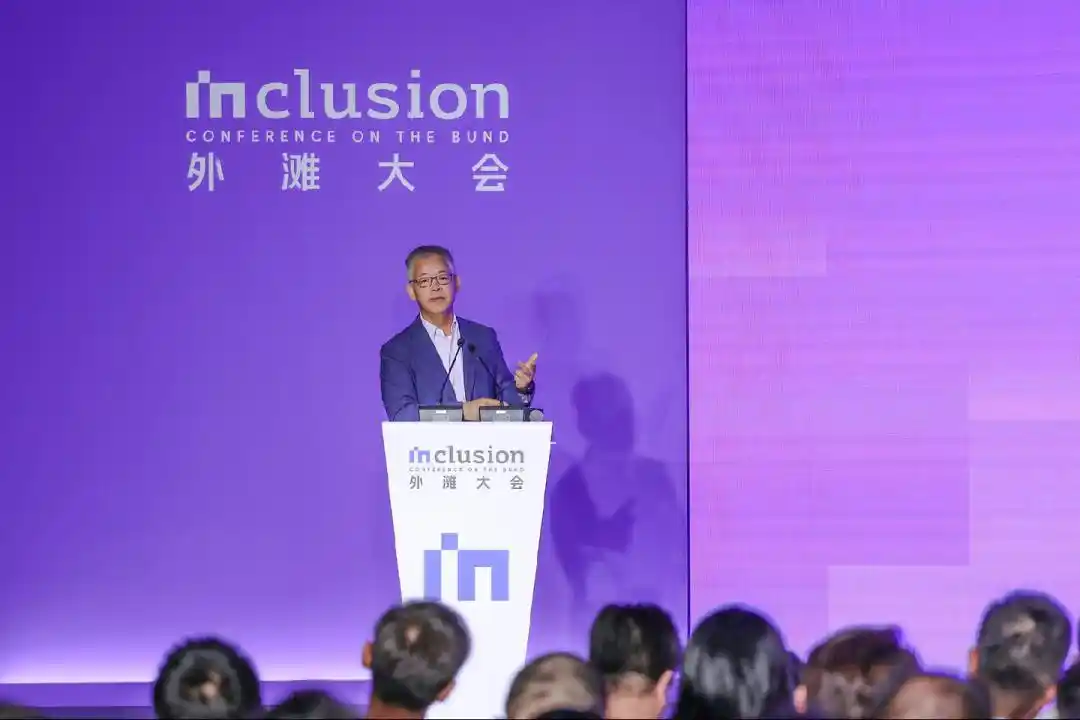
That was the core issue at the 2026 Inclusion Bund Summit, where economists and business leaders argued over what AI is doing to growth, productivity, jobs, income distribution, and demand. The broad takeaway was pretty plain: AI is already inside the real economy. But nobody has a settled answer for what kind of economic system it is going to build.
Huang Yiping, dean of the National School of Development at Peking University, said AI’s end impact on the economy is still nowhere near decided. On the one hand, AI could meaningfully raise total factor productivity. On the other, technological change can reshape employment structures and income distribution, affect consumption and aggregate demand, and even change the familiar pattern of economic growth. Huang’s point was simple: AI should not be treated as only a technology story. What matters is how it enters the economic system in practice.
Liu Yuanchun, president of Shanghai University of Finance and Economics, put it more sharply: "A new form of the AI economy has been established, but AI economics has not really begun." What he meant was that standard economic research has usually rested on fairly stable production functions, corporate structures, and patterns of technological change. AI may be changing labor, capital, knowledge production, and decision-making all at once. If the underlying technological paradigm is shifting this fast, then historical data and old models are no longer enough to project the future.
So several big questions are still hanging there. When does higher efficiency at the micro level turn into productivity at the macro level? Can the capabilities created by huge capital spending reach ordinary companies, instead of stopping with the AI supply chain? And if production gets easier, who creates enough demand to absorb all of it?
Capital spending has surged, but the gains have not spread evenly
Over the past year, the clearest way AI has entered the real economy has been through infrastructure buildout, and through the financial and industrial activity attached to it.
By different measures, AI infrastructure investment in China and the United States has come close to or gone beyond 1% of GDP. Computing power, chips, storage, electricity, and data centers have all turned into scarce resources, and capital markets have swung hard with them. Using statistical standards from early 2025, China’s core AI industry had already passed RMB 1 trillion, and optimistic estimates put it near RMB 2 trillion in 2026.
The first obvious sign of this boom has been a big capital expenditure cycle.
Miao Yanliang, chief economist at China International Capital Corporation, said this wave of AI is spreading much faster than earlier technology cycles did. The internet and personal computers needed about 30 years to reach high penetration. Large language models got close to 50% penetration in only a few years. Fast diffusion means demand for upstream resources gets concentrated more heavily, and short-term bottlenecks show up more clearly. In the last information technology cycle, a 50% rise in memory prices already counted as a big move. In the current AI cycle, memory prices at one point jumped by more than 600%.
But macro productivity data has not delivered the same kind of clarity as the capex boom. Miao said, "A lot of people are using AI, and we all feel it has improved productivity, but that still hasn’t shown up in the macro data."
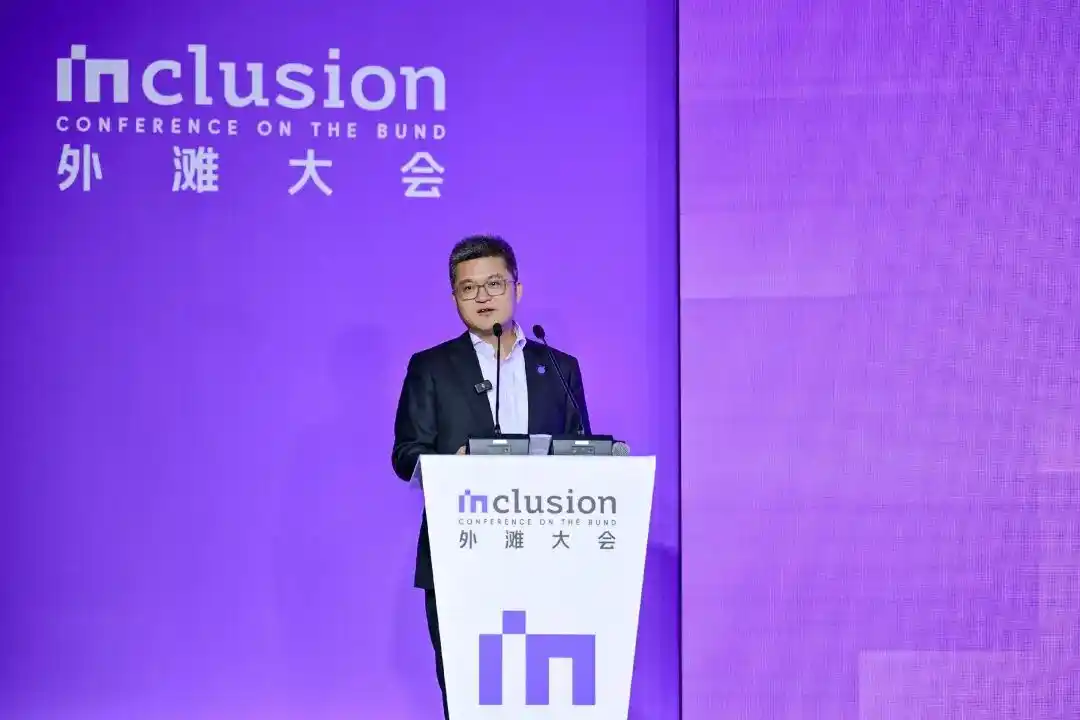
That gap may be the single most important distance in the new AI economy. Money poured into chips, models, and server rooms can generate investment, orders, and market value. People can save time with AI tools too. But small, local efficiency gains only become social productivity growth when those capabilities move into factories, stores, hospitals, and everyday businesses, reshape workflows, and produce new goods and services.
Han Xinyi, CEO of Ant Group, said the AI economy cannot run on capital input alone, and AI applications cannot stop at making existing operations a bit better. He compared the transition to electrification. Power plants on their own did not produce the jump in economic activity. The real shift came when electricity moved into factories, transportation, communications, and homes, creating new products, services, and ways of living. In his view, AI has to follow the same route. Companies need to move beyond cutting costs and improving efficiency and start creating value, using AI to generate more supply and activate more demand.
As model capabilities start to look more alike, competition among large models is moving toward use cases. OpenAI and Anthropic are both trying to work with industry clients, embedding models into specific business processes through engineers and customized solutions. A model only becomes scalable after it proves itself in real operating environments.
The article gave one example: a company that makes fans for textile workshops can add sensors to traditional equipment and connect it to an industrial large model, allowing the system to automatically adjust airflow based on real-time conditions. The maintenance cycle is shortened by 40%. That kind of change may attract less attention than a major model release. But it is much closer to the point where AI becomes an economic variable.
The hard part is that every sector, from manufacturing and healthcare to finance and consumer business, depends on deep know-how, vertical data, production processes, and professional expertise. A lot of China’s real economic activity happens in small and medium-sized enterprises, not in top technology firms. Many SMEs cannot train models themselves. They also do not have the technical staff needed to redesign workflows.
If the adoption threshold stays high, stronger AI could widen the efficiency gap between leading firms and ordinary businesses. In that sense, the first step in the AI economy is not just building better models. It is getting the capabilities created by capital spending out of the AI supply chain and into a wide range of industries, at a price and level of usability that SMEs can actually handle. Only then can productivity gains spread from a small cluster of companies to the wider economy.
Once efficiency improves, who actually benefits?
When AI starts producing real efficiency gains inside business operations, a tougher question arrives fast: who gets those gains?
A statement from Stanford University’s Digital Economy Lab argued that if AI is used mainly to replace labor, squeeze payrolls, and concentrate wealth, the technology could deliver large productivity gains without creating broad prosperity.
Miao said this AI cycle may bring a stronger substitution effect than earlier technology revolutions did. AI may not wipe out entire occupations outright, but it can take over more tasks that workers used to perform, reducing labor’s share of total income.
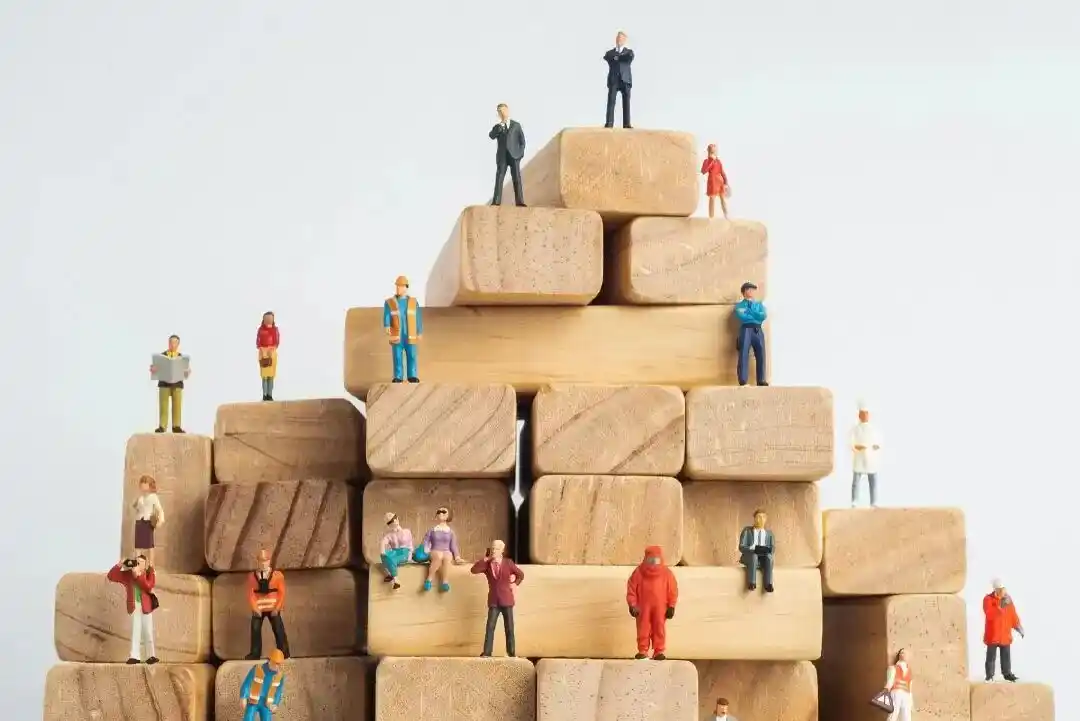
The consequences go well beyond employment. Capital owners usually have a lower marginal propensity to consume than ordinary workers. So if more income shifts from labor to capital, efficiency on the production side may rise quickly while purchasing power on the consumption side rises more slowly. The contradiction is obvious: AI may make society better at producing, without making it better at consuming.
Because of that, Miao argued that over a longer period AI could bring stronger disinflationary pressure. Higher productivity expands supply. At the same time, a falling labor income share and a greater concentration of income in capital may hold down aggregate demand. If demand cannot absorb the increase in supply, prices may stay under pressure.
That lines up with the concern raised by Huang and others. The final economic effect of AI will depend not just on how much efficiency it creates, but also on where those gains go. So inclusion is not only a fairness issue to think about after technological progress happens. It is part of the growth question itself.
Han said the more durable path is to strengthen the ability of workers and SMEs to join in new value creation and share the gains, rather than using AI simply to replace labor. Companies need to turn complicated models into low-cost, easy-to-use products. At the same time, education and vocational training need to build up human capabilities so people can contribute judgment and creativity in human-machine collaboration. And social protection matters too, especially when it comes to helping workers affected by AI get back into the economic cycle.
Workers are consumers too. A labor cost a company saves today may turn into lost household income and weaker spending tomorrow. If efficiency keeps rising and more products and services are created, but the number of people who can afford them does not increase at the same pace, then the new supply created by AI still slams into demand constraints.
So whether AI is used more to replace people or to enhance them may shape not only income distribution, but also the eventual size of the market this technological wave can sustain.
What kind of AI economy does China need?
For China, this question matters even more.
At the end of 2025, the country had more than 720 million employed people, including more than 300 million migrant workers. A large share of jobs and income still comes from traditional industries such as manufacturing, trade, logistics, and catering, along with a huge number of SMEs. That means China’s AI economy cannot be built around only a small group of technology companies.
China still needs better large models with stronger cost performance, more investment in computing infrastructure, and fuller use of its strengths in energy, manufacturing systems, and application scenarios. But it also needs a more inclusive AI economy. One that brings AI into more real-world settings. One that lets SMEs participate. One that gives ordinary workers a chance to share in productivity gains instead of treating them only as replacement targets.
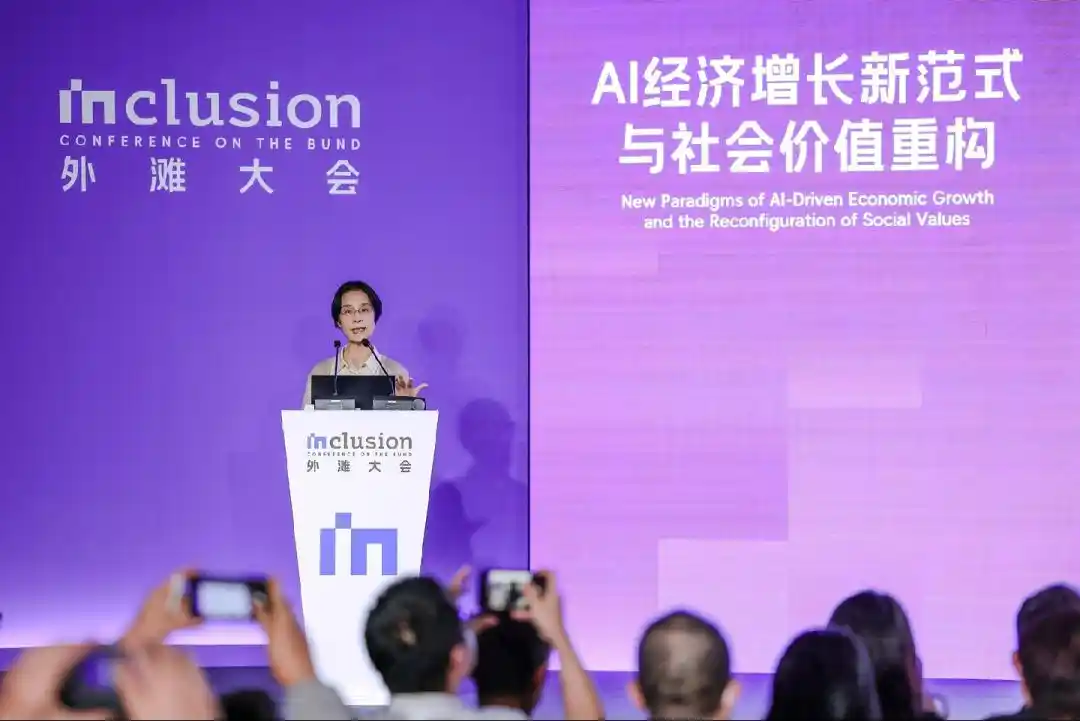
Xing Ziqiang, chief economist for China at Morgan Stanley, said AI and future embodied intelligence will further strengthen supply capacity and move into factories, manufacturing, and services. But in an environment of strong supply and weak demand, "what matters most is still people." He said policy should shift toward a more people-centered approach, including support for service consumption, childcare-related household demand, and, over the medium to long term, stronger social protection for groups such as migrant workers.
Recent policy signals have moved that way. In August 2025, the State Council released the Opinions on Deeply Implementing the “Artificial Intelligence Plus” Initiative, calling for innovation resources to be directed toward areas with stronger job-creation potential. Another document, the Implementation Opinions on the Special Action for “Artificial Intelligence Plus Manufacturing,” released by the Ministry of Industry and Information Technology and seven other departments, also called for support for the intelligent transformation of SMEs and lower AI adoption costs for businesses.
Still, inclusion is not the full answer. Jiang Xiaojuan, a professor at the University of Chinese Academy of Social Sciences, said AI is pushing Chinese companies out of a “domestic first, overseas later” model and into a stage where they are “global from birth.”
In the past, firms usually tested products and scaled them at home before entering foreign markets. But models, data, and digital products can be reused at very low marginal cost, and the internet has reduced the cost of serving users across borders. An AI product may be facing a global user base from the day it is created.
AI may even redraw global supply chains. In AI drug discovery, for example, AI can sharply speed up target discovery and molecule design, while clinical trials still have to stay on their original timeline. If front-end innovation capacity expands quickly while back-end capabilities cannot keep up, a new international division of labor may appear.
The same logic applies to industry-specific models. China has a full industrial system, a large customer base, and rich industrial data, giving it the conditions needed to train professional models. But some niche models may not generate enough returns if they depend only on the domestic market. As Jiang put it, "Once a model is trained, it has to be used globally for its business model to have a chance of being profitable."
That adds another layer to the AI economy. It needs to move downward into manufacturing, consumption, healthcare, and services so more SMEs and workers can participate. And it also needs to move outward, so the technologies, products, and services developed in China can find markets around the world.
Liu’s remark that "AI economics has not really begun" points to the same idea. The AI economy is already here. But there is still no standard answer for how it will reshape growth, employment, distribution, and the global industrial system.
The article was originally published by the WeChat account Economic Observer, written by Zhang Miao, and carried by MarsBit.