
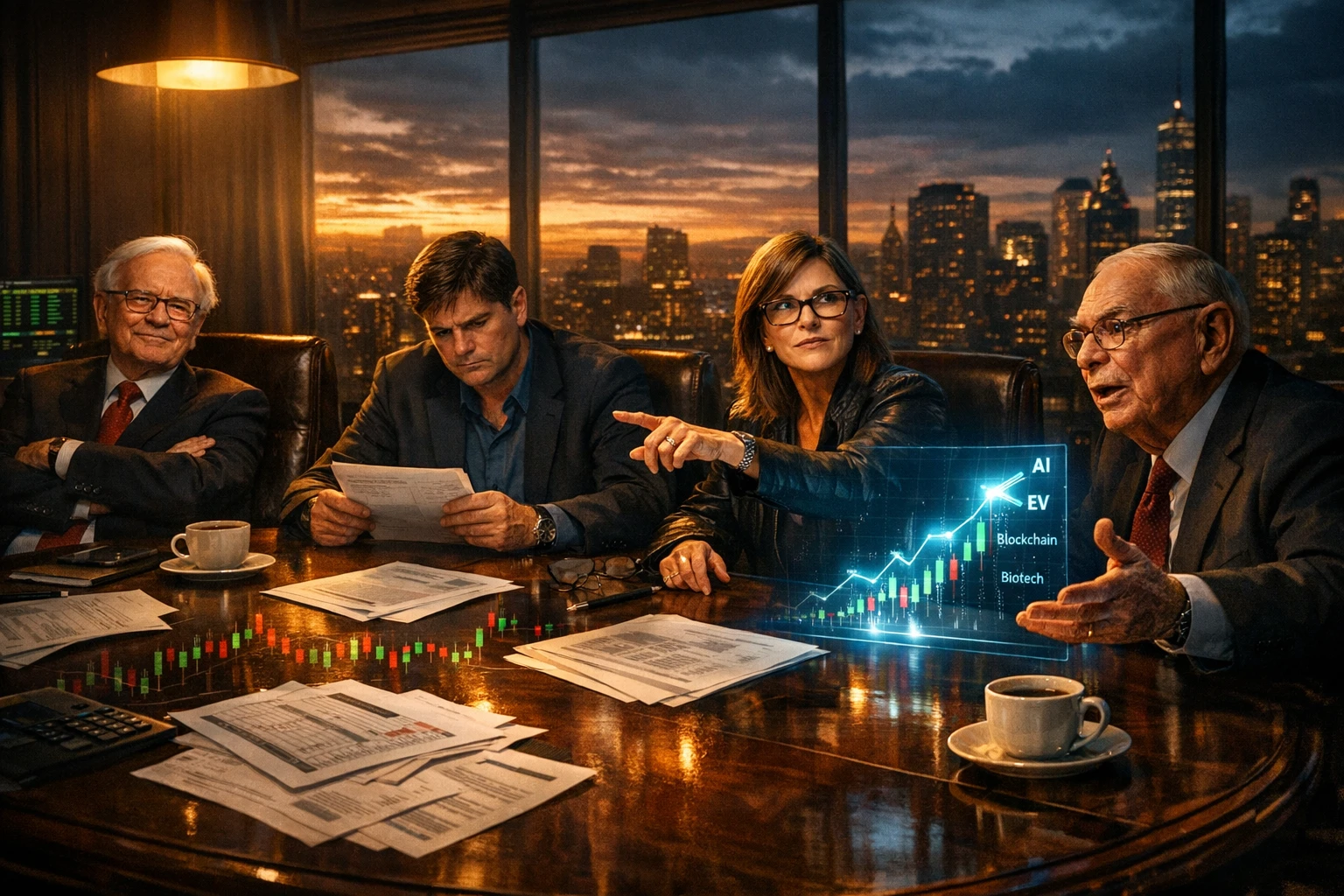
An open-source GitHub project named ai-hedge-fund is quickly spreading through crypto and investment communities. It deploys 19 AI agents to simulate a full hedge fund decision room, including 13 agents modeled after famous investors like Warren Buffett, Charlie Munger, and Cathie Wood, plus 5 analytical agents and a portfolio manager. The project has accumulated over 56,600 GitHub stars.
Which famous investors do the 19 AI agents mimic?
The core consists of 13 agents named after real investors, each following a specific investment philosophy:
- Warren Buffett: Buys quality businesses with deep moats and honest management.
- Charlie Munger: Uses interdisciplinary mental models to dissect business logic.
- Ben Graham: Value investing father, emphasizes margin of safety.
- Peter Lynch: Searches for ten-baggers, invest in what you understand.
- Phil Fisher: Growth investing pioneer, does scuttlebutt due diligence.
- Michael Burry: The Big Short origin, deep value contrarian.
- Cathie Wood: Bets on disruptive technologies, accepts long-term volatility.
- Bill Ackman: Activist investor, builds positions then pushes board changes.
- Stanley Druckenmiller: Macro trading master, focuses on asymmetric risk-reward.
- Nassim Taleb: Identifies tail risks and antifragility.
- Aswath Damodaran: Valuation guru, breaks companies into cash flow stories.
- Mohnish Pabrai: Copies Buffett, seeks low-risk bets with high upside.
- Rakesh Jhunjhunwala: India's Buffett, long-term investor.
The remaining 6 agents are analytical/operational, handling final decisions.
How does the multi-agent architecture work?
The system uses a multi-agent architecture instead of a single AI doing everything. The 19 agents operate in three layers: 13 investor agents output signals based on their given philosophy; 5 analytical agents cover valuation, sentiment, fundamentals, technicals, and risk; finally, the portfolio manager consolidates all inputs into a final position.
How to use it?
Users simply input a stock ticker (e.g., AAPL, MSFT, NVDA). The system launches all agents simultaneously, outputs each "master's" signal, and the portfolio manager aggregates them into a final decision. Tech-wise, it supports OpenAI, Anthropic Claude, DeepSeek, Groq, and can connect to Ollama for local execution. Market data comes from the Financial Datasets API, offering fundamentals and financial reports. The interface includes a command-line tool and a visual web app, with code written in Python and TypeScript.
Why the architecture logic matters
The project's rapid spread goes beyond its functionality. It showcases a design trend: instead of letting one large language model act as an omniscient analyst, split tasks among multiple agents with clear roles, allowing them to check each other and then aggregate. This mirrors how real institutional investment works—where a bull and bear analyst debate within a committee, reducing systematic blind spots compared to a single viewpoint.
The project emphasizes it is for educational purposes only, not investment advice, and the creators assume no liability for financial losses. Using investor names is a quick way to build a mental model of each agent's job. But no real hedge fund would use a public GitHub repository as its trading system. Final investment decisions still require careful human judgment.