
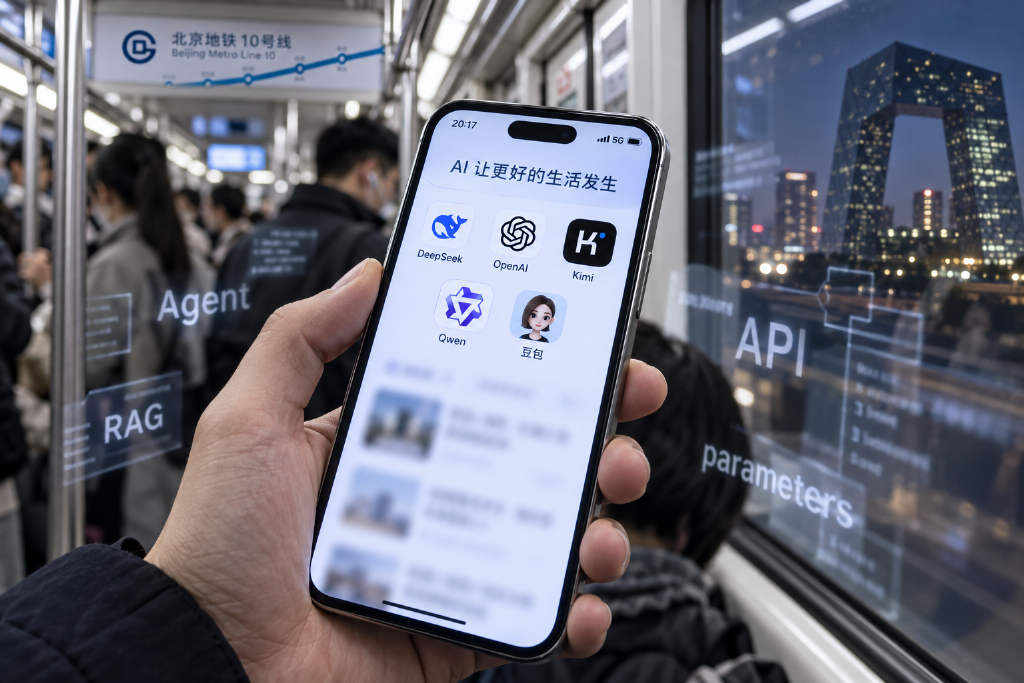
At 10 p.m. on Aug. 13, with Beijing’s Line 10 subway still crowded from the evening rush, a 35-year-old office worker named Lin Wei stopped scrolling when a tech alert flashed across her phone.
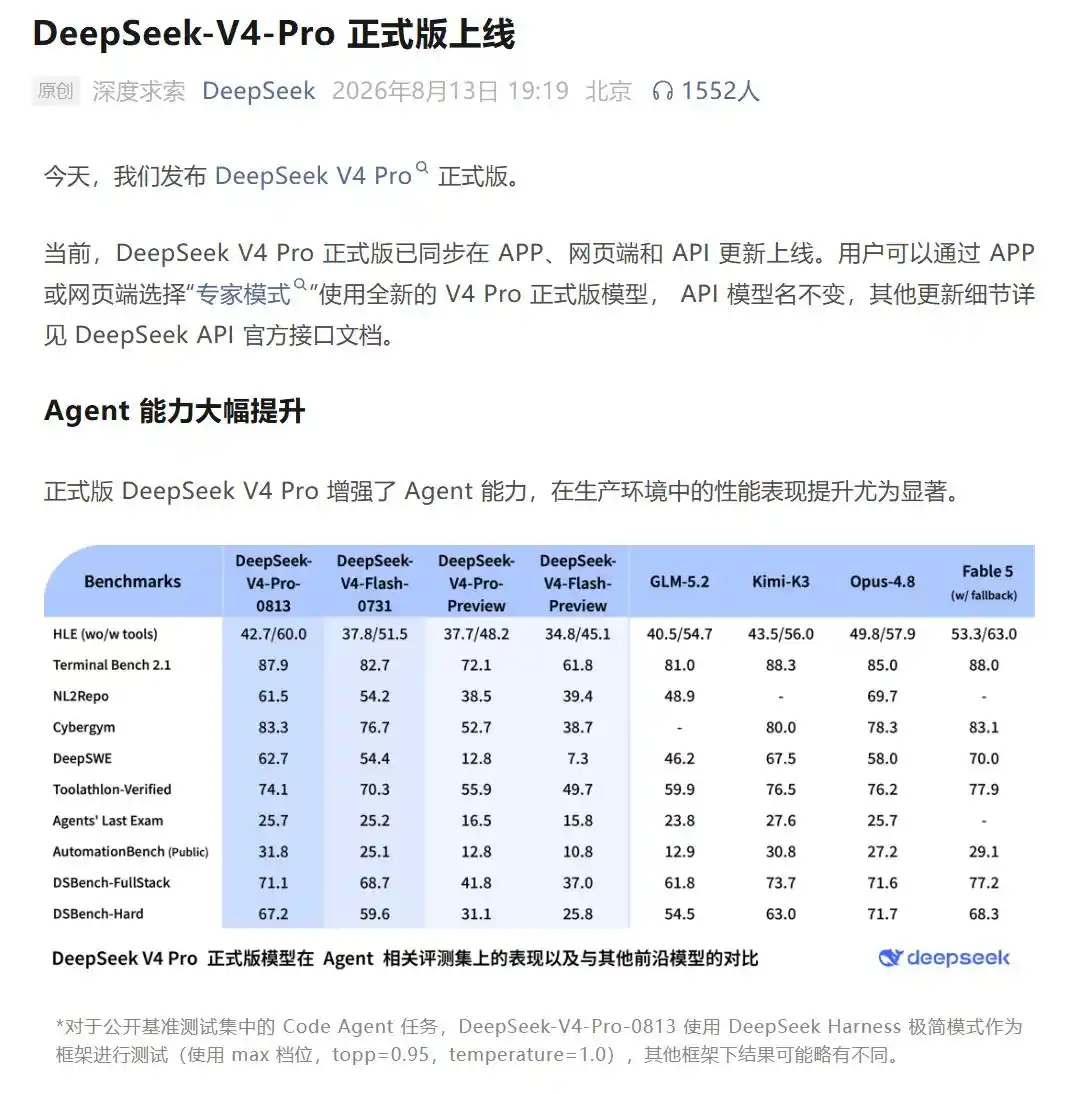
The headline said DeepSeek had released the official version of V4-Pro, with stronger agent capabilities and pricing set at three times the Flash version. Updates from Grok 4.6 and Alibaba’s Qwen3.8-Max arrived the same day.
“I know every word on its own — parameters, agents, weights — but once they are put together, I have no idea what they mean,” Lin told Phoenix AI Research Institute. She said she already uses Doubao and DeepSeek for weekly reports and meeting summaries, but cannot tell what the latest upgrades actually changed or why they should matter to her.
A second item left her even more puzzled. On Aug. 17, DeepSeek’s API price adjustment officially took effect, introducing peak and off-peak pricing for the first time. Some interfaces saw price increases of as much as 1,100% during peak hours. In its notice, the company added that the change applied only to API calls, while normal use through the web version and app would remain free.
“Why does the API cost money while the app is still free?” Lin said. She asked several friends around her, and none of them could explain it.
The article says that if the clock is turned back 30 years, the same pattern appears again. The words that once shut ordinary people out were not agent, token, or RAG, but TCP/IP, modem, and bandwidth.
The early internet had its own wall of incomprehensible terms
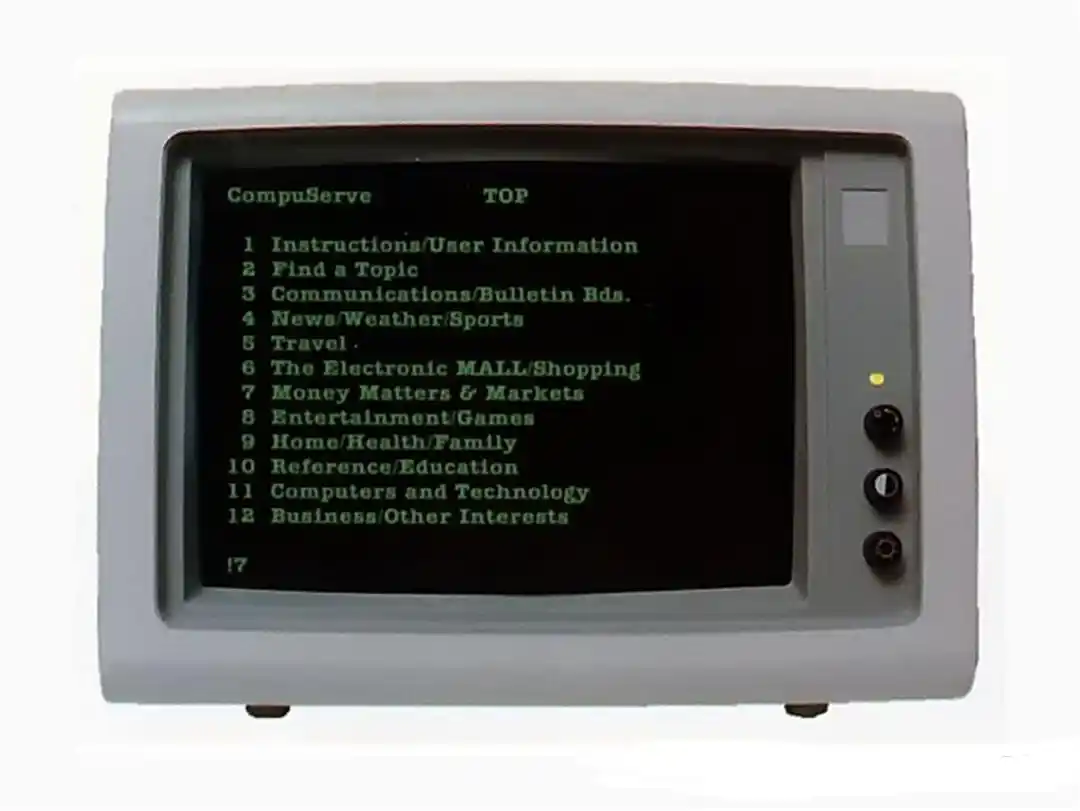
In the early 1990s, the internet belonged mainly to hackers, academics, and engineers. Ordinary people who wanted to get online first had to figure out TCP/IP, learn how dial-up worked over telephone lines, and deal with command-line screens filled with green text on black backgrounds.
The dominant online services at the time included CompuServe and Prodigy. Their interfaces were rough, the workflows were tedious, and users often had to remember long command strings just to send or receive an email.

Language itself was another barrier. The article notes that “bandwidth” originally appeared in meteorology in 1885 to describe rain bands. “Firewall” had existed since 1578, referring literally to a wall that stops fire. “Online” started as a railway term, meaning “along the railway line.” Pulled out of those original contexts and repurposed for computing, the terms felt like a foreign language to most people.
It was at that moment that Steve Case entered the picture. According to the article, the Hawaii-born entrepreneur had little patience for school computer classes when he was young. “Components, circuits, assembly language — what do those things have to do with me?” was how his mindset is described. In 1985, he and his partners founded an online service company, which was officially renamed America Online, or AOL, in 1989.
Case did not invent the internet’s core technology. The article’s argument is simpler than that: he turned it into a product ordinary people could use.
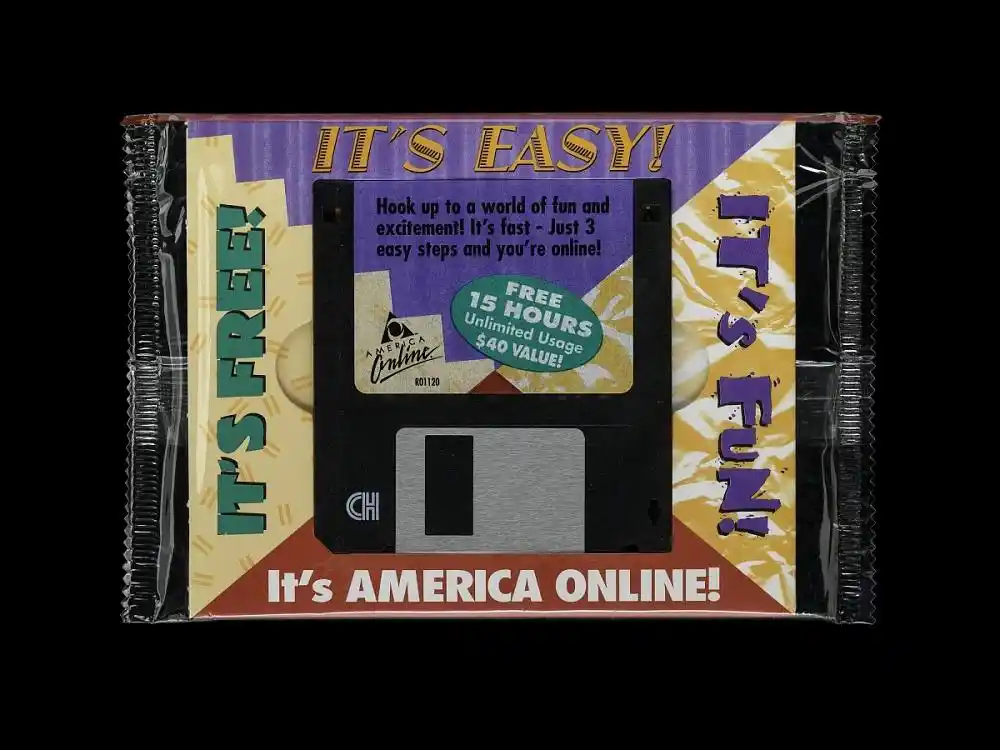
Former chief marketing officer Jan Brandt later recalled that AOL’s campaign came in two phases. In 1993, during its trial stage, the company used 3.5-inch floppy disks and mailed out more than 200,000 of them in its first wave, at a cost of $1.19 apiece.
As CD-ROM drives became standard on personal computers, AOL switched to discs that were cheaper and could hold more data. Distribution then expanded fast. From Super Bowl seats to frozen steak packaging, branded AOL discs showed up across everyday life in North America with a simple message: insert the disc and try the real America Online.
Brandt later estimated that AOL distributed more than 1 billion discs in total. At its peak, the article says, half of all discs produced globally carried the AOL logo.
The spending looked heavy at first glance. AOL spent an average of $35 to acquire each registered user. But the economics worked: the average lifetime value of an AOL user reached $350, ten times the acquisition cost.
Distribution got people in the door. Product design kept them there. AOL replaced the command line with a graphical interface and swapped abstract protocol settings for concrete channels such as chat rooms, email, and newsgroups. Users did not need to know what SMTP was; they clicked “write” and sent an email. They did not need to understand IRC; they clicked “chat” and entered a chat room.
This model, later described as a “walled garden,” hid the hard parts of the internet in the background and left users with a world they could enter by double-clicking.
The commercial results came quickly. AOL had 200,000 users when it went public in 1992, crossed 10 million in 1997, and reached more than 35 million paying users at its 1999 peak. That meant nearly half of US internet users were accessing the network through AOL.
In 1999, AOL posted $4.8 billion in revenue and $762 million in net profit. Its market value climbed as high as $164 billion, more than twice IBM’s at the time. The same year, AOL entered the Fortune 500 at No. 337, the article says, as the only internet company on the list.
Looking back, the article frames AOL’s biggest contribution not as technological invention but as cognitive simplification. It did not try to teach the public TCP/IP or modems first. It let them chat, send email, and play games. Understanding came later, through use.
China’s AI acquisition push brought users in, but many stopped at the terminology barrier
The article draws a straight line from that earlier period to China’s AI product race in 2026.
It describes the 2026 Lunar New Year as one of the most expensive AI awareness campaigns in the history of China’s internet industry. On Jan. 25, Tencent Yuanbao announced 1 billion yuan in cash red envelopes, with individual prizes as high as 10,000 yuan. Baidu Wenxin followed with a 500 million yuan campaign running for one and a half months. On Feb. 2, Alibaba’s Qwen rolled out a 3 billion yuan “Spring Festival treat plan,” including 2 billion yuan in waivers and 1 billion yuan in cash, which the article calls Alibaba’s biggest-ever Spring Festival promotion. ByteDance’s Doubao, for its part, embedded AI into the Spring Festival Gala.
Across four major companies, nearly 5 billion yuan was deployed with one goal: get more people to open AI products and start using them.
The user-acquisition figures were strong. During the holiday period, Qwen’s “Help Me” function passed 5 billion total calls, while participation in Yuanbao’s lottery events across the internet reached 3.6 billion. Pony Ma said at an internal staff meeting that he hoped the effort could recreate the kind of moment that WeChat red envelopes produced 11 years earlier.
Large numbers of people who had never used AI before spoke to an AI product on their phones for the first time. But after the campaign buzz faded, an awkward reality appeared. Many users completed their first AI interaction, then ran into terms such as API, GLM, token, RAG, and agent and found themselves lost again.
The article argues that this split — easy entry, difficult progression — became especially visible during the global large-model release race in August 2026.
DeepSeek V4-Pro launched on Aug. 13, opening a period of dense updates. The official announcement, as summarized in the article, was full of specialist language: agent capabilities were enhanced, with tool-calling benchmarks on Terminal Bench and Cybergym far ahead of the preview version; reasoning depth improved, allowing longer chains for complex problem decomposition; API pricing also rose, with Pro input priced at three times Flash, output at 2.5 times Flash, and peak-period pricing increases of as much as 1,100%.
Almost on the same day, Elon Musk’s Grok 4.6 and Alibaba’s Qwen3.8Max were updated. Over the next 20 days, 11 major frontier models were announced in quick succession, including Anthropic’s Claude Sonnet 5, Zhipu’s GLM-5.3, and Meta’s Llama 4 Scout. New version headlines landed every one or two days.
Trade media filled those updates with phrases such as “new benchmark highs,” “capability leap,” and “paradigm shift.” From the industry’s perspective, the momentum was obvious. From the perspective of regular users, the article says, it looked more like a celebration happening behind glass.
The reason is that most of the upgraded capabilities were concentrated in dimensions ordinary users could not easily feel. In the case of DeepSeek V4-Pro, the article says the headline features — agent tool use, code execution, and multi-step reasoning — were released mainly through APIs for developers and enterprise customers. On the consumer-facing app, only the “deep thinking” mode offered limited improvements, and the difference in everyday tasks such as chatting or writing weekly reports was slight.
Claude Sonnet 5’s stronger “Computer Use” function is presented as a similar example. That feature allows AI to operate software on a computer and complete cross-application tasks, but it too was prioritized for API users, while the personal-user entry point sat in a third-level menu that many people did not even know existed.

Put simply, the capabilities the industry is racing to improve often sit below the chat box, hidden inside APIs, developer tools, and enterprise solutions.
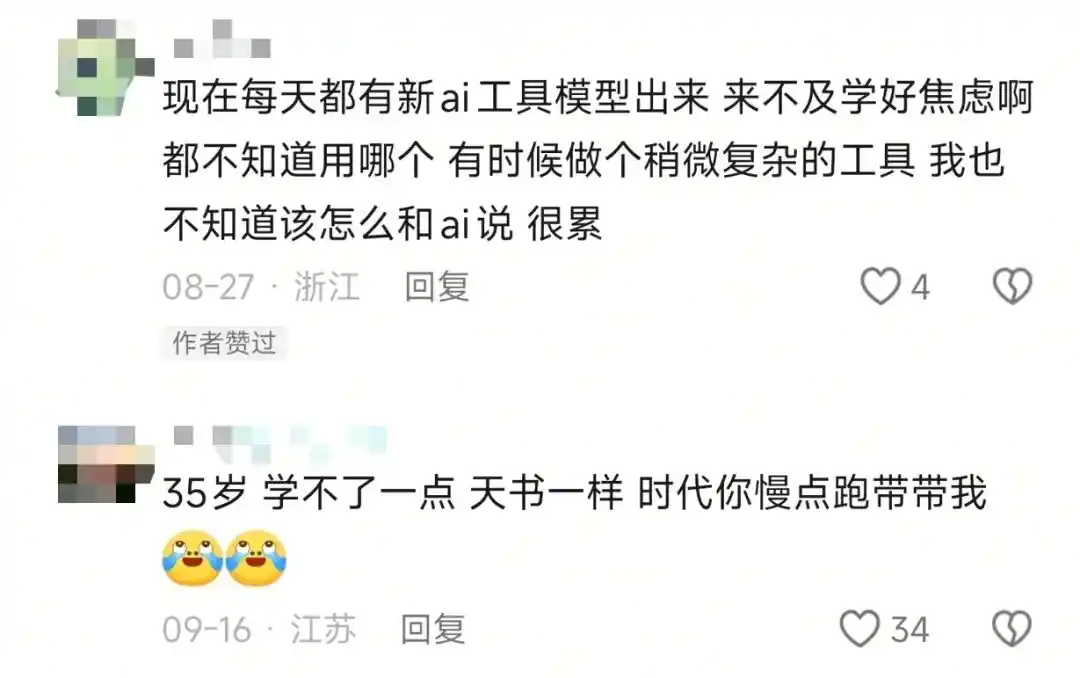
That gap is visible on social platforms. One commenter wrote, “There’s a new AI tool or model every day. I’m anxious because I can’t keep up.” Another 35-year-old user said plainly, “Slow down, era — take me with you.”
The article also notes the rise of a separate layer of explainer content built around “AI jargon.” Searches for the term on social platforms bring up large volumes of posts and videos promising to explain Agent, Skill, Token, MCP, Harness, RAG, Workflow, and other concepts in plain language. In practice, a whole group of creators is now doing terminology translation for the public.
That trend, the article argues, reveals something important. The terminology hurdle has not been removed by product design. It has been outsourced to users and third-party explainers.
The article compares this to the 1990s internet once again. If everyone had been able to get online easily at the time, bookstore shelves would not have needed to carry titles such as dial-up guides and practical internet manuals. When a field depends on large amounts of outside education to close the understanding gap, it usually means product packaging is still short of what mass users need.
OpenAI, Kimi, Qwen, and Doubao are testing a different path
The article then turns to a different kind of signal. In September 2026, OpenAI released a promotional video for GPT-6 Astra. In the video, a user tells the computer: “Turn this yellow circle into a rocket, then make it into a 3D game.” Minutes later, a playable 3D game appears on screen, with arrow keys for movement, the space bar for acceleration, and asteroids to avoid.
The same person then says, “I’m a little hungry. Can you order the beef rice from that place I used last week?” The AI opens a food-delivery app and completes the order.
The article says the clip drew wide attention not because AI can write code, but because it showed a different interaction model. The user does not need to know what a game engine is, how API calls work, or what sits in the frontend or backend. The user does not even need to understand the term “agent.” Natural language is enough; the rest happens behind the scenes.
In that setup, the wall of terminology standing between mainstream users and advanced capability starts to disappear.
The article stresses that this is not only an overseas development. Similar productization attempts are already appearing in China.
In July 2026, Moonshot AI launched the “Kimi Global Ambassador Program.” The article says that instead of following the industry habit of opening APIs first and testing mainly with developers, the program recruited ordinary users worldwide as experience testers, with priority placed on end-to-end task flows.
Qwen’s upgraded “Help Me” entry point in 2026 packaged multi-plugin orchestration and cross-application operations behind the conversation layer. A single user instruction could handle email sorting, calendar synchronization, and weekly report drafting, while workflow orchestration and API authentication stayed out of sight.
ByteDance’s updated Doubao coding assistant is framed the same way. Tasks that used to require a development environment — code generation, batch Excel processing, and simple webpage creation — were wrapped into tools that can be called with natural language, making them usable for office workers without a programming background.
The article is careful not to overstate the shift. These attempts remain limited to specific scenarios and are still far from fully packaging all advanced AI capability into a simple consumer layer. Still, the direction is clear: broad adoption will not come only from making the chat box friendlier. It will also depend on wrapping up the thick manual of jargon that still lives outside the chat box.
Technology adoption has repeatedly come from packaging complexity, not teaching it first
The closing section places this pattern in a longer history.
In 1984, Apple’s Macintosh wrapped the DOS command line into a desktop with icons. The folder, trash can, and clock symbols designed by Susan Kare allowed non-technical users to infer functions visually. Click a folder and a file opens. Drag something to the trash and it disappears.
In 1998, Google wrapped complex information-retrieval theory into an empty search box. Users did not need to know Boolean syntax or understand PageRank. They typed keywords and got ordered answers. Crawlers, indexing, ranking, and server clusters all stayed behind the interface.
In 2007, the iPhone compressed the operating system into a sheet of glass. Users did not need to manage file systems or processes. Taps, swipes, and pinches replaced much of what used to require keyboards, styluses, and deep menu trees.
The article’s conclusion is direct: each time, mass adoption did not happen because users became more technical. It happened because companies made the technology simpler to use.
Three to five years from now, it says, phrases like “calling an API” may be replaced by more casual everyday expressions, the way people already say “connect to Wi-Fi” or “charge it up” without thinking about the underlying systems. Terms such as Agent, RAG, and Token may eventually join “dial-up internet” and “modem” as relics of an earlier phase.
At that point, the question may no longer be how to understand AI at all. The article ends with a simple analogy: AI could become like electricity — most people do not need to understand how a generator works; they flip a switch and the light turns on.
The original article was published by the WeChat account of Phoenix Finance and written by Phoenix AI Research Institute.