
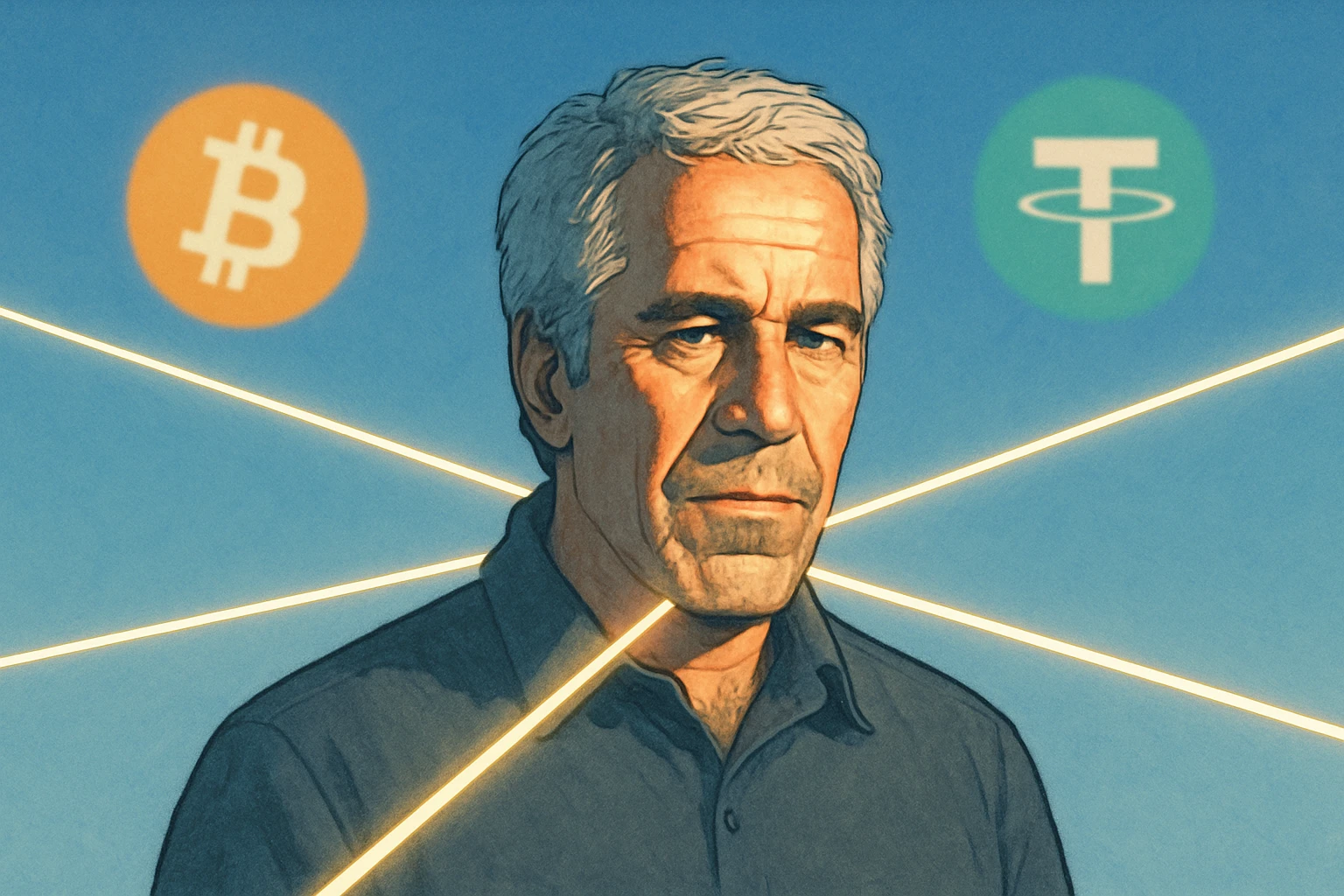
A review built on a public database of Epstein files suggests his links to crypto went well beyond passing mentions. The dataset contains more than 260,000 records extracted from legal documents released by the House Oversight Committee, and the search results surfaced connections involving Brock Pierce, Bitcoin Core contributor Jeremy Rubin, and former MIT Media Lab director Joi Ito.
The underlying source was the Epstein Doc Explorer project on GitHub. Its document_analysis.db SQLite file stores relationships in an rdf_triples table organized around a simple structure: who did what to whom, and when and where. The author started with broad crypto-related keywords, then added terms such as Libra, Stablecoin, and Digital Asset, and finally narrowed the search by filtering actions containing Bitcoin, Crypto, or Blockchain.
Named contacts in the records
Brock Pierce appears prominently in the results. The records indicate that he discussed Bitcoin and cryptocurrency volatility at Epstein's Upper East Side residence in Manhattan, and in one meeting he demonstrated Bitcoin in front of former US Treasury Secretary Larry Summers. One email dated March 31, 2015 shows Alex Yablon asking Epstein whether he could arrange a discussion on Bitcoin between Pierce and Summers.
Another significant thread involves Blockchain Capital. The database contains 82 records tied to the firm, and the material looks less like scattered references than a structured breakdown of a fundraising document. The document is dated October 2015 and lists investments including Coinbase, Kraken, Ripple, Blockstream, BitGo, LedgerX, itBit, and ABRA, along with service providers such as Sidley Austin, Silicon Valley Bank, Xapo, and BitGo. The original article says that, in finance, finding a full placement memo inside someone's files usually suggests that person was approached as a potential LP, though it also notes the database alone did not prove Epstein made an investment.
Developer outreach and MIT funding trails
Jeremy Rubin's entries are concentrated within several days in February 2017. They reference topics including “Bitcoin regulatory outlook,” “Bitcoin regulatory and political speculation,” and updates on his work teaching Bitcoin classes to engineers in Japan. In the source article's reading, these entries stand out because the conversation had moved well beyond basic explanations of Bitcoin and into policy and political questions.
That thread intersects with MIT's Digital Currency Initiative. One database entry states that Joichi Ito used gift funds to finance MIT Media Lab Digital Currency Initiative. Public reporting had already established that Ito resigned in 2019 after his ties to Epstein funding came to light. What the database adds is a more specific direction of funds: the money was tied to digital currency research rather than only broad institutional operations.
That creates a clearer sequence inside the records: money linked to Epstein reached an MIT digital currency program, and a developer associated with that program had direct communications with him. The available material does not establish that Epstein influenced Bitcoin protocol research, but the path from funding to institution to developer to direct contact is present in the released records.
Interest stretching from Bitcoin to Libra
As laid out in the source timeline, Epstein's crypto-related activity goes back to around 2008. Early entries describe him hearing a Bitcoin demonstration. By 2017, the records show discussions about regulation and politics with developers. By June 24, 2019, he had produced an analysis of Facebook's Libra proposal, and he was arrested on July 6, 2019.
Within the currently processed files, the author said there were no direct interaction records involving CZ, Sam Bankman-Fried, Brian Armstrong, Vitalik Buterin, or the Winklevoss twins. The article also makes a narrower point: absence from this database is not proof of no connection, only that no evidence was found in the released and processed material reviewed so far.
Taken together, the article argues that Epstein did not appear in these records as a crypto builder or protocol developer. Nor does he look like a passive observer. The pattern presented is closer to that of an information broker moving between founders, policymakers, and academic researchers, a conclusion drawn from database searches and cross-checking rather than any final legal or historical determination.