

On June 1, 2026, Binance officially opened over 8,000 US stocks and ETFs to non-US users, allowing purchases with USDC, USDT or BNB, with a minimum investment of just $5 and zero commission on fractional shares. What caught Odaily's attention, however, was not the product itself but the brokerage partner chosen for the launch: Alpaca, a US-regulated firm responsible for asset custody, dividend distribution and corporate actions. While the name may be unfamiliar to many, Alpaca's position in the tokenized stock narrative far exceeds what most observers realize.

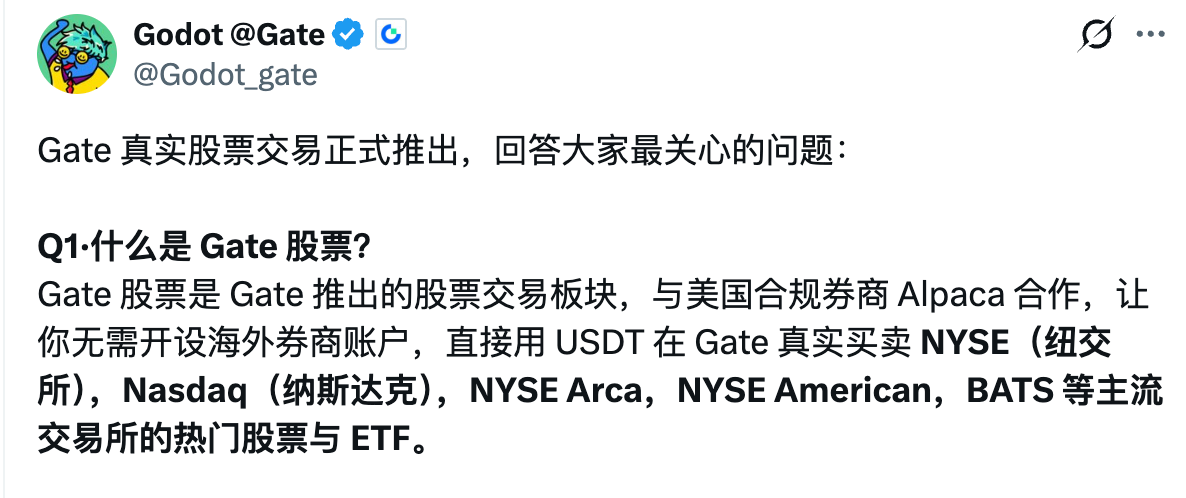
In fact, Binance is far from alone. On May 28, Bitget announced its upcoming Reality platform for stock tokens, backed by rTokens pegged 1:1 to real equities, and its Chinese-market head confirmed that Alpaca is the underlying brokerage. On the same day as Binance's reveal, Gate.io also launched real stock trading with USDT settlement, with its official representative likewise identifying Alpaca as the brokerage partner. The DeFi side tells a similar story: Ondo Finance, the clear leader in on-chain equities, announced its collaboration with Alpaca back in September 2025 to tokenize US stocks and ETFs, while xStocks, the stock token protocol under Kraken, followed suit in December 2025, tapping Alpaca to accelerate its global expansion outside the US.
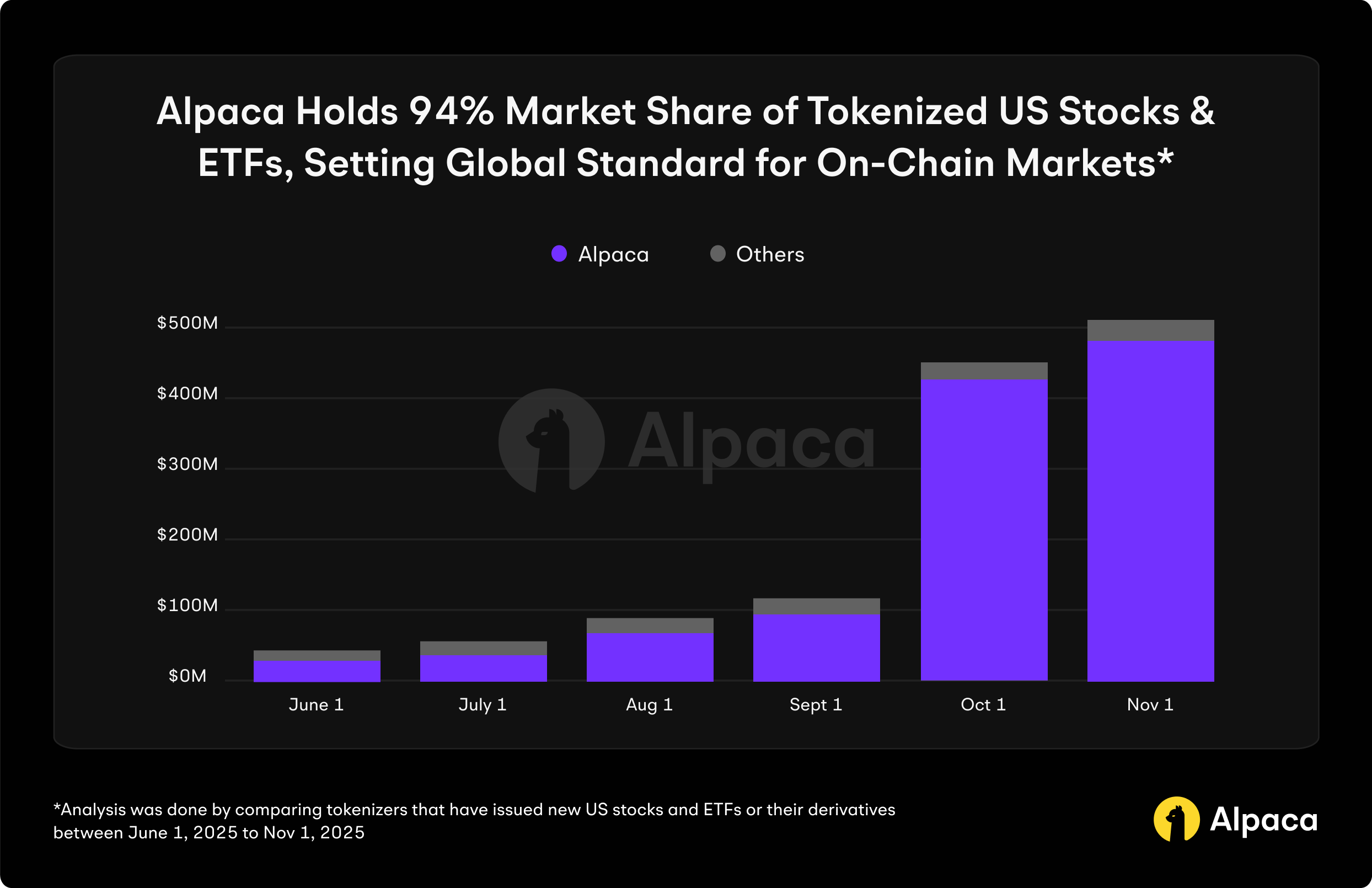
Whether in centralized exchanges or DeFi protocols, almost every visible tokenized equity service carries Alpaca's DNA. According to data disclosed by the company on December 4, 2025, it commands a staggering 94% share of the tokenized US stock and ETF market. This near-monopoly means Alpaca has become virtually the only bridge connecting the crypto world with conventional equities.

The 94% Gatekeeper: From Quant APIs to Financial Infrastructure Giant
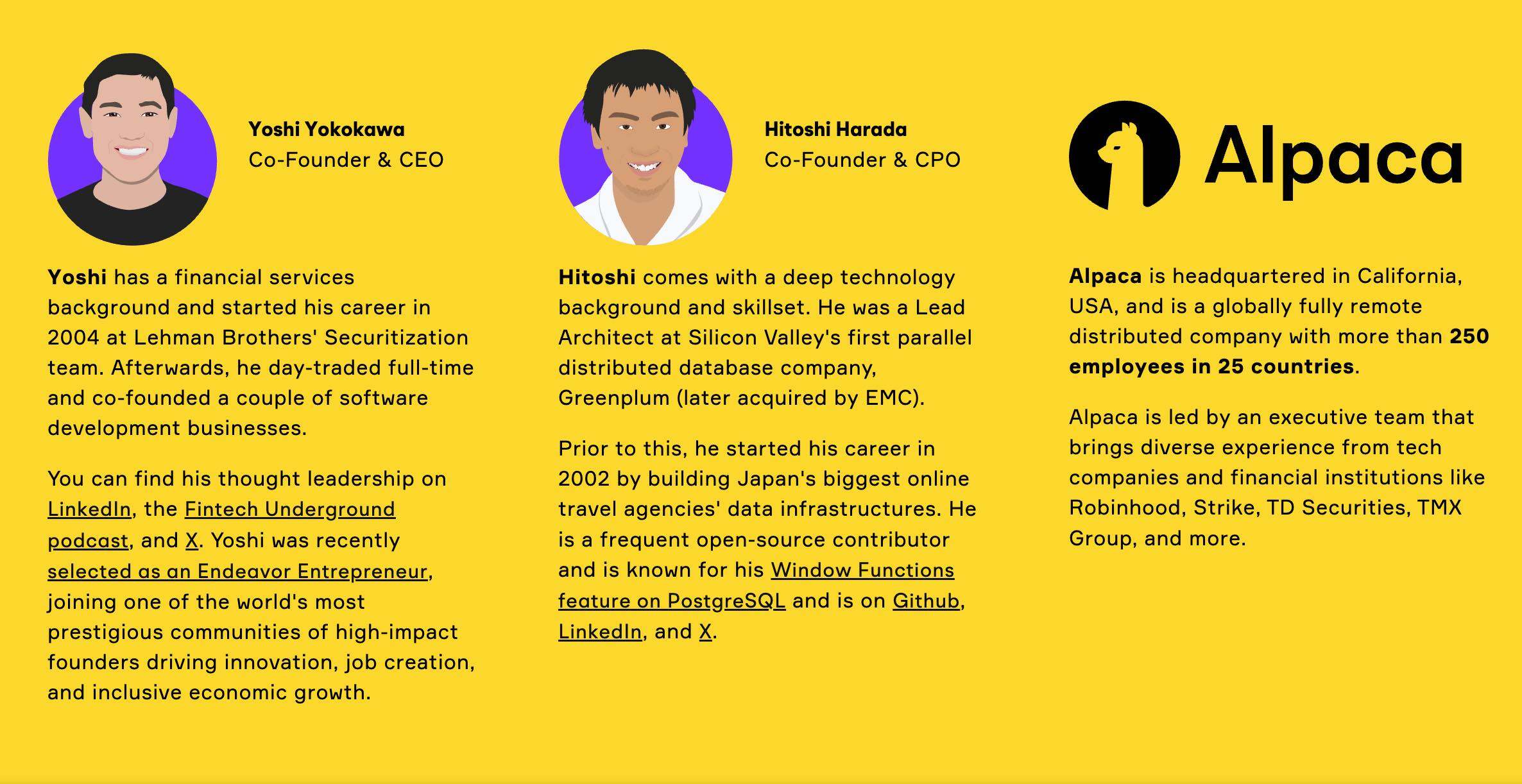
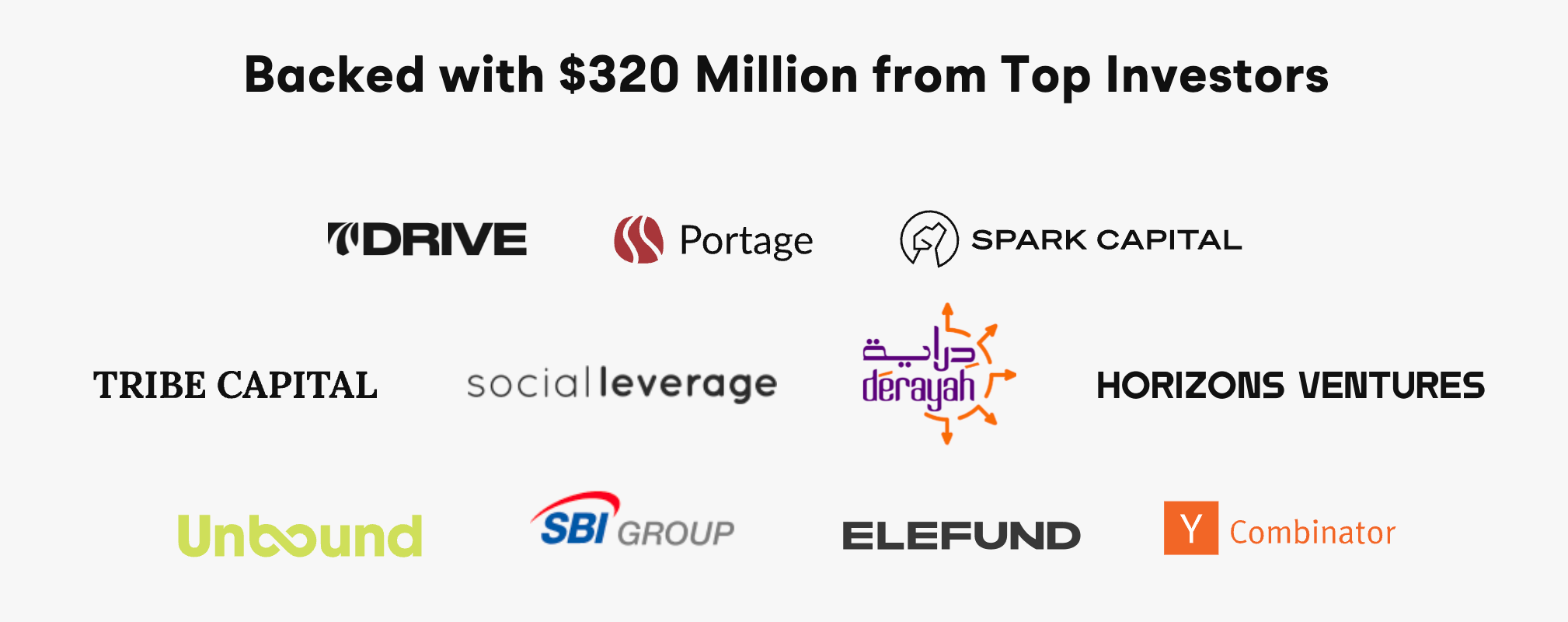
Founded in 2015 and headquartered in California, Alpaca was started by former Lehman Brothers employee and serial entrepreneur Yoshi Yokokawa (CEO) and engineer Hitoshi Harada (CPO). Operating with a distributed workforce across 25 countries and more than 250 employees, the company originally focused on financial databases and machine learning, developing trading APIs for quantitative traders. Over time, it evolved from a simple interface provider into a full-scale financial infrastructure platform, now supporting stocks, ETFs, options, cryptocurrencies and more, along with market data, securities lending, high-yield cash accounts and 24/5 US stock trading. According to FundBet, Alpaca has raised over $320 million since 2019 from investors including Y Combinator, Spark Capital, Portage Ventures, Tribe Capital and SBI Group. Today it serves hundreds of financial institutions and fintech companies across more than 40 countries and regions, having helped partners open over 7 million brokerage accounts.

Brokerage-as-a-Service: An API-First Mindset That Fits Crypto Like a Glove
The fundamental difference between Alpaca and traditional brokerages lies in the target customer: while legacy brokers serve end investors, Alpaca's clients are developers and platforms. Its Broker API allows partners to rapidly assemble a complete securities service stack—account opening, KYC, account management, order execution, clearing and settlement, and market data—by simply calling a set of programmatic interfaces. For platforms like Binance, Bitget or Ondo, solving licensing, compliance, custody and routing problems on their own would be prohibitively expensive and complex. Alpaca encapsulates all this back-end heavy lifting into developer-friendly APIs, effectively offering a "one-click" gateway to real-world stock markets while the platforms focus on user acquisition and front-end experience. This is, in essence, "Brokerage-as-a-Service," which dramatically lowers the barrier for any crypto product to integrate stock trading.
Why Alpaca Dominates While Wall Street Giants Lag
The US compliant financial market is home to thousands of registered broker-dealers, including global powerhouses like Charles Schwab, Interactive Brokers and Fidelity, all of which dwarf Alpaca in brand recognition and assets. So why has this ten-year-old startup become the go-to partner for the tokenized stock wave? The answer lies in its DNA: Alpaca was never a traditional brokerage. The company was built API-first, fully aligned with the needs of platforms that want to embed securities trading directly into their own apps or smart contracts. Moreover, Alpaca was among the earliest licensed US brokerages to proactively embrace digital assets and the tokenization narrative, building relationships with crypto firms long before the sector became fashionable. This early-mover advantage, combined with its developer-oriented architecture, has cemented its 94% market share.
Network effects are now reinforcing that dominance. As more CeFi and DeFi players choose Alpaca for their stock trading rails, a virtuous cycle takes hold: greater platform adoption generates more accounts and trading volume, which in turn fuels further improvements to Alpaca's infrastructure, thereby attracting more later entrants. For newcomers, Alpaca represents the fastest path to market with a proven compliance framework. The firm's official numbers—hundreds of institutional clients, over 7 million brokered accounts, and a presence in over 40 countries—underscore its entrenched position as the industry's underlying plumbing.
Selling Shovels in a Tokenized Gold Rush
Stock tokenization is undeniably a megatrend, and while it remains uncertain how many Binances or Ondos will emerge from the current race, one conclusion is becoming increasingly clear: the entity selling the shovels to all these prospectors—Alpaca—may ultimately be the greatest beneficiary of the tokenized stock boom. As the infrastructure layer that powers nearly every visible stock-offering platform, Alpaca is quietly capturing value from the entire sector's growth without ever needing to win the end-user war itself.